 FREE UK SHIPPING OVER £35!
The Spin Doctor Europadisc's Weekly Column
Celebrating Max Reger
22nd March 2023
22nd March 2023
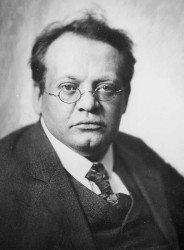 Of the various composers whose significant anniversaries are being celebrated in 2023, one name seems to have slipped under the radar. Max Reger (1873–1916) has a reputation not so much formidable as forbidding. Yet the 150th anniversary of his birth presents an opportunity for a reappraisal of a composer who has earned notoriety for dense counterpoint, yet who was also capable of writing music of great charm and melodic beauty. And, contrary to received opinion, these qualities often overlap in many of his works, making them well worth investigation by those with the time to explore his voluminous output.
Johann Baptist Joseph Maximilian Reger was born on 19 March 1873 in Brand, Bavaria, and grew up in the Bavarian city of Weiden in der Oberpfalz. Although born to a devout Catholic family, there is a tension in his background between Catholic and Protestant traditions (cultural and musical), made the more significant by his early activities as an organist and his later more comprehensive exposure to the music of Bach. His first musical studies were with his father, a school music teacher, and he subsequently studied with Adalbert Lindner (one of his father’s former pupils) and then, most decisively, with the renowned theorist Hugo Riemann (1849–1919), first in Sondershausen and then in Wiesbaden. It was a visit to the Bayreuth Festival in 1888 (Mesitersinger and Parsifal) that had first determined the young Reger on a musical path, but he was uninterested in the musical drama and captivated rather by Wagner’s polyphonic style. Lindner had already introduced Reger to the music of Beethoven and Brahms, and his repertoire as an organist included works by Mendelssohn, Schumann and Liszt. But Riemann’s more wide-ranging knowledge of Bach and Brahms was the decisive piece in the jigsaw of influences on the young composer’s emerging style.
Although some youthful essays in orchestral music survive, Reger’s early output is dominated by organ music, songs, chamber and piano works. His life in Wiesbaden – which included a fondness for drink, as well as his compulsory year of military service – culminated in a mental and physical breakdown, and he moved back to Weiden to recover. In 1901 he moved to Munich, but here he was up against the rising star of Richard Strauss – much more to the Bavarian capital’s liking – as well as Pfitzner. It was the supporters of these composers who put paid to any lasting success in Munich, although he maintained friendly relations with both. In Munich he married Elsa von Bercken, a divorced Lutheran, who did much to maintain his legacy after his untimely death, not least in establishing the Max-Reger-Institute in Karlsruhe.
More successful was Reger’s move to Leipzig in 1907, where he was appointed organist at the University Church and, the following year, professor at the Leipzig Conservatory. The Leipzig years were crucial in cementing his reputation. Among his students were such figures as Othmar Schoeck, Jaromír Weinberger and George Szell, while his wider circle of friends included the great conductor Artur Nikisch. (Reger’s own conducting style, however, was the antithesis of Nikisch’s fabled elegant technique: angular, functional – although with an expressive left hand – and wholly uninterested in the emerging phenomenon of the conductor as podium star.) Another fruitful encounter at this time was with the young Adolf Busch, who also did much to champion Reger’s cause.
In 1911 Reger was appointed court music director in Meiningen – a city with a strong Brahmsian tradition – while continuing his master class at the Leipzig Conservatory. In 1911 he gave up the Meiningen post for health reasons and moved to Jena, but continued commuting to Leipzig. In 1913 he composed his Four Tone Poems after Arnold Böcklin, op.128, and with the outbreak of World War I he began composing a Requiem (unfinished) for the fallen. In these ‘late years’ he strove for a ‘new simplicity’ that anticipated the music of Hindemith (who, like Schoenberg, was an important admirer of Reger’s output), as well as a concern with texts of spiritual significance. He died of a heart attack while in Leipzig on 11 May 1916.
During his lifetime, Reger endured a hard time from the critics, particularly in Munich, and tales of his alcohol consumption were exaggerated to imply that he could only compose whilst under the influence. In fact, Reger’s vast output (some 1000 distinct works, incorporating both original compositions and arrangements, most composed during a period of just 25 years!) testifies to a capacity for sheer hard work which, combined with his frequent travelling (he toured as far as Russia), probably did as much to contribute to his early death at the age of just 43. His influence on Hindemith, Prokofiev and others of the emerging 20th-century neoclassical movement is an important part of his legacy, but so too is his absorption of complex contrapuntal textures (from Bach, Beethoven and Brahms), as well as adventurous chromatic writing (the influence of Brahms, Liszt and Wagner). Although he avoided two key genres of his time – opera and the symphony – his works encompass huge variety, frequently built on a bedrock of ‘found’ music, whether chorales or variations. His ability to anchor his music in the works of the past while offering a challenging vision for the future helps to explain its continuing fascination and power.
Although anniversary releases have been few so far this year, there is a rich discography to be explored by those wanting to explore Reger’s works. The once hugely popular Variations and Fugue on a Theme of Mozart, op.132 (1915), one of the most successful of his late forays into orchestral music, have been recorded several times, and with particular success by Leif Segerstam on BIS. More wide-ranging is a 12-disc ‘Orchestral Edition’ issued by Deutsche Grammophon in 2018. The most recent (and still ongoing) survey of Reger’s extensive output of organ works comes from Gerhard Weinberger on CPO, playing German organs from Reger’s time. Discs of piano works from Marc-André Hamelin and songs from Sophie Bevan (both on Hyperion) are also strong recommendations. But probably the most immersive way into Reger’s uniquely compelling and challenging output – poised between classical beauty and 20th-century post-Romanticism – is the magnificent 6-DVD set ‘Maximum Reger’ from Fugue State Films, which includes three feature-length documentaries as well as 12 hours of filmed performances from an array of deeply committed and knowledgeable performers. For this anniversary year, it’s an essential acquisition!
Recommended recordings:
Organ Works Vol.1 (Weinberger) 7777172
Piano Concerto, 6 Intermezzi (Moog) ONYX4235
Orchestral Edition (Albrecht, Stein et al.) 4799983
Clarinet Sonatas (Collins, McHale) CHAN10970
Organ Fantasias & Fugues (D Goode) SIGCD476
Songs (S Bevan, Martineau) CDA68057
Orchestral Works (Segerstam) BIS9047
Piano Music (Hamelin) CDA66996
Maximum Reger FSFDVD011
Latest Posts
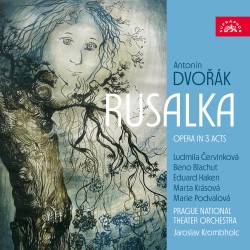
Water, Moonlight and Memory: Dvořák’s ‘Rusalka’ – The Return of a Classic
21st July 2026
Few operas announce their emotional climate as immediately as Rusalka. Before a word is sung, the lower strings seem to stir the black water; a melody rises, reaches towards warmth and falls back into its own reflection. Dvořák’s ‘lyric fairy tale’, composed in 1900–01 to Jaroslav Kvapil’s Czech libretto and first performed in Prague in 1901, is built upon an adult unease: the desire to cross into another world, and the fear that fulfilment may destroy the self that desired it.
Recordings can prettify Rusalka into... read more
Music of the Iberian Peninsula, Part 5: Beyond Vienna – The Classical Era in Spain and Portugal
14th July 2026
The Classical period has long been mapped as though Europe’s musical imagination narrowed to a triangle drawn between Vienna, Mannheim and northern Italy. Spain and Portugal appear, if at all, as picturesque margins: lands of guitars, fandangos and imported opera, waiting for the 19th century to discover their national voices. Listen attentively to the Iberian repertory of roughly 1750 to 1830, however, and a more intricate picture emerges. Madrid and Lisbon were cosmopolitan courts, receptive to Italian opera, French... read more
read more
Hans Werner Henze at 100: An Outsider at the Heart of Modern Music
6th July 2026
Among the major composers of the post-war era, Hans Werner Henze occupies a singular position. Neither a doctrinaire modernist nor a nostalgic traditionalist, he fashioned a musical language of remarkable elasticity, capable of embracing serial procedures and sumptuous lyricism, classical forms and theatrical fantasy, political engagement and deeply personal expression. If his music has never enjoyed the ubiquity of Britten, Shostakovich or Ligeti, it has steadily acquired the stature of a body of work whose richness rewards... read more
read more
Music of the Iberian Peninsula Part 4: The Spanish and Portuguese Baroque
30th June 2026
For many music lovers, the Baroque era immediately conjures images of Bach's intricate counterpoint, Handel's majestic choruses, Vivaldi’s dazzling violin concertos or Charpentier’s sumptuous vocal music. Yet on the southwestern edge of Europe another remarkable musical tradition flourished during the seventeenth and early eighteenth centuries. The Iberian Peninsula developed a distinctive Baroque voice that combined religious intensity, courtly sophistication and popular vitality. Drawing upon centuries of cultural exchange... read more
read more
Carl Maria von Weber: Visionary of German Romanticism
23rd June 2026
When audiences think of early nineteenth-century German music, the towering figures of Beethoven, Schubert, and later Wagner often dominate the conversation. Yet between the Classical world of Mozart and the mature Romanticism of Wagner stands a composer whose influence was both profound and transformative: Carl Maria von Weber (1786–1826). Composer, conductor, pianist, critic, and visionary dramatist, Weber played a pivotal role in shaping the future of German opera and helping define the musical language of... read more
read more