FREE UK SHIPPING OVER £35!

The Spin Doctor Europadisc's Weekly Column

Music of the Iberian Peninsula, Part 5: Beyond Vienna – The Classical Era in Spain and Portugal

  14th July 2026

14th July 2026

The Classical period has long been mapped as though Europe’s musical imagination narrowed to a triangle drawn between Vienna, Mannheim and northern Italy. Spain and Portugal appear, if at all, as picturesque margins: lands of guitars, fandangos and imported opera, waiting for the 19th century to discover their national voices. Listen attentively to the Iberian repertory of roughly 1750 to 1830, however, and a more intricate picture emerges. Madrid and Lisbon were cosmopolitan courts, receptive to Italian opera, French elegance and the instrumental language associated with Haydn and Mozart. What distinguishes their music is not isolation, but the way international Classicism was refracted through local institutions, devotional traditions and dance rhythms.

In both kingdoms, music flourished where power, worship and spectacle met. Royal chapels maintained imposing sacred establishments; aristocratic households cultivated chamber music; theatres fed an appetite for Italian opera and vernacular entertainment. Much of the repertory was composed for a particular patron, feast day, palace room or theatrical season. Manuscripts consequently remained in archives and works circulated narrowly, leaving composers who once supplied music for courts and churches vulnerable to neglect when those institutions changed.

Spain’s 18th century is impossible to understand without the foreign musicians who made the country their home. Domenico Scarlatti’s long residence at the Spanish court had already shown how the keyboard sonata could absorb Iberian gestures without lapsing into decorative local colour. His presumed pupil Antonio Soler (1729–1783) carried that legacy into the later century at El Escorial. Soler’s sonatas may begin in Scarlattian territory, but their personality is unmistakable: bold hand-crossings, ringing repeated notes, abrupt contrasts and a relish for harmonic detours. Even at his most ceremonious, Soler retains an earthy rhythmic spring. The celebrated Fandango is less a decorous court dance than a sustained act of controlled intoxication, its repeating bass and accumulating ornament turning the keyboard into an entire nocturnal gathering.

Soler also represents the persistence of older Iberian traditions within the Classical age. The monastery, the organ loft and the royal classroom coexist in his music. His concertos for two organs exchange phrases with the ease of animated conversation. Classical ideals of balance and symmetry are present, but filtered through sonorities peculiar to the Spanish sacred environment. The music does not reject the galant style; it domesticates it.

The most celebrated musical immigrant in Spain was Luigi Boccherini (1743–1805), a virtuoso cellist from Lucca who spent most of his mature career in and around Madrid. His music has sometimes been patronised for its grace, as though elegance were evidence of shallowness. In fact, Boccherini’s chamber works possess one of the most individual sound-worlds of the century. The cello, liberated from bass-line duties, sings, whispers and vaults into the treble; inner parts glow with sensuous detail; sudden dynamic withdrawals create an atmosphere at once refined and strangely private. His string quintets, many written with two cellos, reinvent chamber texture from within.

Spain enters Boccherini’s music not as a permanent costume but as a flash of lived experience. In the Guitar Quintet associated with the fandango, castanets and an obsessive dance pulse produce an irresistible theatrical charge. More extraordinary still is La musica notturna delle strade di Madrid (‘The Night Music of the Streets of Madrid’), a sequence of street scenes in which military drums, church bells, popular songs and the retreating night watch become the material of high art. It is topographical music without complacency: affectionate, stylised and alert to distance, as sounds approach and recede through the city. The famous Minuet secured Boccherini’s immortality, but these Madrid works reveal the sharper ear.

Beside Boccherini stands Gaetano Brunetti (1744–1798), another Italian-born musician absorbed into Spanish court life. Brunetti served as violinist and teacher to the future Charles IV and composed prolifically for the royal chamber. His symphonies and quartets show how eagerly Madrid participated in the wider European traffic of instrumental style. Haydn was known and admired; the quartet was not an exotic import but a cultivated local practice. Brunetti’s music is lucid, energetic and often more adventurous than its obscurity suggests. Its neglect owes much to restricted circulation during his lifetime rather than to any want of invention.

Spanish theatrical music presents a similarly mixed identity. Italian opera seria held prestige, but the tonadilla and zarzuela brought vernacular language, popular characters and dance-inflected immediacy to the stage. Composers such as Antonio Rodríguez de Hita (1722–1787) and Pablo Esteve (1730–1794) moved between courtly and popular idioms. Spanish theatre was not a sealed national tradition but a busy meeting place for imported opera, spoken drama, song and spectacle.

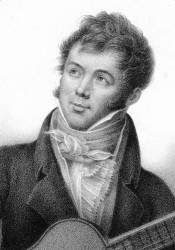
The guitar became an increasingly articulate vehicle for Classical form. The sonatas, variations and studies of Fernando Sor (1778–1839) demonstrate that the instrument could sustain large-scale argument as well as salon charm. Their clean textures and poised rhetoric belong to the international Classical language, but the guitar’s resonance lends them an unmistakably Iberian intimacy. Sor could write with almost orchestral ambition while preserving the impression that the music was being confided directly to the listener. His finest works reward players who resist prettification. Beneath their polish lies a firm architectural sense, and beneath their charm an often surprisingly grave expressive world.

Portugal’s musical 18th century was shaped by both splendour and catastrophe. Lisbon’s magnificent Ópera do Tejo opened in 1755 and was destroyed only months later in the earthquake that devastated the city. The episode has become emblematic: an image of cultural ambition abruptly erased. Yet Portuguese music did not vanish with the theatre. Royal and patriarchal institutions were rebuilt, Italian opera remained central, and a generation of Portuguese composers received training that connected Lisbon directly to Naples and Rome.

João de Sousa Carvalho (1745–c.1798) was the commanding Portuguese figure of the later 18th century. Educated first at Vila Viçosa and then in Naples, he returned to Lisbon to teach at the Patriarchal Seminary and eventually became mestre de capela. His operas, serenatas, oratorios and sacred works reveal a composer fully conversant with Italian style, particularly the elegant vocal writing and clear dramatic pacing associated with Metastasian opera. Yet Carvalho is more than an efficient importer. At his best, ceremonial brilliance is balanced by expressive gravity; choral writing has architectural breadth, while arias possess a supple, singerly line. The Portuguese court heard itself represented through an Italianate language that had become thoroughly international.

Carvalho’s pupils and successors widened that world. António Leal Moreira (1758–1819) wrote sacred and theatrical music, while Marcos Portugal (1762–1830) achieved international operatic success unmatched by any Portuguese composer of his age. Known in Italy as Marco Portogallo, he produced dozens of stage works and saw them performed widely across Europe. His comedies have rhythmic buoyancy, deft ensemble writing and a shrewd sense of theatrical timing. When the Portuguese royal court transferred to Rio de Janeiro during the Napoleonic invasions, Marcos Portugal followed, carrying court musical practice across the Atlantic. His career makes nonsense of any tidy division between ‘European’ and ‘colonial’ music. Portuguese Classicism belonged to a network linking Lisbon, Italian theatres and Brazil. The Atlantic was not simply a boundary but a cultural highway, along which musicians, manuscripts and institutions travelled.

At the edge of the period stands João Domingos Bomtempo (1775–1842), pianist and composer, whose symphonies, concertos and chamber works point towards a more public musical culture. Rather than follow the customary Portuguese route to Italy, he built a career as a virtuoso in Paris and London and later founded a Philharmonic Society in Lisbon. His music can sound rhetorically broader and more assertive than Carvalho’s or Marcos Portugal’s, as though Portuguese Classicism were opening its doors to Romantic ambition.

And then there is Juan Crisóstomo de Arriaga (1806–1826), the most haunting ‘might-have-been’ in Iberian music. Born in Bilbao in the Basque region in 1806, he composed an opera while still in his early teens and went to Paris to study at the Conservatoire. He died in 1826, just ten days before his 20th birthday. The inevitable nickname, ‘the Spanish Mozart’, is both understandable and unhelpful. It captures the prodigy and the tragedy, but encourages us to hear imitation where there is already a distinct musical intelligence.

Arriaga’s three string quartets, published in Paris in 1824, stand among the most compelling Iberian chamber works of the period. They have Classical poise and an evident knowledge of Haydn, Mozart and early Beethoven; but their harmonic warmth, rhythmic volatility and sudden shadows belong to no mere copyist. The First Quartet in D minor has a tensile drama that repeatedly unsettles its elegant surfaces. The Second in A major unfolds with lyrical generosity, while the Third in E flat major balances wit, counterpoint and expressive surprise.

His Symphony in D is equally fascinating, hovering between major and minor, Classical clarity and Romantic turbulence. Arriaga’s command of form is impressive, but it is the music’s nervous energy that lingers: phrases lean towards expected cadences and then hesitate; sunny orchestral textures suddenly acquire a darker grain. One hears not a finished national style but an imagination in motion.

That unfinished quality is, in a sense, emblematic of the whole Iberian Classical repertory. Spain and Portugal did not produce a single figure who came to dominate the international canon as Haydn or Mozart did. But the demand for such a figure may itself be misleading. Iberian music of the period is best understood as a constellation: Soler’s keyboard fire, Boccherini’s chamber sensuality, Brunetti’s courtly invention, Carvalho’s ceremonial theatre, Marcos Portugal’s cosmopolitan stagecraft, Sor’s lucid guitar writing and Arriaga’s precocious intensity.

The best modern performances resist two temptations: to make everything sound generically Classical, or to exaggerate every dance rhythm into folkloric spectacle. This repertory thrives on proportion. Its accents must bite, but its phrases must breathe; its elegance should gleam without becoming porcelain. In Boccherini and Brunetti, conversational flexibility matters more than symphonic weight. In Soler, rhythmic tension must be allowed to accumulate. In Carvalho and Marcos Portugal, the vocal line must remain sovereign.

To explore Classical Spain and Portugal, then, is not to take a detour from the mainstream; it is to redraw the map. The Iberian Peninsula received the languages of Naples, Paris and Vienna, but answered in voices conditioned by its palaces, monasteries, theatres, streets and Atlantic horizons. The reward is music of refinement and heat, formal discipline and theatrical instinct: a repertory whose rediscovery makes the Classical period itself sound larger, stranger and more various.

A few recommended recordings:

In the next instalment of this series (scheduled for two weeks’ time), we take a closer look at the world of the zarzuela.

Illustration: Portrait of Fernando Sor


Latest Posts


Hans Werner Henze at 100: An Outsider at the Heart of Modern Music

6th July 2026

Among the major composers of the post-war era, Hans Werner Henze occupies a singular position. Neither a doctrinaire modernist nor a nostalgic traditionalist, he fashioned a musical language of remarkable elasticity, capable of embracing serial procedures and sumptuous lyricism, classical forms and theatrical fantasy, political engagement and deeply personal expression. If his music has never enjoyed the ubiquity of Britten, Shostakovich or Ligeti, it has steadily acquired the stature of a body of work whose richness rewards... read more

read more
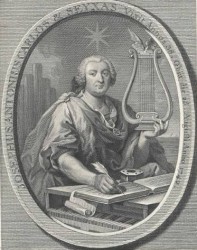
Music of the Iberian Peninsula Part 4: The Spanish and Portuguese Baroque

30th June 2026

For many music lovers, the Baroque era immediately conjures images of Bach's intricate counterpoint, Handel's majestic choruses, Vivaldi’s dazzling violin concertos or Charpentier’s sumptuous vocal music. Yet on the southwestern edge of Europe another remarkable musical tradition flourished during the seventeenth and early eighteenth centuries. The Iberian Peninsula developed a distinctive Baroque voice that combined religious intensity, courtly sophistication and popular vitality. Drawing upon centuries of cultural exchange... read more

read more
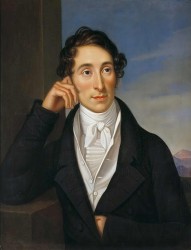
Carl Maria von Weber: Visionary of German Romanticism

23rd June 2026

When audiences think of early nineteenth-century German music, the towering figures of Beethoven, Schubert, and later Wagner often dominate the conversation. Yet between the Classical world of Mozart and the mature Romanticism of Wagner stands a composer whose influence was both profound and transformative: Carl Maria von Weber (1786–1826). Composer, conductor, pianist, critic, and visionary dramatist, Weber played a pivotal role in shaping the future of German opera and helping define the musical language of... read more

read more
Music of the Iberian Peninsula, Part 3: More observations on the Golden Age

16th June 2026

Our last visit to the Iberian peninsula, a fortnight ago, was an insanely ambitious, necessarily broad-brush survey of the Spanish and Portuguese Golden Age, covering vocal and instrumental music, the sacred and the secular. This week, we take a more concise and (I hope) focussed look at a few of the sacred vocal masterpieces which exemplify the particular fervour and intensity of this remarkable period of musical history. They reflect the special place the peninsula had as a bulwark against the Reformation that had taken... read more

read more
Music of the Iberian Peninsula, Part 3: More observations on the Golden Age

16th June 2026

Our last visit to the Iberian peninsula, a fortnight ago, was an insanely ambitious, necessarily broad-brush survey of the Spanish and Portuguese Golden Age, covering vocal and instrumental music, the sacred and the secular. This week, we take a more concise and (I hope) focussed look at a few of the sacred vocal masterpieces which exemplify the particular fervour and intensity of this remarkable period of musical history. They reflect the special place the peninsula had as a bulwark against the Reformation that had taken... read more

read more
View Full Archive