FREE UK SHIPPING OVER £35!

The Spin Doctor Europadisc's Weekly Column

Hans Werner Henze at 100: An Outsider at the Heart of Modern Music

  6th July 2026

6th July 2026
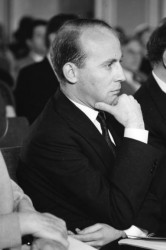

Among the major composers of the post-war era, Hans Werner Henze occupies a singular position. Neither a doctrinaire modernist nor a nostalgic traditionalist, he fashioned a musical language of remarkable elasticity, capable of embracing serial procedures and sumptuous lyricism, classical forms and theatrical fantasy, political engagement and deeply personal expression. If his music has never enjoyed the ubiquity of Britten, Shostakovich or Ligeti, it has steadily acquired the stature of a body of work whose richness rewards repeated acquaintance.

Henze's refusal to conform to prevailing fashions was both an artistic principle and a matter of temperament. Throughout a career spanning more than six decades, he resisted easy categorisation, moving effortlessly between opera, ballet, symphony, chamber music and concerto, while absorbing influences that ranged from Berg and Stravinsky to jazz, Mediterranean folk traditions and Renaissance polyphony. Few twentieth-century composers displayed such stylistic range without sacrificing an unmistakably individual voice.

Born in Gütersloh on 1 July 1926, Henze's early years were marked by conflict. His father, an ardent Nazi schoolmaster, viewed music chiefly as a vehicle for discipline and national pride, while the young Henze discovered in it an intensely private means of escape. The Second World War interrupted his studies, and military service, imprisonment and the collapse of Germany left profound emotional scars. Equally formative was the hostility directed towards his homosexuality in post-war Germany, contributing to his growing sense of alienation from his homeland. These experiences shaped the moral seriousness that underpins even his most overtly lyrical works. Henze rarely wore autobiography on his sleeve, yet questions of identity, freedom and human dignity recur throughout his output with remarkable consistency.

Following studies in Heidelberg, Henze emerged as one of the brightest talents of Germany's musical renaissance. His earliest compositions reveal a composer keenly aware of recent developments while unwilling to become their disciple. Although he explored serial methods, he never accepted them as an end in themselves. For Henze, technique served imagination rather than replacing it. This position increasingly distinguished him from the composers associated with Darmstadt, where post-war modernism acquired an almost ideological intensity. Figures such as Pierre Boulez and Karlheinz Stockhausen pursued ever more systematic approaches to musical organisation, seeking a decisive break with the past. Henze admired their intellectual ambition but resisted what he perceived as aesthetic orthodoxy. Music, he believed, must remain capable of beauty, sensuality and emotional ambiguity.

His move to Italy in 1953 proved decisive. Settling first on the island of Ischia before making his home near Rome, Henze found a cultural atmosphere immeasurably more congenial than the austerity of post-war Germany. Italy became not simply a geographical refuge but an imaginative landscape. Mediterranean light, classical mythology, Italian literature and the rhythms of southern life subtly permeate his music, lending it a warmth and colour rarely encountered among his northern European contemporaries.

That sense of colour is among Henze's most immediately recognisable gifts. His orchestration possesses an almost painterly refinement, combining luminous transparency with extraordinary richness. One hears echoes of Ravel's precision, Berg's emotional intensity and Stravinsky's rhythmic vitality, yet the resulting sound world belongs unmistakably to Henze himself. Individual instrumental lines emerge with operatic clarity before dissolving into textures of astonishing complexity.

Opera naturally occupied the centre of his artistic imagination. Henze regarded the stage as the place where literature, psychology and music could most completely interact. His breakthrough opera, Boulevard Solitude (1952), transplanted the story of Manon Lescaut into the contemporary world, already revealing his instinct for reinterpreting familiar narratives through modern sensibilities.

More ambitious still was The Bassarids (1966), based on Euripides' The Bacchae with a libretto by W.H. Auden and Chester Kallman. Structured in four continuous movements that mirror a symphony, it remains one of the twentieth century's supreme operatic achievements. Here Henze combines psychological insight with orchestral brilliance, producing music of overwhelming dramatic force. The score moves effortlessly between savage violence, haunting lyricism and moments of radiant stillness, all sustained by an architectural command that rewards both listener and analyst.

Subsequent operas continued to demonstrate remarkable versatility. Whether adapting Japanese Noh drama in The Jade Princess, exploring Shakespeare in Venus und Adonis, or creating the enchanting fantasy of Pollicino, Henze consistently treated opera as a living art rather than a museum piece. His theatrical instincts remained unfailingly acute, his vocal writing generous without ever becoming merely decorative.

Alongside opera runs an equally impressive sequence of ten symphonies, composed between 1947 and 2000. Rather than embracing the monumental symphonic argument associated with Bruckner or Mahler, Henze conceived each work as an individual dramatic landscape. Literary references, political reflections and private memories often inform their structure, giving the cycle an almost novelistic quality.

Particularly compelling are the Seventh and Ninth Symphonies. The former draws inspiration from Hölderlin's visionary poetry, while the latter confronts the moral catastrophe of Nazism through texts commemorating anti-fascist resistance. Yet even when addressing history directly, Henze avoids rhetorical certainty. His music asks questions rather than delivering verdicts, creating emotional spaces in which reflection becomes possible.

Politics, indeed, remained central to Henze's public identity. During the 1960s and 1970s he aligned himself with left-wing causes, often provoking fierce controversy. The ill-fated premiere of Das Floß der Medusa (The Raft of the Medusa) in Hamburg in 1968 became legendary after political demonstrations prevented the performance from taking place. For some critics, Henze's activism threatened to overshadow his artistry.

With hindsight, such anxieties appear misplaced. His political works possess a complexity that transcends immediate circumstances. Rather than functioning as ideological statements, they explore the ethical responsibilities of individuals confronted by oppression, violence and injustice. The emotional force of these scores derives less from their politics than from their humanity.

Henze's concertante works deserve similar attention. His violin concertos, the two cello concertos, the piano concertos and, above all, the extraordinary guitar works written for Julian Bream reveal a composer acutely sensitive to instrumental personality. Soloists are not placed in perpetual opposition to the orchestra but become participants in an intricate musical dialogue whose character shifts continuously between intimacy and brilliance.

Chamber music occupies an equally significant place within his catalogue. Works such as the string quartets display a remarkable economy of means without sacrificing expressive depth. Even in reduced forces, Henze's instinct for drama remains unmistakable. Musical ideas behave almost like characters, entering into conversation, conflict and reconciliation with compelling naturalness.

For performers, Henze presents challenges that extend far beyond technical mastery. His music demands flexibility of imagination. Conductors must negotiate abrupt changes of atmosphere without compromising structural coherence; singers require both lyrical generosity and dramatic intelligence; orchestral players must balance virtuosity with chamber-like sensitivity. When these elements come together, the rewards are exceptional.

Perhaps the greatest obstacle to Henze's wider popularity has been expectation. Audiences approaching his music under the label of 'modernism' often anticipate austere intellectualism, while those seeking romantic immediacy may initially be unsettled by its harmonic complexity. In reality, Henze belongs to neither camp. His finest works inhabit the fertile territory between tradition and innovation, where expressive freedom outweighs stylistic allegiance.

Today, more than a decade after his death, on 27 October 2012 in Dresden, Henze's reputation continues to deepen. Major conductors increasingly programme the symphonies, opera companies have rediscovered The Bassarids and Boulevard Solitude, while younger musicians have embraced the chamber and concerto repertoire with fresh enthusiasm. Freed from the ideological disputes that once dominated post-war musical discourse, listeners can appreciate the remarkable breadth of his achievement.

Ultimately, Henze's significance lies not simply in the diversity of his catalogue but in the integrity of his artistic vision. He refused to accept that modern music must choose between intellect and emotion, between structural sophistication and sensuous beauty, between private reflection and public engagement. His works inhabit all these worlds simultaneously.

Listening to Henze is therefore less an encounter with a fixed style than with a restless imagination, endlessly curious and perpetually evolving. His music can astonish with its brilliance, unsettle with its complexity, console with its lyricism and provoke with its moral seriousness. Such qualities ensure that it remains not merely an important chapter in twentieth-century music but an enduring invitation to hear the possibilities of composition afresh.

For those willing to explore beyond the standard repertory, Hans Werner Henze offers one of the richest and most rewarding musical landscapes of the last hundred years: a world in which drama, poetry, politics and beauty coexist in rare and compelling balance.

Recommended recordings:

Latest Posts


Music of the Iberian Peninsula Part 4: The Spanish and Portuguese Baroque

30th June 2026

For many music lovers, the Baroque era immediately conjures images of Bach's intricate counterpoint, Handel's majestic choruses, Vivaldi’s dazzling violin concertos or Charpentier’s sumptuous vocal music. Yet on the southwestern edge of Europe another remarkable musical tradition flourished during the seventeenth and early eighteenth centuries. The Iberian Peninsula developed a distinctive Baroque voice that combined religious intensity, courtly sophistication and popular vitality. Drawing upon centuries of cultural exchange... read more

read more
Carl Maria von Weber: Visionary of German Romanticism

23rd June 2026

When audiences think of early nineteenth-century German music, the towering figures of Beethoven, Schubert, and later Wagner often dominate the conversation. Yet between the Classical world of Mozart and the mature Romanticism of Wagner stands a composer whose influence was both profound and transformative: Carl Maria von Weber (1786–1826). Composer, conductor, pianist, critic, and visionary dramatist, Weber played a pivotal role in shaping the future of German opera and helping define the musical language of... read more

read more
Music of the Iberian Peninsula, Part 3: More observations on the Golden Age

16th June 2026

Our last visit to the Iberian peninsula, a fortnight ago, was an insanely ambitious, necessarily broad-brush survey of the Spanish and Portuguese Golden Age, covering vocal and instrumental music, the sacred and the secular. This week, we take a more concise and (I hope) focussed look at a few of the sacred vocal masterpieces which exemplify the particular fervour and intensity of this remarkable period of musical history. They reflect the special place the peninsula had as a bulwark against the Reformation that had taken... read more

read more
Music of the Iberian Peninsula, Part 3: More observations on the Golden Age

16th June 2026

Our last visit to the Iberian peninsula, a fortnight ago, was an insanely ambitious, necessarily broad-brush survey of the Spanish and Portuguese Golden Age, covering vocal and instrumental music, the sacred and the secular. This week, we take a more concise and (I hope) focussed look at a few of the sacred vocal masterpieces which exemplify the particular fervour and intensity of this remarkable period of musical history. They reflect the special place the peninsula had as a bulwark against the Reformation that had taken... read more

read more
Carl Schachter, Arnold Whittall, and why music analysis matters

9th June 2026

Two recent deaths have robbed the world of music analysis of a pair of its most revered figures. Carl Schachter, who has died at the age of 93, was a pupil of (and subsequently collaborator with) Felix Salzer, himself one of Heinrich Schenker’s foremost students. Schachter continued to enrich and broaden the teaching of Schenkerian analysis, including important work on its application to issues of rhythm (which Schenker, focussing on harmonic and contrapuntal matters, largely bypassed). His influence went well beyond the... read more

read more
View Full Archive