FREE UK SHIPPING OVER £35!

The Spin Doctor Europadisc's Weekly Column

Music of the Iberian Peninsula, Part 3: More observations on the Golden Age

  16th June 2026

16th June 2026

Our last visit to the Iberian peninsula, a fortnight ago, was an insanely ambitious, necessarily broad-brush survey of the Spanish and Portuguese Golden Age, covering vocal and instrumental music, the sacred and the secular. This week, we take a more concise and (I hope) focussed look at a few of the sacred vocal masterpieces which exemplify the particular fervour and intensity of this remarkable period of musical history. They reflect the special place the peninsula had as a bulwark against the Reformation that had taken hold in northern Europe, and the especially incandescent nature of its music for the dead as well as is fervent devotion to the Virgin Mary, the Mother of Jesus.

In the first half of the 17th century, Filipe de Magalhães (c.1571–1652) – a compatriot and contemporary of Duarte Lobo and Manuel Cardoso – was arguably the most renowned of Portuguese composers, an influential teacher as well as a published composer of plainsong for the Office of the Dead. Two of his mass settings, based respectively on motets by the Spaniard Francisco Guerrero and the Franco-Flemish composer Pierre de Manchicourt, have been recorded on an absorbing Hyperion disc from the Portuguese Cupertinos ensemble, and demonstrate a flexible responsiveness to his models, each culminating in an Agnus Dei that is particularly faithful to the original motet.

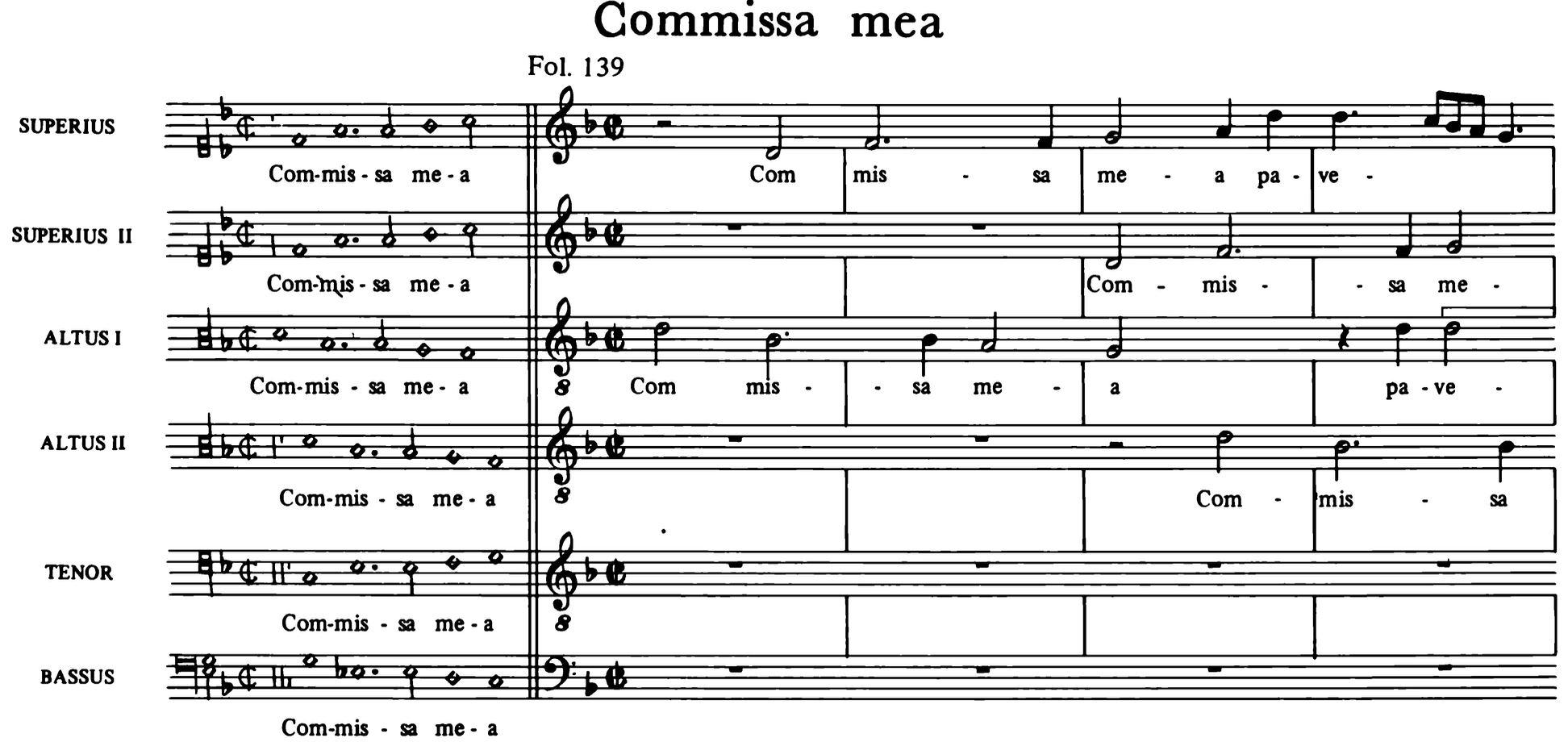
It is, however, the two six-voice motets that frame the album, and particularly the concluding penitential responsory Commissa mea pavesco (I fear my transgression) – probably his single best-known work – which show Magalhães at the height of his powers. The latter begins with a head-motif which appears imitatively in rapid succession, including in inverted form, in each of the voices: A1, S1, S2, A2, T, B. However, the continuation of the motif is treated flexibly to make the most of cadence points, and as the music unfurls the writing becomes increasingly fluid, though all the time enlivened by points of imitation, as well as occasional cascades of faster notes. Dissonances underline the soul’s fear and blushing, and before the final cadence the second soprano pushes the tessitura up to the minor sixth before the tierce de Picardie close. The entire piece lasts under four minutes, yet the expansiveness and intensity of the music is completely transporting.

The harnessing of expressive harmonic inflections and contrapuntal devices is a crucial part of what makes the music of the Golden Age so compelling. Over sixty years before Magalhães published Commissa mea pavesco (in his Missarum liber of 1636), Francisco Guerrero (1528–1599) wrote a remarkable six-voice motet to a text from the Song of Songs: Surge propera amica mea (Rise up, hasten, my love). As suggested by the text, this is a far livelier affair than the Magalhães, yet the contrapuntal writing at the opening – a rapid, overlapping motif heard in both original form and inversion – are similar. What makes this such a singular work is that the second soprano line is quite independent from the other voices, taking the form of a cantus firmus obstinatus to the words ‘Veni sponsa Christi’ (Come, bride of Christ), sung in long notes. At each repetition, it descends one scale degree over the first half of the work: five times in total. Then, in the second half, it duly rises (as per the text), cutting through the lively texture of the other five voices and acting as the motet’s musical anchor.

Not all of Guerrero’s motets are quite so contrapuntally intricate, and in many of his later works their declamatory nature and harmonic language are decidedly modern. However, his greatest hit, the five-voice Ave Virgo sanctissima – published no fewer than three times between 1566 and 1597 – is another work notable for its combination of contrapuntal mastery and expressive power. The text is a devotional hymn to the Virgin Mary, an old Spanish antiphon for the Nativity of John the Baptist (24 June):

Ave virgo sanctissima, Hail, most holy Virgin,

Dei mater piissima, most righteous mother of God,

Maris stella clarissima: brightest star of the sea:

Salve semper gloriosa, hail, ever glorious,
Margarita pretiosa, precious pearl,
Sicut lilium formosa, fair as the lily,
Nitens, olens velut rosa. shining and fragrant as the rose.

The words are reminiscent of the Song of Songs, and Guerrero’s setting is both tender and radiant. The texture is dominated by a canon at the unison between the two upper voices, and Guerrero uses it as a source of continuous momentum and elegance, with each climax in the top line occurring not once but twice, like a succession of waves. As well as being a long-term structural device, this canon also gives the music its unmistakable shimmering radiance, a hallmark of the Spanish Renaissance soundworld. Predominantly stepwise motion (rather than large melodic leaps) adds to the sense of grace and flow, and the imitative writing combines textural clarity with a sense of organic progression.

The work’s musical highpoint starts around a third of the way in, at the word ‘Salve’, which Guerrero takes as a cue to quote the four-note plainsong intonation of ‘Salve regina’, and uses it in both the canonic voices and the three lower parts to build and sustain a climax that is one of the most radiant in all music, before the music gently subsides to the close. There are plenty of other radiant works from the Golden Age, all deserving of closer attention; but the way in which Guerrero shapes this particular motet, bringing out the beauty of the text, carefully honing each phrase and binding it all together with the canon in the upper voices, gives it a very special place in the repertoire.

In our next instalment (scheduled for two weeks’ time), we move forward to the equally absorbing world of the Iberian Baroque.

Recommended recordings:
Magalhães - Masses ‘Veni Domine’ & ‘Vere Dominus est’ (Cupertinos) CDA68403
O Virgo Benedicta: Music of Marian Devotion from Spain’s Century of Gold (Marian Consort) DCD34086

Illustration: the opening bars of Magalhães’s Commissa mea pavesco

Latest Posts


Music of the Iberian Peninsula, Part 3: More observations on the Golden Age

16th June 2026

Our last visit to the Iberian peninsula, a fortnight ago, was an insanely ambitious, necessarily broad-brush survey of the Spanish and Portuguese Golden Age, covering vocal and instrumental music, the sacred and the secular. This week, we take a more concise and (I hope) focussed look at a few of the sacred vocal masterpieces which exemplify the particular fervour and intensity of this remarkable period of musical history. They reflect the special place the peninsula had as a bulwark against the Reformation that had taken... read more

read more
Carl Schachter, Arnold Whittall, and why music analysis matters

9th June 2026

Two recent deaths have robbed the world of music analysis of a pair of its most revered figures. Carl Schachter, who has died at the age of 93, was a pupil of (and subsequently collaborator with) Felix Salzer, himself one of Heinrich Schenker’s foremost students. Schachter continued to enrich and broaden the teaching of Schenkerian analysis, including important work on its application to issues of rhythm (which Schenker, focussing on harmonic and contrapuntal matters, largely bypassed). His influence went well beyond the... read more

read more
Carl Schachter, Arnold Whittall, and why music analysis matters

9th June 2026

Two recent deaths have robbed the world of music analysis of a pair of its most revered figures. Carl Schachter, who has died at the age of 93, was a pupil of (and subsequently collaborator with) Felix Salzer, himself one of Heinrich Schenker’s foremost students. Schachter continued to enrich and broaden the teaching of Schenkerian analysis, including important work on its application to issues of rhythm (which Schenker, focussing on harmonic and contrapuntal matters, largely bypassed). His influence went well beyond the... read more

read more
Music of the Iberian Peninsula, Part 2: ‘O quam gloriosum’ – The Spanish and Portuguese Golden Age

2nd June 2026

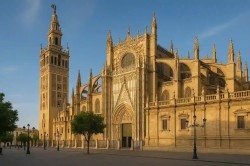
Over the past fortnight, I’ve been bathed in the most glorious, radiant, transformative light. Not the UK’s recent unseasonable heatwave, but the extraordinary vocal polyphony of the Siglo de Oro: the Spanish (and Portuguese) ‘Golden Century’. Extending from the late 15th to the early 17th century, this was a time of remarkable artistic flowering on the Iberian Peninsula, coinciding with the emergence of Spain and Portugal as global imperial powers with extensive colonial territories in the Americas, Africa and Asia. The... read more

read more
‘Call Me Flott’: A Tribute to Felicity Lott

26th May 2026

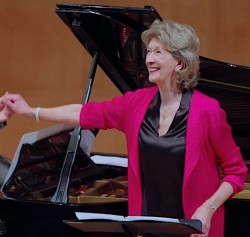
The acclaimed lyric soprano Felicity Lott, who has died at the age of 79, was an example of that rare breed among international singers: someone who combined star quality, wit, intelligence and humanity. During her half-century career she stood out for the refinement, clarity and textual responsiveness she brought to the music of Mozart and Richard Strauss, at a time when specialism in the former and sheer vocal power and OTT theatricality in the latter were increasingly the norm. These same strengths characterised her wider... read more

read more
View Full Archive