
FREE UK SHIPPING OVER £35!

The Spin Doctor Europadisc's Weekly Column

‘Call Me Flott’: A Tribute to Felicity Lott

  26th May 2026

26th May 2026
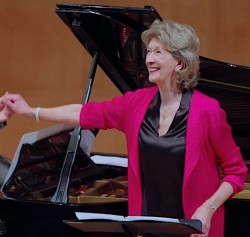

The acclaimed lyric soprano Felicity Lott, who has died at the age of 79, was an example of that rare breed among international singers: someone who combined star quality, wit, intelligence and humanity. During her half-century career she stood out for the refinement, clarity and textual responsiveness she brought to the music of Mozart and Richard Strauss, at a time when specialism in the former and sheer vocal power and OTT theatricality in the latter were increasingly the norm. These same strengths characterised her wider repertoire, not least her explorations of French mélodie and comic operetta, and they earned her the love and admiration of friends, colleagues and audiences, among whom she was universally and affectionately known as ‘Flott’.

Felicity Ann Emwhyla Lott was born in Cheltenham in 1947 to a family of keen amateur musicians. As a child she studied piano, while developing a love of languages alongside music; at Royal Holloway, University of London, she read French and Latin, and a year spent in Grenoble deepened her love of French culture, as well as determining her to pursue a musical path. On her return to London, she enrolled at the Royal Academy of Music, and won the Principal’s Prize on graduating in 1973.

Her early career was not exactly smooth: she was thrice rejected for the chorus at Glyndebourne, before eventually singing the Countess in Strauss’s Capriccio on tour in 1976. This was her breakthrough moment, but her appearance the previous year as a stand-in Pamina in The Magic Flute at English National Opera had already drawn her to critics’ attention and won their praise for her diction, luminosity of tone, poise and stage presence.

In the music of Richard Strauss, she brought character and a lightly-carried aristocratic bearing where others offered more overt opulence. As well as the Countess and Arabella, her outstanding role was, of course, the Marschallin in Der Rosenkavalier, above all in the Vienna production immortalised on video (but, alas, currently out of the catalogue) under the inspired direction of the legendary Carlos Kleiber. It was one of her career-defining roles, while her accounts of Strauss’s orchestral songs are scarcely less miraculous, again bringing a welcome focus and intelligence to music that is too often reduced to wave upon wave of cloying opulence.

Flott’s early enthusiasm for Gallic culture made her one of her generation’s finest interpreters of French art song, earning critical plaudits on both sides of the Channel in Fauré, Poulenc and Reynaldo Hahn. Her long collaboration with pianist Graham Johnson was one of the great postwar recital partnerships, and she was also a founding member of the Songmakers’ Almanac, which was so influential in transforming British attitudes to and enthusiasm for song recitals in the 1970s and 1980s.

Avoiding the pitfalls of migrating into more heavyweight repertoire such as Italian bel canto opera or Wagnerian music drama, she instead moved in time to operetta and comic roles, where her sense of wit, impeccable timing and gift for self-parody made her a natural. Her gifts as a comedienne were evident in her singular performances of La Belle Hélène and The Merry Widow, to the surprise and delight of her fans. She also excelled in such roles as an achingly tender Anne Trulove in Stravinsky’s The Rake’s Progress (in the celebrated Glyndebourne production featuring designs by David Hockney).

She was a familiar figure in Seaford, East Sussex, close to her beloved Glyndebourne, where she made her home with her actor husband, Gabriel Woolf. In the street, she cut an unmistakable figure: tall, slender, friendly and always elegantly poised yet unassuming, without hauteur but every inch a dame (which honour duly came along in 1996). Over some four decades she was the ‘darling of Glyndebourne’, appearing in every season there between 1976 and 1990. She inspired new generations of singers through masterclasses and competitions, and even after stepping back from fully-sung roles she found new life in the spoken-word repertoire. As well as her damehood, she was a recipient of the French Légion d’honneur and the title of Bayerische Kammersängerin at the Bavarian State Opera.

From Strauss and Stravinsky to Poulenc’s La Voix humaine and Fiordiligi in Mackerras’s underrated yet immensely stylish Così fan tutte (Telarc), Felicity Lott’s operatic recordings are selective but all treasurable. Yet her artistry is arguably heard at its most distilled in the genre of song, whether in the lieder of Schubert and Strauss, the mélodies of Poulenc and Hahn, or her welcome ventures into the English song repertoire. To all these and more she brought a combination of idiomatic stylishness, intelligence and an almost conversational intimacy and tenderness.

Felicity Lott’s announcement, on her 79th birthday and just days before her death on 15 May, of her terminal cancer diagnosis was expressed with characteristic grace and candour. She is survived by her husband, and by their daughter Emily. Her voice lives on in the memories of her friends, colleagues and legions of fans, as well as in her recordings, a precious and radiant legacy from one of the great lyric sopranos of the late 20th and early 21st centuries.

A few recommended recordings:

Next week: The Spanish and Portuguese Golden Age

Latest Posts


Music of the Iberian Peninsula, Part 2: ‘O quam gloriosum’ – The Spanish and Portuguese Golden Age

2nd June 2026

Over the past fortnight, I’ve been bathed in the most glorious, radiant, transformative light. Not the UK’s recent unseasonable heatwave, but the extraordinary vocal polyphony of the Siglo de Oro: the Spanish (and Portuguese) ‘Golden Century’. Extending from the late 15th to the early 17th century, this was a time of remarkable artistic flowering on the Iberian Peninsula, coinciding with the emergence of Spain and Portugal as global imperial powers with extensive colonial territories in the Americas, Africa and Asia. The... read more

read more
Music of the Iberian Peninsula: Beginnings

19th May 2026

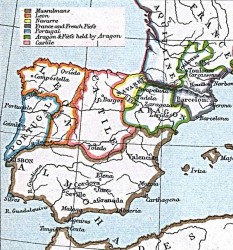
Nestling at the southwestern-most tip of Europe, the Iberian Peninsula has long held charms for the rest of the continent. It is still one of the most popular destination for west-European holidaymakers seeking a mixture of sun and exoticism. In the world of classical music, it has attracted composers from the Neapolitan expat Domenico Scarlatti, and French composers like Bizet, Chabrier and Ravel, to Rimsky-Korsakov in far-away St Petersburg. The allure of Hispania is partly due to its geographic location as a peninsula... read more

read more

When the Music Vanishes

12th May 2026

Many of you may think that classical music has already vanished from our streets. The days when a modest-sized city like Europadisc’s home patch in Nottingham could boast no fewer than three specialist classical shops are long gone. In central London, where the likes of Caruso & Co, Farringdon Records, Direction Dean Street and Orchesography plied their trade, even the tenacious Harold Moores in Great Marlborough finally shut up shop in early 2017. Mounting rents, business rates and online competition have been... read more

read more
Five Years of the Spin Doctor!

6th May 2026

A couple of weeks ago, I was told by Europadisc’s proprietor that it is now five years since we first launched the Spin Doctor column. Where has the time gone? The original brief was fairly succinct and deliberately left open to a wide range of options: to write a weekly column, roughly the same length as (or a little longer than) our Disc of the Week reviews, on any subject broadly related to recorded classical music. As the first columns appeared while the knock-on effects of the Covid pandemic were still being felt, the... read more

read more
Michael Tilson Thomas (1944–2026)

28th April 2026

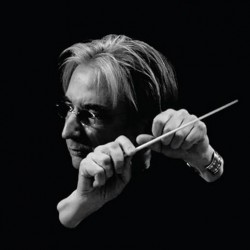
For over half a century, the conductor, pianist, composer and pedagogue Michael Tilson Thomas, who has died at the age of 81, cut a distinctive figure on the international musical scene. Slim, graceful, often balletic on the podium, he brought a unique mixture of refinement and vitality to his music-making. A protégé and friend of Leonard Bernstein, he was just as committed to the championing of American music, though his tastes extended perhaps further, from Gershwin and Ives to Lou Harrison and Morton Feldman. And in the... read more

read more
View Full Archive