 FREE UK SHIPPING OVER £35!
The Spin Doctor Europadisc's Weekly Column
Music of the Iberian Peninsula: Beginnings
19th May 2026
19th May 2026
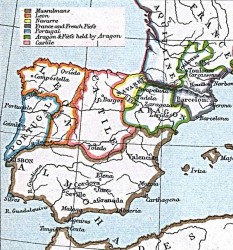 Nestling at the southwestern-most tip of Europe, the Iberian Peninsula has long held charms for the rest of the continent. It is still one of the most popular destination for west-European holidaymakers seeking a mixture of sun and exoticism. In the world of classical music, it has attracted composers from the Neapolitan expat Domenico Scarlatti, and French composers like Bizet, Chabrier and Ravel, to Rimsky-Korsakov in far-away St Petersburg. The allure of Hispania is partly due to its geographic location as a peninsula separated from the rest of Europe by the Pyrenees and by the basin of the river Ebro which gives ‘Iberia' its name. As consequential for its rich history has been its proximity to the northern tip of Africa: barely eight miles at the Strait of Gibraltar.
The classical music of Spain and Portugal has been shaped by centuries of Roman, Jewish, Moorish, Christian, and folk influences. Although often overshadowed by the dominant musical traditions of Germany, Italy, and France, Iberian classical music possesses a distinctive character marked in popular perception by rhythmic vitality, expressive melodies, and strong regional identity. Spanish classical music, in particular, is renowned for incorporating elements of flamenco, dance rhythms, and guitar-inspired textures into orchestral and piano compositions. Composers such as Isaac Albéniz, Enrique Granados, and Manuel de Falla helped establish a national musical style during the late 19th and early 20th centuries, blending Romantic traditions with Spanish folk idioms.
At the southwestern extreme of the peninsula, Portuguese classical music developed along a somewhat different path, strongly influenced by sacred music and court traditions. During the Baroque era, composers such as João de Sousa Carvalho contributed to the flourishing of opera and religious music in Lisbon. Portugal is also closely associated with the emotional folk tradition of fado, which, although not strictly classical, has influenced Portuguese art music through its themes of longing and melancholy. Across both nations, classical music has served as an expression of national identity and cultural heritage.
Beginnings: Mozarabic chant and the Middle Ages
The medieval music of the Iberian Peninsula occupies a unique and influential position in the cultural history of Europe. Situated at the crossroads of Christian, Muslim, and Jewish civilisations, medieval Iberia produced a remarkably diverse musical tradition between the eighth and fifteenth centuries. The coexistence of these religious and cultural communities, particularly during the period known as the Convivencia, allowed for the exchange of artistic ideas that shaped not only Iberian music but also the broader development of European musical culture. From the sacred chants of Christian monasteries to the sophisticated court music of Al-Andalus and the poetic songs of Jewish communities, medieval Iberian music reflects the peninsula’s extraordinary cultural complexity.
One of the earliest and most important musical traditions in medieval Iberia was the Mozarabic chant, also known as Visigothic or Old Hispanic chant. Before the spread of the Roman liturgy, Christians in the Iberian Peninsula practiced their own liturgical rite under Visigothic rule. Even after the Muslim conquest of 711, many Christians continued to preserve this religious music within Muslim-controlled territories. First documented by archbishop and polymath Isidore of Seville (c.560–636), by which time it was already well-established, Mozarabic chant differed from Gregorian chant in both its melodic structure and its liturgical organisation. Although much of its precise sound has been lost because of incomplete notation systems, surviving manuscripts suggest a rich and ornate vocal tradition. The eventual imposition of the Roman rite from the beginning of the Reconquista in the 11th century, encouraged by political and religious reforms linked to the Papacy and the kingdom of Castile, led to the gradual decline of the Mozarabic tradition. Nevertheless, it remains an important symbol of Iberia’s early medieval Christian identity.
The Muslim conquest of Iberia brought profound musical transformations. Under the Umayyad rulers of Al-Andalus, particularly in cities such as Córdoba, Seville, and Granada, music flourished as an essential aspect of courtly life. Islamic Spain became one of the great intellectual and artistic centres of the medieval world. Musicians and scholars from the Middle East introduced sophisticated theories of rhythm, melody, and performance that deeply influenced Iberian culture.
Among the most celebrated figures associated with Andalusian music was the musician and polymath Ziryab (c.789–c.857), who arrived in Córdoba in the ninth century from Baghdad. Ziryab revolutionised musical practice in Al-Andalus by introducing new musical forms, refining court etiquette, and developing innovations in instrument design and vocal performance. He is often credited with adding a fifth string to the oud, the ancestor of the European lute, and with establishing one of the earliest formal music schools in Europe. His influence extended beyond music into fashion, cuisine, and cultural refinement, making him a legendary figure in Andalusian history.
Andalusian music itself was highly sophisticated. It emphasised melodic modes known as maqamat and rhythmic cycles that guided both vocal and instrumental performance. Poetry and music were closely intertwined, particularly in the muwashshah and zajal, poetic forms that emerged in Al-Andalus and often blended Arabic with local Romance languages. These forms reveal the multicultural environment of medieval Iberia, where linguistic and artistic boundaries were fluid. Musical instruments such as the oud, rebab, qanun, and various percussion instruments contributed to a rich sonic environment that would later influence European instrumental traditions.
Jewish communities in medieval Iberia also contributed significantly to musical culture. Jewish musicians often participated in both Christian and Muslim courts, serving as performers, poets, and cultural intermediaries. Hebrew liturgical music absorbed elements from surrounding Arabic and Christian traditions, creating a distinctive Sephardic musical identity. Secular Jewish poetry, especially during the so-called Golden Age of Jewish culture in Al-Andalus, often followed Arabic poetic and musical conventions. Figures such as Yehuda Halevi (c.1075–1141) composed works that reflected this fusion of Hebrew spirituality and Arabic artistic influence.
The Christian kingdoms of northern Iberia gradually developed their own musical traditions as the Reconquista advanced southward. Monasteries and cathedrals became centres of musical education and manuscript production. Gregorian chant eventually replaced Mozarabic chant in most regions (imposed by the centralising 11th-century Pope Gregory VII), linking Iberian Christian worship more closely with the rest of Western Europe. Yet local traditions persisted, and Iberian sacred music retained distinctive characteristics.
One of the most important musical manuscripts from medieval Spain is the Cantigas de Santa Maria, compiled in the thirteenth century during the reign of Alfonso X (‘El Sabio’: the Wise) of Castile (1221–1284). This remarkable collection contains more than four hundred songs dedicated to the Virgin Mary, written in the Galician-Portuguese language. The Cantigas are notable not only for their music and poetry but also for their detailed illustrations depicting medieval musicians and instruments. The songs combine sacred devotion with elements of popular and courtly music, revealing the interaction between learned and vernacular traditions.
The Cantigas de Santa Maria demonstrate the multicultural nature of Alfonso X’s court, where Christian, Muslim, and Jewish scholars collaborated on artistic and intellectual projects. The melodies show influences from Gregorian chant, troubadour song, and Andalusian musical traditions, while instruments depicted in the manuscript include lutes, harps, fiddles, drums, and flutes, illustrating the diversity of medieval Iberian musical practice.
Secular music also played an important role throughout the peninsula. Troubadours and minstrels travelled among courts and towns, performing songs about love, heroism, satire, and politics. In the Christian kingdoms, the influence of Occitan troubadour culture from southern France became particularly significant during the 12th and 13th centuries. Courtly love poetry spread through Iberia, blending with local traditions to produce distinctive forms of lyric expression.
The interaction between oral and written traditions was central to medieval Iberian music. Much music was transmitted orally (as Mozarabic chant had been, to the frustration of modern scholars), especially among popular performers and rural communities. At the same time, monasteries and royal courts increasingly used musical notation to preserve liturgical and courtly repertories. The development of notation allowed for greater musical complexity and facilitated the spread of compositions across regions.
Instruments occupied a prominent place in medieval Iberian music. The cultural exchanges of the peninsula enriched the variety of available instruments and performance styles. Many instruments introduced through Islamic culture eventually became standard in European music. The lute, rebec, and various percussion instruments illustrate the deep impact of Andalusian musical traditions on later European developments. Instrumental music often accompanied dancing, storytelling, and ceremonial occasions, though purely instrumental compositions were less frequently written down.
By the late medieval period, the political and religious landscape of Iberia was changing dramatically. The Christian reconquest culminated in the fall of Granada in 1492, ending Muslim political rule in the peninsula. That same year also marked the expulsion of many Jews from Spain. These events profoundly altered the multicultural environment that had characterised medieval Iberian society for centuries. Yet the musical legacy of this coexistence endured. Sephardic Jews carried Iberian musical traditions into exile across the Mediterranean, while Andalusian musical influences survived in North Africa and continued to shape Spanish music for generations.
The medieval music of the Iberian Peninsula was the product of an extraordinary convergence of cultures. Christian liturgical chant, Islamic court music, and Jewish poetic traditions interacted in ways that produced one of the richest musical landscapes of medieval Europe. The peninsula’s music reflected not only religious devotion and artistic sophistication but also the complex realities of coexistence, exchange, and conflict. Through manuscripts such as the Cantigas de Santa Maria, the legacy of figures like Ziryab, and the enduring traditions of Sephardic and Andalusian music, medieval Iberia left a lasting imprint on the history of world music.
Few performers have done as much to champion the richness of Hispanic music in all its richness and wider context than Jordi Savall, whose recordings of music from the Cantigas de Santa Maria, like his more wide-ranging (and chronologically organised) ‘Granada 1013-1526’ are required listening for anyone interested in this fascinating period of artistic growth in the Iberian Peninsula. Similarly, Marcel Pérès’s investigations into Mozarabic chant with his Ensemble Organum resulted in an important 1994 Harmonia Mundi recording; although currently deleted, Pérès returned to the repertoire (alongside contemporaneous Arabic music) in the 2021 album ‘In memoria eterna’.
Recommended recordings:
In memoria eterna: A Spiritual Vigil for the New Century (Ensemble Organum/Pérès) HMM905319
Granada 1013-1526 (Hesperion XXI, La Capella Reial de Catalunya/Savall) AVSA9915
Alfonso X El Sabio: Cantigas de Santa Maria (Hesperion XX, La Capella Reial de Catalunya/Savall) AVSA9923
Alfonso X El Sabio: Cantigas de Santa Maria (Capella de Ministrers/Magraner) CDM2150
Latest Posts
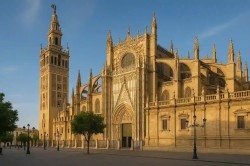
Music of the Iberian Peninsula, Part 2: ‘O quam gloriosum’ – The Spanish and Portuguese Golden Age
2nd June 2026
Over the past fortnight, I’ve been bathed in the most glorious, radiant, transformative light. Not the UK’s recent unseasonable heatwave, but the extraordinary vocal polyphony of the Siglo de Oro: the Spanish (and Portuguese) ‘Golden Century’. Extending from the late 15th to the early 17th century, this was a time of remarkable artistic flowering on the Iberian Peninsula, coinciding with the emergence of Spain and Portugal as global imperial powers with extensive colonial territories in the Americas, Africa and Asia. The... read more
read more
‘Call Me Flott’: A Tribute to Felicity Lott
26th May 2026
The acclaimed lyric soprano Felicity Lott, who has died at the age of 79, was an example of that rare breed among international singers: someone who combined star quality, wit, intelligence and humanity. During her half-century career she stood out for the refinement, clarity and textual responsiveness she brought to the music of Mozart and Richard Strauss, at a time when specialism in the former and sheer vocal power and OTT theatricality in the latter were increasingly the norm. These same strengths characterised her wider... read more
read more
When the Music Vanishes
12th May 2026
Many of you may think that classical music has already vanished from our streets. The days when a modest-sized city like Europadisc’s home patch in Nottingham could boast no fewer than three specialist classical shops are long gone. In central London, where the likes of Caruso & Co, Farringdon Records, Direction Dean Street and Orchesography plied their trade, even the tenacious Harold Moores in Great Marlborough finally shut up shop in early 2017. Mounting rents, business rates and online competition have been... read more
read more
Five Years of the Spin Doctor!
6th May 2026
A couple of weeks ago, I was told by Europadisc’s proprietor that it is now five years since we first launched the Spin Doctor column. Where has the time gone? The original brief was fairly succinct and deliberately left open to a wide range of options: to write a weekly column, roughly the same length as (or a little longer than) our Disc of the Week reviews, on any subject broadly related to recorded classical music. As the first columns appeared while the knock-on effects of the Covid pandemic were still being felt, the... read more
read more
Michael Tilson Thomas (1944–2026)
28th April 2026
For over half a century, the conductor, pianist, composer and pedagogue Michael Tilson Thomas, who has died at the age of 81, cut a distinctive figure on the international musical scene. Slim, graceful, often balletic on the podium, he brought a unique mixture of refinement and vitality to his music-making. A protégé and friend of Leonard Bernstein, he was just as committed to the championing of American music, though his tastes extended perhaps further, from Gershwin and Ives to Lou Harrison and Morton Feldman. And in the... read more
read more