 FREE UK SHIPPING OVER £35!
The Spin Doctor Europadisc's Weekly Column
Five Years of the Spin Doctor!
6th May 2026
6th May 2026
 A couple of weeks ago, I was told by Europadisc’s proprietor that it is now five years since we first launched the Spin Doctor column. Where has the time gone? The original brief was fairly succinct and deliberately left open to a wide range of options: to write a weekly column, roughly the same length as (or a little longer than) our Disc of the Week reviews, on any subject broadly related to recorded classical music. As the first columns appeared while the knock-on effects of the Covid pandemic were still being felt, the challenges facing musicians, audiences and the classical music business at large featured prominently. Amid the enforced isolation of the lockdowns, many of you sought comfort in recordings, and Rachel in our packing department put in a truly Herculean effort to keep the deliveries flowing.
The challenges for live music making were enormous, and some of them were reflected in our interview with pianist Charles Owen, coinciding with his release of an album of the first book of Liszt’s Années de pèlerinage. In the ‘Covid years’, the making of recordings was severely affected, with studio sessions having to comply with social distancing rules, and ‘live’ concerts recorded and broadcast with only ‘virtual’ audiences in attendance via streaming. The sight of an empty Royal Albert Hall for the Last Night of the Proms remains a vivid one. In the aftermath of those years, classical music has struggled to regain previous levels of audiences, an effort made all the more difficult by challenging economic and political circumstances, with continued budget and funding cuts, and many hitherto unassailable organisations and ensembles now fighting for survival. A cultural shift will be evident to anyone who has tuned in to BBC Radio 4’s Desert Island Discs over the last decade or so. Our frequent observations on these subjects have drawn lively responses from many of you, as has the move (entirely welcome, in my view) towards greater exposure for women composers and those from so-called ‘minority’ backgrounds (i.e. the global majority). In these latter respects, at least, classical music has made enormous strides in the last few years.
One subject that repeatedly prompts lively feedback is the state of opera productions, with many of you leaving us in no doubt that you feel the phenomenon of ‘director’s opera’ (or Regieoper) has gone too far. This is a topic that looks set to run and run; I continue to believe that productions which engage new audiences while challenging existing ones in lively and imaginative ways are a good thing, even if some of the more radical experiments have come up with their fair share of turkeys. Better this, however, than the sterility of a continued diet of the same old tired productions in traditional dress, with singers whose acting abilities play not just second but third or fourth fiddle to their vocal prowess. The bad old days of characters just standing their in ornate costume and singing for all their worth, whether in Baroque opera, the Italian repertoire or Wagner, with no thought to action, motivation or dramatic engagement, are surely gone forever.
There is a similar uphill struggle faced in persuading many audiences to forego the tried-and-tested ‘standard repertoire’ in favour of new and neglected works (the dreaded ‘New Music’). Yet classical music, like the other arts, needs constant renewal if it is to survive and thrive, and not only because that is the surest way by which it can hope to meet the ever-shifting challenges it faces. If there were no development or renewal in music, almost the entire classical repertoire would simply never have come into existence in the first place. We need to embrace change even while respecting and loving the ever-evolving traditions of the art form.
The yearly round of composer anniversaries continues to provide some of our most popular features, and we must hope that next year’s events marking the 200th anniversary of Beethoven’s death make up for the greatly curtailed festivities for his 250th birthday in 2020. Anniversary jamborees are the bread and butter for many record labels, as they are for performing organisations, and every so often even some living musicians make it into the limelight, with composers György Kurtág and Betsy Jolas both marking their centenaries this year.
More sombre are the musical departures which feature every year: the one I have felt most keenly in the past five years is that of Harrison Birtwistle, whose music for me still towers above all other late-20th-century British composers, and much of whose output (including several operas and music theatre pieces) still needs recording. Perhaps his centenary in 2034 will provide the opportunity? If so, it will be a couple of years after the big Haydn celebrations of 2032, which will hopefully bring the completion of Giovanni Antonini’s consistently invigorating survey of the complete symphonies on the Alpha Classics label, one of the most exciting recording projects of recent years.
Haydn was one of music’s great humourists, and we will shortly be returning to a subject we promised to feature more of some time ago: music and humour. A long overdue exploration of music of the Iberian peninsula (along the lines of our exploration of the music of Finland, which proved popular with so many of you, and was a voyage of discovery for me) is also in the pipeline. So is the return of our periodic ‘Works in Focus’ feature, zooming in on repertoire favourites and a few rarities as well. Some of you have occasionally requested a blog that enables the publication of comments and feedback, but the logistics of such an undertaking (requiring time-intensive monitoring and moderating of the kind we cannot provide) are sadly prohibitive. The exploration of subjects in greater depth over the course of a mini ‘series’ is something I hope to revive.
I try to read all your thoughtful responses and suggestions, and attempt to respond to most within a few days. Differences of opinion are always healthy, but please bear in mind that any experiences expressed in the Spin Doctor are purely my personal thoughts, and are neither set in stone nor intended to offend or upset (to provoke, perhaps yes). Your thoughts are always welcome and helpful, and will help to shape the Spin Doctor for (we hope!) the next five years. Thank you all for your encouragement over the last five!
Latest Posts
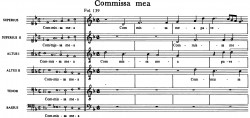
Music of the Iberian Peninsula, Part 3: More observations on the Golden Age
16th June 2026
Our last visit to the Iberian peninsula, a fortnight ago, was an insanely ambitious, necessarily broad-brush survey of the Spanish and Portuguese Golden Age, covering vocal and instrumental music, the sacred and the secular. This week, we take a more concise and (I hope) focussed look at a few of the sacred vocal masterpieces which exemplify the particular fervour and intensity of this remarkable period of musical history. They reflect the special place the peninsula had as a bulwark against the Reformation that had taken... read more
read more
Music of the Iberian Peninsula, Part 3: More observations on the Golden Age
16th June 2026
Our last visit to the Iberian peninsula, a fortnight ago, was an insanely ambitious, necessarily broad-brush survey of the Spanish and Portuguese Golden Age, covering vocal and instrumental music, the sacred and the secular. This week, we take a more concise and (I hope) focussed look at a few of the sacred vocal masterpieces which exemplify the particular fervour and intensity of this remarkable period of musical history. They reflect the special place the peninsula had as a bulwark against the Reformation that had taken... read more
read more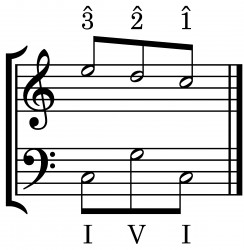
Carl Schachter, Arnold Whittall, and why music analysis matters
9th June 2026
Two recent deaths have robbed the world of music analysis of a pair of its most revered figures. Carl Schachter, who has died at the age of 93, was a pupil of (and subsequently collaborator with) Felix Salzer, himself one of Heinrich Schenker’s foremost students. Schachter continued to enrich and broaden the teaching of Schenkerian analysis, including important work on its application to issues of rhythm (which Schenker, focussing on harmonic and contrapuntal matters, largely bypassed). His influence went well beyond the... read more
read more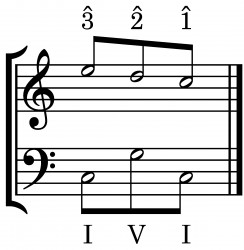
Carl Schachter, Arnold Whittall, and why music analysis matters
9th June 2026
Two recent deaths have robbed the world of music analysis of a pair of its most revered figures. Carl Schachter, who has died at the age of 93, was a pupil of (and subsequently collaborator with) Felix Salzer, himself one of Heinrich Schenker’s foremost students. Schachter continued to enrich and broaden the teaching of Schenkerian analysis, including important work on its application to issues of rhythm (which Schenker, focussing on harmonic and contrapuntal matters, largely bypassed). His influence went well beyond the... read more
read more
Music of the Iberian Peninsula, Part 2: ‘O quam gloriosum’ – The Spanish and Portuguese Golden Age
2nd June 2026
Over the past fortnight, I’ve been bathed in the most glorious, radiant, transformative light. Not the UK’s recent unseasonable heatwave, but the extraordinary vocal polyphony of the Siglo de Oro: the Spanish (and Portuguese) ‘Golden Century’. Extending from the late 15th to the early 17th century, this was a time of remarkable artistic flowering on the Iberian Peninsula, coinciding with the emergence of Spain and Portugal as global imperial powers with extensive colonial territories in the Americas, Africa and Asia. The... read more
read more