 FREE UK SHIPPING OVER £35!
The Spin Doctor Europadisc's Weekly Column
Carl Schachter, Arnold Whittall, and why music analysis matters
9th June 2026
9th June 2026
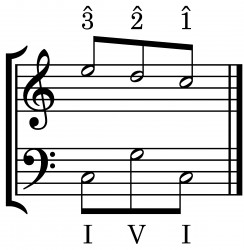
Two recent deaths have robbed the world of music analysis of a pair of its most revered figures. Carl Schachter, who has died at the age of 93, was a pupil of (and subsequently collaborator with) Felix Salzer, himself one of Heinrich Schenker’s foremost students. Schachter continued to enrich and broaden the teaching of Schenkerian analysis, including important work on its application to issues of rhythm (which Schenker, focussing on harmonic and contrapuntal matters, largely bypassed). His influence went well beyond the corridors of academia, however: among his students Schachter counted such names as Murray Perahia, Richard Goode, Frederica von Stade and Myung-whun Chung. Schenker – who was concerned as much with performance as analysis per se – would have been proud that Schachter kept this flame alive.
With the death, at the age of 90, of Arnold Whittall, British musicology has lost not only one of its most distinguished members, but a committed champion of 20th-century and contemporary music, on which he published widely. As well as a series of highly influential books and academic articles on those subjects, he was a regular reviewer for Gramophone magazine, so that his name and writing will be familiar to many who are barely aware of the esoteric world of music analysis. As a lecturer in Nottingham in the late 1960s, he established an MA course in composition which counted Colin Matthews among its alumni, and in Cardiff set up a similar postgraduate course in the analysis of modern music. From 1975 onwards he taught at King’s College London, and from 1982 was Professor of Music Analysis there (a post created for him), establishing the MMus course in Analysis as well as supervising doctoral research. He continued teaching there well beyond his official retirement in 1996. Whittall’s greatest musical love, however, was Wagner, and his writings on the subject, discussing complex issues with rare lucidity and thoughtfulness, are typical of his output as a whole.
To many music lovers (and, it must be admitted, musicians too), music analysis may seem an impossibly rarefied activity, designed for those privileged few who are locked away in their ivory towers. Yet both Schachter and Whittall proved otherwise. Without ever compromising standards, they ensured that their work informed wider musical activity, whether performance, composition or the mere act of listening. Music analysis involves examining the structure, elements, and meaning of a musical work in order to understand its construction and impact. Far from reducing music to technical details, it can enrich appreciation by revealing the artistic choices that shape a composition. It can thus deepen appreciation, inform performance and composition, preserve cultural understanding, and enhance critical thinking.
One of the most important reasons music analysis matters is that it deepens listeners' appreciation of music. Most people can recognise when a piece of music sounds beautiful, exciting, or emotional, but analysis helps explain why those reactions occur. By examining elements such as melody, harmony, rhythm, texture, form, and dynamics, listeners can uncover the techniques composers use to create specific effects. For example, a sudden change from a major key to a minor key may evoke sadness (or, as in Mahler, something altogether more elemental), while a gradual increase in volume can build tension and anticipation. Understanding such musical devices allows listeners to engage with music on a more meaningful level. Rather than experiencing music only emotionally, they can also appreciate the craftsmanship and creativity involved in its creation.
Music analysis also reveals the complexity hidden beneath seemingly simple works. A popular song with a catchy melody may contain sophisticated harmonic progressions, rhythmic patterns, or production techniques that are not immediately obvious. Similarly, classical compositions often feature intricate relationships between themes and motifs that become apparent only through careful examination. When listeners recognise these details, they gain a greater respect for the skill and imagination of composers and performers. Analysis transforms music from background entertainment into a rich artistic experience worthy of thoughtful exploration, as the ‘functional analyses’ presented by Hans Keller on Radio 3 decades ago vividly proved. Not for nothing did such programmes (and those presented by Denis Matthews) win a dedicated following.
Music analysis can also play a crucial role in musical performance. Performers are not merely responsible for playing the correct notes; they must also strive to communicate the emotional and artistic content of a piece. Analysis helps musicians understand the structure and meaning of the music they perform. By studying phrases, harmonic progressions, and formal organisation, performers can make informed decisions about tempo, dynamics, articulation, and expression. These decisions allow them to present a more convincing and engaging interpretation.
For example, a pianist analysing a sonata may identify the climax of a movement and shape the performance to emphasise that moment. That climax, however, may be decided by more factors than mere volume or textural build-up. Harmonic and melodic structure may also play a part in locating crucial musical moments. Similarly, a singer studying the relationship between melody and text may discover how musical phrases reinforce the emotional content of the lyrics. Without analysis, performers may rely solely on instinct or imitation.
While intuition is valuable, analysis provides a foundation for artistic choices and helps performers communicate more effectively with audiences. In this way, analysis bridges the gap between the written score and the listener's experience. It is worth remembering that Wilhelm Furtwängler, that seemingly most intuitive and instinctive of conductors, was also an avid reader of Schenker’s publications, and one of his most prominent admirers. By subsuming Schenkerian insight into his visionary style, he ensured that the seemingly volatile surface of his performances was underpinned by a rigorous understanding of the work’s structure and long-term harmonic and melodic goals.
Music analysis can be equally important for composers and songwriters. By studying existing works, composers learn how music is constructed and how various techniques produce specific effects. Analysis allows them to understand what makes certain pieces successful and how different styles have evolved over time. Through examining the works of past and present musicians, composers gain tools that can inform their own creative processes.
Many great composers developed their skills by analysing the music of those who came before them. (The young Johann Sebastian Bach, for instance, copied out not only many works by other members of the Bach clan, but also Renaissance and Baroque masters who had come before him.) By studying structure, orchestration, harmony, and thematic development, composers learned techniques that they later adapted and transformed into original creations. Analysis does not limit creativity; instead, it provides knowledge that can inspire innovation. Just as writers study literature and artists study paintings, musicians benefit from understanding the works that have shaped their field. Analysis enables composers to build upon tradition while contributing new ideas to the musical landscape.
Beyond its practical applications, music analysis also contributes to cultural and historical understanding. Music reflects the values, beliefs, experiences, and identities of the societies that create it. Through more broadly defined analysis, one can explore how music relates to historical events, social movements, political ideologies, and cultural traditions. Musical works often serve as valuable historical documents that provide insight into the lives and perspectives of people from different times and places.
For instance, the analysis of folk songs can reveal information about community traditions, migration patterns, and social concerns. The study of protest music can shed light on political struggles and movements for social change. Similarly, examining sacred music can deepen understanding of religious practices and beliefs. In its broadest sense, music analysis extends beyond notes and rhythms; it becomes a means of exploring human history and culture. By preserving and interpreting musical traditions, analysts help ensure that important cultural knowledge is not lost.
In an increasingly globalised world, music analysis can also promote cross-cultural understanding. Different musical traditions often employ unique scales, rhythms, instruments, and forms that may seem unfamiliar to outsiders. Through analysis, listeners can learn to appreciate the distinctive characteristics of diverse musical cultures. This process encourages respect for cultural diversity and helps break down stereotypes or misconceptions. Understanding the structure and context of music from around the world fosters a broader perspective on human creativity and expression.
Furthermore, music analysis develops critical thinking skills that are valuable far beyond the field of music. Analysis requires careful observation, pattern recognition, interpretation, and evaluation. Analysts must identify relationships between musical elements, formulate explanations, and support their conclusions with evidence. These intellectual processes are similar to those used in disciplines such as literature, history, science, and philosophy.
Some critics argue that music analysis diminishes the emotional power of music by reducing it to technical details. According to this view, overanalysing a piece may distract listeners from simply enjoying it. However, this criticism misunderstands the purpose of analysis. Effective analysis does not replace emotional experience; rather, it enhances it. Understanding how a composer creates a particular emotional effect can make that effect even more meaningful, taking us beyond the mere pegging of biographical fact or myth to certain works. Just as learning about literature can deepen appreciation for a novel, studying music can enrich the listening experience without diminishing its emotional impact.
In fact, many musicians and listeners find that analysis increases their appreciation of music. Discovering hidden patterns, recurring themes, and structural relationships can create a sense of excitement and wonder. Analysis allows listeners to hear familiar works in new ways and uncover layers of meaning that might otherwise go unnoticed. Instead of taking away from the beauty of music, analysis often reveals just how remarkable that beauty truly is.
The best way in which to honour the work of Carl Schachter, Arnold Whittall and other giants in the field is to carry it further, not giving way to an increasingly dumbed-down curriculum and public discourse but instead demonstrating the difference which informed and clearly communicated analytical thought can enrich performance, composition and active listening. A subject which has been known to strike terror in the hearts of undergraduates needs its best champions to carry the flame forward, and they will find constant inspiration and food for thought in the publications of both Schachter and Whittall. Eternal memory!
Latest Posts
Carl Schachter, Arnold Whittall, and why music analysis matters
9th June 2026
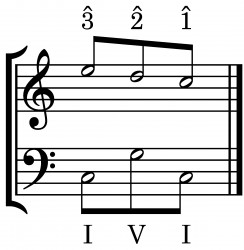
Two recent deaths have robbed the world of music analysis of a pair of its most revered figures. Carl Schachter, who has died at the age of 93, was a pupil of (and subsequently collaborator with) Felix Salzer, himself one of Heinrich Schenker’s foremost students. Schachter continued to enrich and broaden the teaching of Schenkerian analysis, including important work on its application to issues of rhythm (which Schenker, focussing on harmonic and contrapuntal matters, largely bypassed). His influence went well beyond the... read more
read more
Music of the Iberian Peninsula, Part 2: ‘O quam gloriosum’ – The Spanish and Portuguese Golden Age
2nd June 2026
Over the past fortnight, I’ve been bathed in the most glorious, radiant, transformative light. Not the UK’s recent unseasonable heatwave, but the extraordinary vocal polyphony of the Siglo de Oro: the Spanish (and Portuguese) ‘Golden Century’. Extending from the late 15th to the early 17th century, this was a time of remarkable artistic flowering on the Iberian Peninsula, coinciding with the emergence of Spain and Portugal as global imperial powers with extensive colonial territories in the Americas, Africa and Asia. The... read more
read more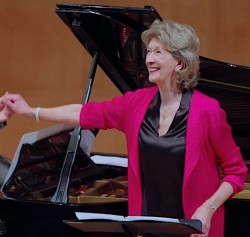
‘Call Me Flott’: A Tribute to Felicity Lott
26th May 2026
The acclaimed lyric soprano Felicity Lott, who has died at the age of 79, was an example of that rare breed among international singers: someone who combined star quality, wit, intelligence and humanity. During her half-century career she stood out for the refinement, clarity and textual responsiveness she brought to the music of Mozart and Richard Strauss, at a time when specialism in the former and sheer vocal power and OTT theatricality in the latter were increasingly the norm. These same strengths characterised her wider... read more
read more
Music of the Iberian Peninsula: Beginnings
19th May 2026
Nestling at the southwestern-most tip of Europe, the Iberian Peninsula has long held charms for the rest of the continent. It is still one of the most popular destination for west-European holidaymakers seeking a mixture of sun and exoticism. In the world of classical music, it has attracted composers from the Neapolitan expat Domenico Scarlatti, and French composers like Bizet, Chabrier and Ravel, to Rimsky-Korsakov in far-away St Petersburg. The allure of Hispania is partly due to its geographic location as a peninsula... read more
read more
When the Music Vanishes
12th May 2026
Many of you may think that classical music has already vanished from our streets. The days when a modest-sized city like Europadisc’s home patch in Nottingham could boast no fewer than three specialist classical shops are long gone. In central London, where the likes of Caruso & Co, Farringdon Records, Direction Dean Street and Orchesography plied their trade, even the tenacious Harold Moores in Great Marlborough finally shut up shop in early 2017. Mounting rents, business rates and online competition have been... read more
read more