 FREE UK SHIPPING OVER £35!
The Spin Doctor Europadisc's Weekly Column
Michael Tilson Thomas (1944–2026)
28th April 2026
28th April 2026
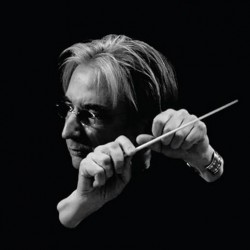 For over half a century, the conductor, pianist, composer and pedagogue Michael Tilson Thomas, who has died at the age of 81, cut a distinctive figure on the international musical scene. Slim, graceful, often balletic on the podium, he brought a unique mixture of refinement and vitality to his music-making. A protégé and friend of Leonard Bernstein, he was just as committed to the championing of American music, though his tastes extended perhaps further, from Gershwin and Ives to Lou Harrison and Morton Feldman. And in the central repertoire, where Bernstein typically painted in bold colours, MTT (as he was universally known) brought a greater subtlety, with supple rhythmic flexibility and softer shading. Like Bernstein, he was an outstanding Mahler conductor, but despite an early stint as musical assistant at Bayreuth in the 1960s he made few forays into the world of opera, although his semi-staged concert performances included a 2021 account of Rimsky-Korsakov’s rarely heard Mlada, and his interest in the Russian repertoire extended from Stravinsky and Prokofiev to Mosolov’s futuristic behemoth The Iron Foundry.
Michael Tilson Thomas was born in Los Angeles on 21 December 1944 to Ted Thomas, a Broadway stage manager who had transferred to the Hollywood film industry, and Roberta (née Meritzer), a high school history teacher. His paternal grandparents, Boris and Bessie Thomashefsky, were leading figures in the Yiddish Theatre District of Manhattan, and beyond them stretched a long line of cantors. An only child, the young Michael showed prodigious musical talent at an early age. By the mid 1960s he was already working with such greats as Heifetz, Piatigorsky, Stravinsky, Copland, Boulez and Stockhausen. In 1969 he won the Koussevitsky Prize, becoming assistant conductor and pianist at the Boston Symphony Orchestra, and was propelled to wider attention when he took over mid-concert for an ailing William Steinberg. His first recordings Deutsche Grammophon recordings followed soon after, including an acclaimed performance of Tchaikovsky’s First Symphony which has recently been rereleased on high-end vinyl as part of DG’s ‘Original Source’ series.
From 1971 to 1979 Thomas was music director of the Buffalo Philharmonic, and during the same period also found an ideal outlet for his communicative nature with the New York Philharmonic’s Young People’s Concerts. That same commitment to younger musicians and audiences led to his founding in 1987 of the New World Symphony, an orchestral academy based in Miami Beach, which Thomas led until he finally stepped down as artistic director in June 2022. Later, in the early 2000s as music director of the San Francisco Symphony, he launched the educational project Keeping Score, comprising documentary-style television broadcasts alongside live concert programmes, in a similar vein to Bernstein’s pioneering 1960s broadcasts. Both the concerts and the background documentaries are available on disc, and give valuable insight into this essential components of the conductor’s work.
Before his lengthy spell at the San Francisco Symphony, however, came a seven-year spell as principal conductor of the London Symphony Orchestra in succession to Claudio Abbado, bringing welcome recording work including music by Mahler and Janáček (including a finely-shaped account of the Glagolitic Mass) as well as American classics and choral rarities by Beethoven, all for the Columbia/Sony label and many now much sought-after by collectors. It was during this period that the LSO established its ‘Discovery’ programme, as well as consolidating its home in City of London’s Barbican Centre. By the time he left the LSO in 1995, Thomas’s combination of collegiality, flair and taste for unusual programming had left a valuable legacy, distinct from those of his two immediate predecessors, Previn and Abbado.
However, the defining partnership of MTT’s career was his music directorship of the San Francisco, for a period of 25 years from 1995. Accompanied by a high-profile publicity campaign, and giving prominent billing on each programme to at least one work by an American composer, Thomas brought new audiences to Symphony Hall, and the establishment of the orchestra’s own label brought added lustre to their partnership. A highlight of the partnership was a cycle of recordings of a composer for whom MTT had always shown deep sympathy: Gustav Mahler. His approach to the scores, more malleable, less granitic than some great Mahlerians of the past, nevertheless revealed new facets in the symphonies and vocal music, and (as was typical of MTT’s performances generally) no two accounts of the same work were ever identical, frequently rethought in challenging ways.
Together with music by a variety of his compatriots, Thomas’s later years brought a steady stream of his own works, non-dogmatic and in a style that combined neoclassical elegance with a spikey edginess. A four-disc set of MTT’s own music, released on the Pentatone label in 2024 and including such works as From the Diary of Anne Frank, the Poems of Emily Dickinson and Whitman Songs, is required listening for anyone who wants to gain a deeper understanding of Thomas’s musical identity.
Grace: The Music of Michael Tilson Thomas PTC5187355
Michael Tilson Thomas: Complete Deutsche Grammophon & Argo Recordings ELQ4846836
Michael Tilson Thomas - From the Diary of Anne Frank, Meditations on Rilke SFS0079
Orff - Carmina Burana; Gershwin - American in Paris, Rhapsody in Blue; Beethoven - Late Choral Music 2CDLX7369
Ives - Symphonies 3 & 4 SFS0076
R Strauss - Till Eulenspiegel, Ein Heldenleben (LSO) ICAD5031 (DVD)
Mahler - Songs with Orchestra (Graham, Hampson, SFS) 82193600362
Keeping Score: Copland and the American Sound (SFS) 82193600159 (DVD)
Latest Posts
Music of the Iberian Peninsula, Part 3: More observations on the Golden Age
16th June 2026
Our last visit to the Iberian peninsula, a fortnight ago, was an insanely ambitious, necessarily broad-brush survey of the Spanish and Portuguese Golden Age, covering vocal and instrumental music, the sacred and the secular. This week, we take a more concise and (I hope) focussed look at a few of the sacred vocal masterpieces which exemplify the particular fervour and intensity of this remarkable period of musical history. They reflect the special place the peninsula had as a bulwark against the Reformation that had taken... read more
read more
Music of the Iberian Peninsula, Part 3: More observations on the Golden Age
16th June 2026
Our last visit to the Iberian peninsula, a fortnight ago, was an insanely ambitious, necessarily broad-brush survey of the Spanish and Portuguese Golden Age, covering vocal and instrumental music, the sacred and the secular. This week, we take a more concise and (I hope) focussed look at a few of the sacred vocal masterpieces which exemplify the particular fervour and intensity of this remarkable period of musical history. They reflect the special place the peninsula had as a bulwark against the Reformation that had taken... read more
read more
Carl Schachter, Arnold Whittall, and why music analysis matters
9th June 2026
Two recent deaths have robbed the world of music analysis of a pair of its most revered figures. Carl Schachter, who has died at the age of 93, was a pupil of (and subsequently collaborator with) Felix Salzer, himself one of Heinrich Schenker’s foremost students. Schachter continued to enrich and broaden the teaching of Schenkerian analysis, including important work on its application to issues of rhythm (which Schenker, focussing on harmonic and contrapuntal matters, largely bypassed). His influence went well beyond the... read more
read more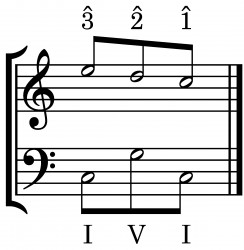
Carl Schachter, Arnold Whittall, and why music analysis matters
9th June 2026
Two recent deaths have robbed the world of music analysis of a pair of its most revered figures. Carl Schachter, who has died at the age of 93, was a pupil of (and subsequently collaborator with) Felix Salzer, himself one of Heinrich Schenker’s foremost students. Schachter continued to enrich and broaden the teaching of Schenkerian analysis, including important work on its application to issues of rhythm (which Schenker, focussing on harmonic and contrapuntal matters, largely bypassed). His influence went well beyond the... read more
read more
Music of the Iberian Peninsula, Part 2: ‘O quam gloriosum’ – The Spanish and Portuguese Golden Age
2nd June 2026
Over the past fortnight, I’ve been bathed in the most glorious, radiant, transformative light. Not the UK’s recent unseasonable heatwave, but the extraordinary vocal polyphony of the Siglo de Oro: the Spanish (and Portuguese) ‘Golden Century’. Extending from the late 15th to the early 17th century, this was a time of remarkable artistic flowering on the Iberian Peninsula, coinciding with the emergence of Spain and Portugal as global imperial powers with extensive colonial territories in the Americas, Africa and Asia. The... read more
read more