FREE UK SHIPPING OVER £35!

The Spin Doctor Europadisc's Weekly Column

Music of the Iberian Peninsula Part 4: The Spanish and Portuguese Baroque

  30th June 2026

30th June 2026

For many music lovers, the Baroque era immediately conjures images of Bach's intricate counterpoint, Handel's majestic choruses, Vivaldi’s dazzling violin concertos or Charpentier’s sumptuous vocal music. Yet on the southwestern edge of Europe another remarkable musical tradition flourished during the seventeenth and early eighteenth centuries. The Iberian Peninsula developed a distinctive Baroque voice that combined religious intensity, courtly sophistication and popular vitality. Drawing upon centuries of cultural exchange between Christian, Jewish and Islamic traditions, Iberian composers created music that was both deeply rooted in local customs and fully conversant with European trends.

Today, thanks to pioneering performers and musicologists, the works of these neglected masters are finally emerging from the archives. Their music reveals a colourful landscape of magnificent cathedral polyphony, dramatic keyboard works, exuberant dances and some of the most expressive sacred vocal music of the period.

Unlike Italy, where opera dominated musical life, or Germany, where Lutheran church music reached extraordinary heights, Spain and Portugal remained strongly centred on the Roman Catholic Church. Great cathedrals in Seville, Toledo, Zaragoza, Braga and Lisbon served not only as places of worship but also as major centres of musical innovation. Every important cathedral maintained highly trained choirs, orchestras and resident composers whose responsibilities ranged from composing masses to directing elaborate celebrations for feast days.

Yet Iberian music was far from austere. Popular dance rhythms – including the folía, chacona, zarabanda and canarios – flowed freely between court, church and street. Guitar traditions flourished alongside sophisticated keyboard music, while composers readily absorbed influences arriving from Italy without abandoning their own musical identity.

Although technically a composer of the late Renaissance rather than the mature Baroque, Tomás Luis de Victoria (1548–1611) cast a long shadow over Spanish sacred music. His sublime Officium defunctorum (1605), often regarded as one of the greatest Requiem settings ever written, established an ideal of expressive spirituality that later Iberian composers sought to emulate. Victoria's luminous polyphony remained a touchstone throughout the seventeenth century, even as newer Baroque styles gradually entered Spain from Italy.

The most significant figure in early Spanish theatrical music was Juan Hidalgo (1614–1685), harpist, composer and leading musician at the court of Philip IV. Hidalgo helped establish the uniquely Spanish genre known as the zarzuela, blending spoken drama with vocal and instrumental music. His collaboration with dramatist Pedro Calderón de la Barca produced works such as Celos aun del aire matan (1660), often regarded as Spain's first true opera. Unlike Italian opera, Hidalgo's works favour clarity of text, elegant dance rhythms and vivid dramatic pacing over extended displays of vocal virtuosity. They demonstrate how Spanish composers adapted European fashions while preserving their own theatrical traditions.

If Hidalgo laid the foundations of Spanish stage music, Sebastián Durón (1660–1716) expanded its expressive possibilities. Serving as chapel master to Charles II and later Philip V, Durón composed both sacred music and zarzuelas. His theatrical works, including Salir el Amor del Mundo and La Guerra de los Gigantes, display lively orchestration and infectious dance rhythms. His sacred music is equally compelling. Villancicos –  vernacular devotional works performed during major religious festivals (see further below) – allowed Durón to combine sophisticated composition with folk-like melodies and popular rhythms. These pieces reveal a musical culture where sacred and secular influences comfortably coexisted.

The eighteenth century belongs above all to José de Nebra (1702–1768), perhaps the greatest Spanish composer before the arrival of Classical style. Nebra inherited Italian influences while retaining unmistakably Spanish characteristics. His zarzuelas, including Viento es la dicha de Amor and Amor aumenta el valor, sparkle with melodic invention, expressive recitative and colourful orchestration. His sacred compositions – including masses, lamentations and psalm settings – demonstrate remarkable emotional depth. Nebra's music bridges the worlds of Baroque complexity and emerging Classical elegance, making him one of Europe's most fascinating transitional composers.

Perhaps nowhere was Iberian originality more apparent than in keyboard music. Organist Francisco Correa de Arauxo (1584–1654) published Libro de tientos y discursos de música práctica, one of the great monuments of Spanish keyboard literature, 400 years ago, in 1626. His tientos resemble the fantasia or ricercar found elsewhere in Europe but possess a distinctive harmonic boldness and rhythmic freedom. Unexpected dissonances, virtuosic ornamentation and expressive chromatic writing create music of extraordinary individuality.

Blind from infancy, Pablo Bruna (1611–1679), affectionately known as ‘El Ciego de Daroca’, became one of Spain's finest organists. His tientos display dazzling contrapuntal technique alongside imaginative exploitation of the divided keyboard, a uniquely Iberian organ feature that allowed different registrations for the upper and lower halves of the keyboard. This produced striking dialogues between contrasting instrumental colours.

Widely regarded as Spain's greatest Baroque organ composer, Joan Cabanilles (1644–1712) served Valencia Cathedral for almost fifty years. His output includes over 200 tientos, numerous batallas (battle pieces) and liturgical works. The celebrated Batalla imperial evokes military fanfares through brilliant figurations, while his tientos rival the complexity and invention of the finest keyboard music being written anywhere in Europe. Modern organists increasingly recognise Cabanilles as a composer worthy of standing beside Buxtehude and Bach.

Portugal's contribution to Baroque music has often been overshadowed by its larger neighbour, yet it produced composers of exceptional originality. Following the restoration of Portuguese independence in 1640, Lisbon developed into a thriving musical centre. Royal patronage, prosperous trade and close contacts with Italy encouraged a flourishing artistic culture.

Like Victoria, Manuel Cardoso (1566–1650) belongs to the transitional period between Renaissance and Baroque. A Carmelite friar, Cardoso composed magnificent masses, motets and lamentations characterised by rich harmonies and profound spiritual expression. His Missa Miserere mihi Domine remains one of the masterpieces of Portuguese sacred music.

The cosmopolitan João Rodrigues Esteves (1700–1751) studied in Rome before returning to Lisbon. Italian influence is evident in works such as his Missa a 8 vozes, where flowing melodies combine with Portuguese choral traditions. His music illustrates Portugal's increasing engagement with wider European musical developments during the eighteenth century.

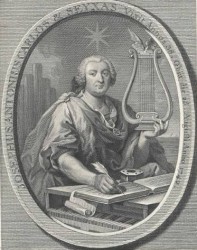
The finest Portuguese keyboard composer was undoubtedly Carlos Seixas (1704–1742). Organist of Lisbon Cathedral from the age of sixteen, Seixas composed over one hundred keyboard sonatas. While Seixas’s style was undoubtedly influenced by that of the Neapolitan émigré Domenico Scarlatti – who spent several years in Portugal before accompanying his student Princess Maria Barbara to Spain upon her marriage to the future Ferdinand VI – Seixas developed an unmistakable musical language of his own. His sonatas range from brilliant virtuoso showpieces to lyrical, introspective works. Rapid hand crossings, sparkling passagework and unexpected harmonic turns reveal an inventive imagination comparable to Scarlatti at his finest. Many modern pianists now programme Seixas alongside Scarlatti and Soler, recognising his importance in the evolution of keyboard music.

Opera arrived relatively late in Portugal but quickly flourished. António Teixeira (1707–1769) composed As Variedades de Proteu, one of the earliest surviving Portuguese operas. Combining Italian dramatic conventions with Portuguese lyricism, his works reflect the cosmopolitan atmosphere of eighteenth-century Lisbon before the catastrophic earthquake of 1755 transformed the city.

Among the most distinctive forms of Spanish and Portuguese Baroque music was the villancico. Originally secular songs, villancicos evolved into festive sacred compositions sung during Christmas, Corpus Christi and other major feasts. Their texts frequently employed regional dialects, pastoral imagery and lively dance rhythms. Composers including Durón, Juan de Araujo, Francisco Valls and countless cathedral chapel masters created vibrant works featuring alternating choruses, soloists and instrumental ensembles. These compositions reveal a church culture that embraced theatricality and popular musical language without sacrificing devotional purpose.

The guitar enjoyed unprecedented popularity, with composers such as Gaspar Sanz (1640–1710) producing influential collections including Instrucción de música sobre la guitarra española. His dances – including canarios, folías and españoletas – remain favourites among modern guitarists. The harp, too, occupied a far more central position than elsewhere in Europe, appearing regularly in both sacred and theatrical music. Spanish organs featured divided keyboards and brilliant reed stops that inspired uniquely colourful repertoire. Percussion instruments – including castanets and tambourines – often appeared in theatrical and festive works, reinforcing the music's rhythmic vitality.

For much of the nineteenth and twentieth centuries, Iberian Baroque music remained neglected outside specialist circles. The overwhelming dominance of Bach, Handel and Vivaldi left relatively little room for Spain's and Portugal's equally fascinating traditions, beyond a smattering of Scarlatti's keyboard sonatas. That situation has changed dramatically over recent decades. Ensembles such as La Capella Reial de Catalunya, Hespèrion XXI, Al Ayre Español and Forma Antiqva, together with conductors including Jordi Savall, Eduardo López Banzo and Paul Hillier, have brought this forgotten repertoire to international audiences through acclaimed recordings and performances. Musicologists continue to uncover manuscripts in cathedral archives, revealing that countless masterpieces remain unpublished and unperformed.

Spanish and Portuguese Baroque music reminds us that Europe's musical history is far richer than the familiar narrative centred on Germany, Italy and France. These composers developed their own solutions to questions of harmony, rhythm, instrumental colour and dramatic expression, creating works that are immediately recognisable yet unmistakably individual. Whether in the ecstatic counterpoint of Victoria's spiritual descendants, the theatrical brilliance of Hidalgo and Nebra, the keyboard virtuosity of Cabanilles and Seixas or the irresistible rhythms of Sanz's guitar dances, Iberian Baroque music offers listeners an exhilarating alternative perspective on one of Western music's greatest creative periods.

Far from being a peripheral tradition, the music of Baroque Spain and Portugal stands as one of Europe's hidden cultural treasures – a world where sacred devotion, theatrical spectacle and popular vitality combine in a musical language unlike any other. For adventurous listeners, it is a treasure chest that has only just begun to be opened.

A few recommended recordings:

Picture: Carlos Seixas holding an Orphic lyre while composing

Latest Posts


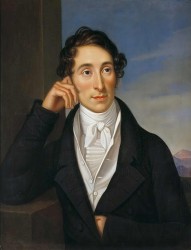
Carl Maria von Weber: Visionary of German Romanticism

23rd June 2026

When audiences think of early nineteenth-century German music, the towering figures of Beethoven, Schubert, and later Wagner often dominate the conversation. Yet between the Classical world of Mozart and the mature Romanticism of Wagner stands a composer whose influence was both profound and transformative: Carl Maria von Weber (1786–1826). Composer, conductor, pianist, critic, and visionary dramatist, Weber played a pivotal role in shaping the future of German opera and helping define the musical language of... read more

read more
Music of the Iberian Peninsula, Part 3: More observations on the Golden Age

16th June 2026

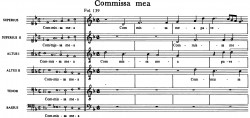
Our last visit to the Iberian peninsula, a fortnight ago, was an insanely ambitious, necessarily broad-brush survey of the Spanish and Portuguese Golden Age, covering vocal and instrumental music, the sacred and the secular. This week, we take a more concise and (I hope) focussed look at a few of the sacred vocal masterpieces which exemplify the particular fervour and intensity of this remarkable period of musical history. They reflect the special place the peninsula had as a bulwark against the Reformation that had taken... read more

read more
Music of the Iberian Peninsula, Part 3: More observations on the Golden Age

16th June 2026

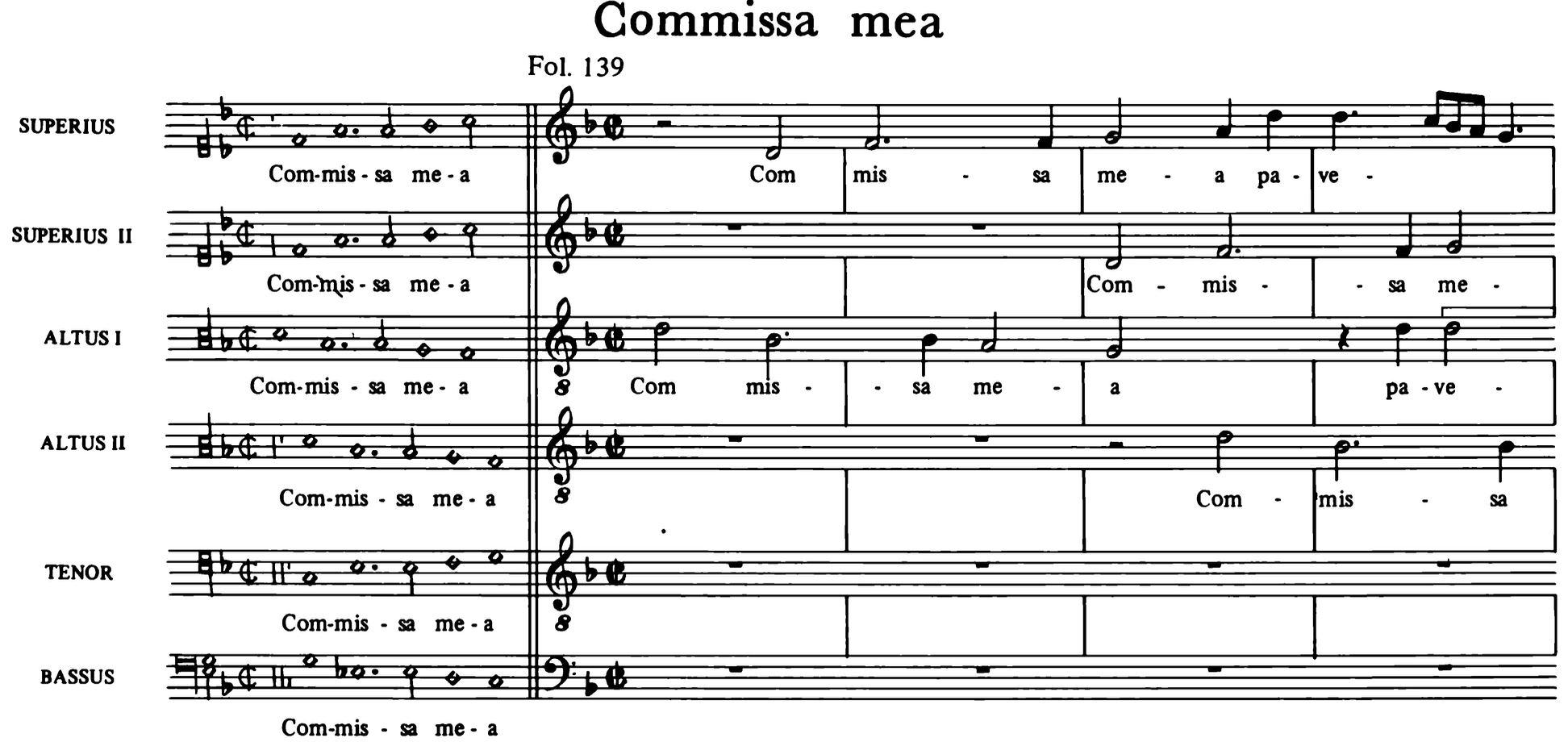
Our last visit to the Iberian peninsula, a fortnight ago, was an insanely ambitious, necessarily broad-brush survey of the Spanish and Portuguese Golden Age, covering vocal and instrumental music, the sacred and the secular. This week, we take a more concise and (I hope) focussed look at a few of the sacred vocal masterpieces which exemplify the particular fervour and intensity of this remarkable period of musical history. They reflect the special place the peninsula had as a bulwark against the Reformation that had taken... read more

read more
Carl Schachter, Arnold Whittall, and why music analysis matters

9th June 2026

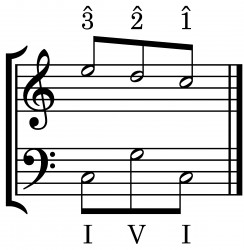
Two recent deaths have robbed the world of music analysis of a pair of its most revered figures. Carl Schachter, who has died at the age of 93, was a pupil of (and subsequently collaborator with) Felix Salzer, himself one of Heinrich Schenker’s foremost students. Schachter continued to enrich and broaden the teaching of Schenkerian analysis, including important work on its application to issues of rhythm (which Schenker, focussing on harmonic and contrapuntal matters, largely bypassed). His influence went well beyond the... read more

read more
Carl Schachter, Arnold Whittall, and why music analysis matters

9th June 2026

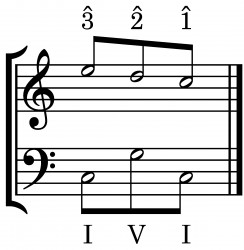
Two recent deaths have robbed the world of music analysis of a pair of its most revered figures. Carl Schachter, who has died at the age of 93, was a pupil of (and subsequently collaborator with) Felix Salzer, himself one of Heinrich Schenker’s foremost students. Schachter continued to enrich and broaden the teaching of Schenkerian analysis, including important work on its application to issues of rhythm (which Schenker, focussing on harmonic and contrapuntal matters, largely bypassed). His influence went well beyond the... read more

read more
View Full Archive