 FREE UK SHIPPING OVER £35!
The Spin Doctor Europadisc's Weekly Column
Carl Maria von Weber: Visionary of German Romanticism
23rd June 2026
23rd June 2026
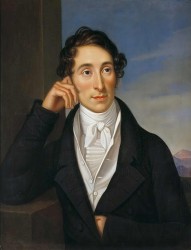
When audiences think of early nineteenth-century German music, the towering figures of Beethoven, Schubert, and later Wagner often dominate the conversation. Yet between the Classical world of Mozart and the mature Romanticism of Wagner stands a composer whose influence was both profound and transformative: Carl Maria von Weber (1786–1826). Composer, conductor, pianist, critic, and visionary dramatist, Weber played a pivotal role in shaping the future of German opera and helping define the musical language of Romanticism.
Although his life was tragically short, lasting only thirty-nine years, Weber left a legacy that extended far beyond his own generation. His operas introduced a distinctly German voice to the lyric stage, while his orchestral and piano works revealed a composer of remarkable imagination and colour. Today, his masterpiece Der Freischütz remains a landmark in music history, and his influence can be heard in composers ranging from Wagner and Mendelssohn to Berlioz and beyond.
Carl Maria Friedrich Ernst von Weber was born on 18 November 1786 in Eutin, a small town in what is now northern Germany. Music and theatre were part of his life from the beginning. His father, Franz Anton von Weber, was an ambitious musician and theatre entrepreneur who moved frequently in pursuit of theatrical ventures. As a result, the young Carl experienced a somewhat unsettled childhood, but one rich in artistic influences. The family's constant travels exposed Weber to a variety of musical traditions and performance styles. By his early teens Weber was already composing prolifically. His first opera, Das Waldmädchen ("The Forest Maiden"), was written while he was still a teenager. Though juvenile in style, it demonstrated an instinctive feel for dramatic storytelling that would later become one of his defining strengths.
Recognising his son's talent early, Franz Anton arranged lessons with several respected teachers. Among the most significant was Michael Haydn, younger brother of Joseph Haydn, who helped develop Weber's compositional skills. Other formative influences included Johann Peter Heuschkel, and Abbé Georg Joseph Vogler. The latter, a progressive theorist and composer, had a particularly significant impact on Weber's development. Under his guidance in Vienna, Weber refined his compositional skills as well as meeting such prominent musical figures as Salieri, Hummel, Joseph Haydn and Schuppanzigh.
Weber's early professional life was marked by both success and adversity. In 1804, at the age of seventeen, he became music director at the opera house in Breslau (now Wrocław, Poland). The appointment demonstrated the confidence that musical institutions had in his abilities despite his youth. However, his efforts to reform the orchestra and improve performance standards met with resistance from older musicians. His growing interest in aesthetics also broadened his outlook, combining with his steadily developing technical assurance as a composer and performer.
These years were marked by both successes and setbacks. Financial difficulties were common, and Weber's health was often fragile. A serious setback occurred in 1809 when Weber accidentally drank sulphuric acid, mistaking it for wine. The incident permanently damaged his voice and affected his health for the rest of his life. Nevertheless, he continued to compose, perform, and conduct with determination, earning a reputation as an energetic reformer.
Weber's career reached a turning point in 1813 when he became director of the Prague Opera. There he worked tirelessly to improve artistic standards, introducing better rehearsal practices and raising the quality of productions. His success in Prague established him as one of the leading conductors of his generation. His experiences as a conductor greatly influenced his compositional thinking. Weber understood the capabilities of orchestras and singers from firsthand experience, enabling him to write music that was both effective and theatrical. At the same time, he established himself as one of Europe's leading pianists. His brilliant technique and flair for colouristic effects made him a celebrated performer. Several of his piano works, including the Invitation to the Dance (Aufforderung zum Tanz, familiar to many in Berlioz’s later orchestration), reveal a composer who combined virtuosity with elegance and poetic imagination.
In 1817, Weber accepted the prestigious position of director of the German Opera in Dresden. At the time, Italian opera dominated many European stages, and Weber was determined to promote a distinctly German operatic tradition. His efforts coincided with growing cultural nationalism in the German-speaking world, where artists sought to celebrate native folklore, language, and traditions. At the beginning of the nineteenth century, Italian opera dominated European stages. German composers often imitated Italian models, while French opera exerted its own influence. Weber sought something different: an opera rooted in German folklore, landscape, language, and imagination. He believed that opera should be a unified artistic experience in which music, drama, staging, and orchestration worked together to create a coherent whole.
While in Dresden, Weber composed the work that would secure his place in musical history: Der Freischütz (‘The Marksman’), premiered in Berlin in 1821. The opera tells the story of Max, a hunter who makes a dangerous pact with supernatural forces in order to win a shooting contest and marry his beloved Agathe. Combining folk-like melodies, evocative orchestration, rustic settings, and elements of the supernatural, the work captured the imagination of audiences immediately. The famous ‘Wolf's Glen’ scene remains one of the most innovative passages in early Romantic opera. Here Weber uses orchestral colour, harmonic tension, and dramatic pacing to create an atmosphere of terror and mystery. The scene foreshadows the psychological and supernatural worlds later explored by Wagner and other Romantic composers.
The success of Der Freischütz was extraordinary. It quickly spread throughout Europe and established Weber as the leading German opera composer of his generation. More importantly, it demonstrated that German opera could possess a distinctive identity separate from Italian and French traditions.
Weber's orchestral writing often evokes landscapes, emotions, and dramatic situations with remarkable clarity. Woodwind instruments, in particular, play a prominent role in his music. Weber understood their expressive possibilities and frequently gave them solo passages of unusual beauty and character. His two clarinet concertos, written for the virtuoso Heinrich Baermann, whom he first met in Munich 1811, remain cornerstones of the instrument's repertoire. Combining lyrical elegance with dazzling technical demands, they showcase Weber's talent for balancing virtuosity and musical substance. Similarly, the Concertino for Clarinet and the Bassoon Concerto demonstrate his ability to write idiomatically and imaginatively for wind instruments. These works helped expand the possibilities of concerto writing and influenced later composers who explored similar instrumental colours.
Weber's overtures deserve special mention. Rather than serving merely as introductory pieces, they function as dramatic summaries of the operas they precede, and in this respect among others they were important influences on Wagner. The overtures to Der Freischütz, Euryanthe, and Oberon reveal a composer capable of creating compelling musical narratives within a purely orchestral framework and they, together with the concert overture Der Beherrscher der Geister, represent important staging posts in the emergence of the symphonic poem.
While Der Freischütz remains Weber's most famous work, his later operas further demonstrate his artistic aims. His next major operatic work, Euryanthe (1823), was an ambitious attempt to create a more through-composed form of opera, and to put into practice Weber's considered views on the aesthetic possibilities of a distinctly German operatic genre. Although its libretto was problematic, the music contains some of Weber's most sophisticated orchestral and harmonic writing, and many commentators regard it as an important step toward the music dramas of Wagner. His final opera, Oberon, was commissioned by London's Covent Garden and premiered in 1826. Based on a fairy-tale story involving magic, adventure, and romance, the work contains music of extraordinary charm and imagination. The overture remains especially popular in the concert hall, celebrated for its sparkling orchestration and lyrical beauty.
Despite Oberon's success, Weber was already gravely ill during its creation. In 1826 he had travelled to London to oversee the opera’s premiere. The journey was physically exhausting, but he hoped the commission would provide financial security for his family. While the premiere was a success, and London audiences warmly received the composer, Weber's health deteriorated rapidly. On 5 June 1826, only weeks after the first performance of Oberon, he died in London at the age of thirty-nine. His death was widely mourned across Europe. Eighteen years later, at the request of Richard Wagner, Weber's remains were transferred from London to Dresden, where he was reburied with great ceremony.
Weber's importance in music history extends far beyond the popularity of the handful of works for which he is best known today. He helped establish the aesthetic foundations of German Romantic opera and expanded the expressive possibilities of orchestral writing. Wagner regarded Weber as a crucial predecessor: the emphasis on myth, folklore, dramatic unity, and orchestral storytelling that characterises Wagner's mature works owes much to Weber's pioneering example. At the same time, composers such as Mendelssohn, Schumann, Berlioz, and Liszt admired his orchestral imagination and dramatic instincts.
Weber was a composer who understood the power of atmosphere, narrative, and musical colour. His works bridge the worlds of Mozart and Beethoven on the one hand and Wagner on the other, preserving a certain Classical clarity while embracing Romantic fantasy and emotional depth. As much as Beethoven and Schubert, Weber laid the foundations for German musical Romanticism.
Two centuries after his death, Carl Maria von Weber remains one of the essential figures in the evolution of nineteenth-century music. Through his operas, concertos, piano works, and orchestral masterpieces, he gave Romanticism a distinctive voice – one that continues to resonate whenever the mysterious forests of Der Freischütz or the magical world of Oberon come alive in performance.
Recommended recordings:
Weber: The Spirit of German Romanticism (various artists, 18 CDs) 2685411239
Der Freischütz (Holm, Seefried, Streich / Jochum) WS121234
Complete Overtures (WDR Sinfonieorchester / Griffiths) 7778312
Clarinet Concertos, Concertino & Quintet (Fröst, Tapiola Sinfonietta / Kantorow) BISSACD1523
Konzertstück, Overtures & Arias (Helmchen, Prohaska / Eschenbach) ALPHA744
Complete Piano Sonatas, etc. (Carbonara) PCL0105
Complete Songs for Voice and Guitar (Cigna, Sebastiani) 95323
Latest Posts
Music of the Iberian Peninsula, Part 3: More observations on the Golden Age
16th June 2026
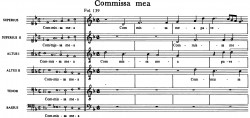
Our last visit to the Iberian peninsula, a fortnight ago, was an insanely ambitious, necessarily broad-brush survey of the Spanish and Portuguese Golden Age, covering vocal and instrumental music, the sacred and the secular. This week, we take a more concise and (I hope) focussed look at a few of the sacred vocal masterpieces which exemplify the particular fervour and intensity of this remarkable period of musical history. They reflect the special place the peninsula had as a bulwark against the Reformation that had taken... read more
read more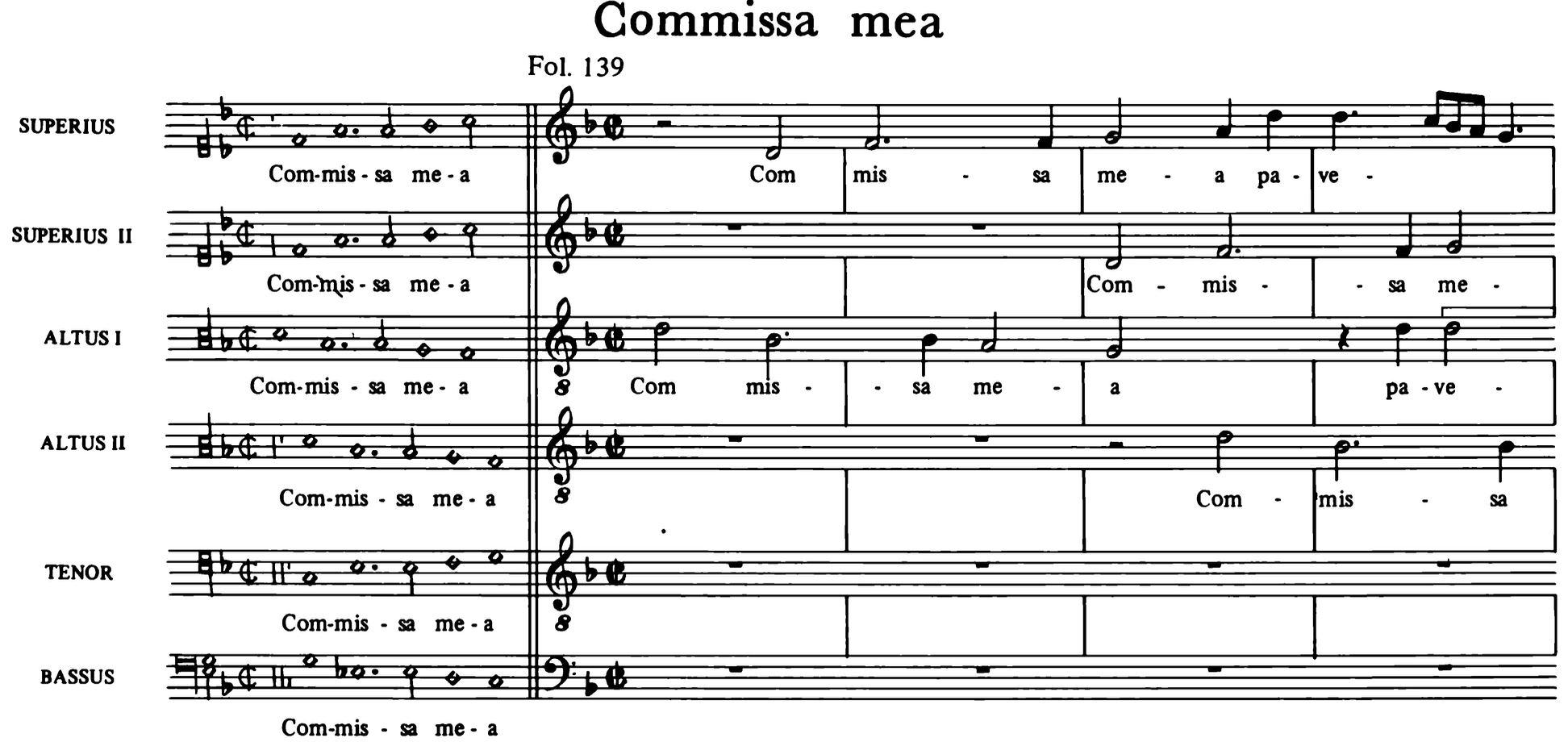
Music of the Iberian Peninsula, Part 3: More observations on the Golden Age
16th June 2026
Our last visit to the Iberian peninsula, a fortnight ago, was an insanely ambitious, necessarily broad-brush survey of the Spanish and Portuguese Golden Age, covering vocal and instrumental music, the sacred and the secular. This week, we take a more concise and (I hope) focussed look at a few of the sacred vocal masterpieces which exemplify the particular fervour and intensity of this remarkable period of musical history. They reflect the special place the peninsula had as a bulwark against the Reformation that had taken... read more
read more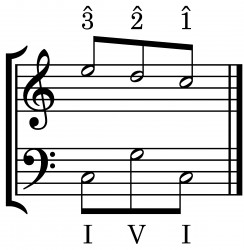
Carl Schachter, Arnold Whittall, and why music analysis matters
9th June 2026
Two recent deaths have robbed the world of music analysis of a pair of its most revered figures. Carl Schachter, who has died at the age of 93, was a pupil of (and subsequently collaborator with) Felix Salzer, himself one of Heinrich Schenker’s foremost students. Schachter continued to enrich and broaden the teaching of Schenkerian analysis, including important work on its application to issues of rhythm (which Schenker, focussing on harmonic and contrapuntal matters, largely bypassed). His influence went well beyond the... read more
read more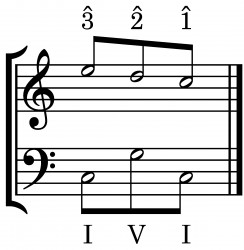
Carl Schachter, Arnold Whittall, and why music analysis matters
9th June 2026
Two recent deaths have robbed the world of music analysis of a pair of its most revered figures. Carl Schachter, who has died at the age of 93, was a pupil of (and subsequently collaborator with) Felix Salzer, himself one of Heinrich Schenker’s foremost students. Schachter continued to enrich and broaden the teaching of Schenkerian analysis, including important work on its application to issues of rhythm (which Schenker, focussing on harmonic and contrapuntal matters, largely bypassed). His influence went well beyond the... read more
read more
Music of the Iberian Peninsula, Part 2: ‘O quam gloriosum’ – The Spanish and Portuguese Golden Age
2nd June 2026
Over the past fortnight, I’ve been bathed in the most glorious, radiant, transformative light. Not the UK’s recent unseasonable heatwave, but the extraordinary vocal polyphony of the Siglo de Oro: the Spanish (and Portuguese) ‘Golden Century’. Extending from the late 15th to the early 17th century, this was a time of remarkable artistic flowering on the Iberian Peninsula, coinciding with the emergence of Spain and Portugal as global imperial powers with extensive colonial territories in the Americas, Africa and Asia. The... read more
read more