FREE UK SHIPPING OVER £35!

The Spin Doctor Europadisc's Weekly Column

Water, Moonlight and Memory: Dvořák’s ‘Rusalka’ – The Return of a Classic

  21st July 2026

21st July 2026
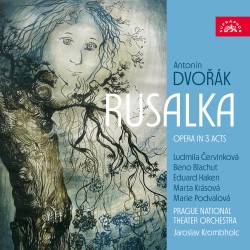

Few operas announce their emotional climate as immediately as Rusalka. Before a word is sung, the lower strings seem to stir the black water; a melody rises, reaches towards warmth and falls back into its own reflection. Dvořák’s ‘lyric fairy tale’, composed in 1900–01 to Jaroslav Kvapil’s Czech libretto and first performed in Prague in 1901, is built upon an adult unease: the desire to cross into another world, and the fear that fulfilment may destroy the self that desired it.

Recordings can prettify Rusalka into moonlit tableaux. The greatest do the opposite. They make the enchantment physical – one hears damp earth, dangerous water, the restlessness of creatures who belong to nature – and then show the human court as the stranger, colder realm. Among the opera’s Czech recordings, the 1952 set conducted by Jaroslav Krombholc, now rereleased by Supraphon in a new remastering by Miloš Guth, remains uniquely compelling. It was the first complete Czech studio recording, made with the Prague National Theatre forces and a cast led by Ludmila Červinková, Beno Blachut and Eduard Haken. Its mono sound is narrow, but the performance has the breadth and immediacy of theatre. What survives, in spite of the technology of the time, is an ensemble style formed in repertory, not assembled for microphones.

Krombholc was a man of the Prague National Theatre, steeped in Czech opera and trained in the orbit of Václav Talich. His special gift was not simply rhythmic animation or orchestral colour but the ability to construct an opera dramatically, letting its argument accumulate across acts. In Rusalka, that means refusing to linger sentimentally over every lovely phrase. The opening scene has an alert, half-wild life: the wood nymphs tease, Vodník’s paternal anxiety interrupts their play, and Rusalka’s entrance changes the temperature. Krombholc keeps the music breathing in long spans, so that the celebrated ‘Song to the Moon’ grows naturally from the preceding confession rather than appearing as a detachable favourite.

Červinková’s Rusalka is the heart of the set. Her voice is not the most sensuously floated on record, nor is her characterisation based on girlish fragility. There is womanly substance in the tone and urgency in the phrasing: she already sounds capable of suffering before Ježibaba grants her humanity. In the famous invocation to the moon, she sings with grave simplicity, shaping the line as speech intensified by melody. The climaxes open without becoming grandiose; the quiet phrases retain a core of tone. This matters, because Rusalka’s tragedy is not that a water sprite dreams of love, but that a complete consciousness accepts mutilation – silence, exile and mortality – in order to possess it.

The surrounding cast belongs to a golden Prague generation. Beno Blachut’s Prince is ardent without turning the role into generalised heroic tenorism. His famously honeyed, slightly plaintive timbre makes the Prince’s appetite sound sincere even when it is unstable. The character is often dismissed as a faithless weakling, but Blachut and Krombholc reveal something more troubling: a man overwhelmed by the supernatural, then frightened by the very otherness that attracted him.

Eduard Haken’s Vodník is just as remarkable. He would repeat the role for Zdeněk Chalabala’s recording in 1961, but here the voice is fresh, black and resonant, while the characterisation is tender rather than merely admonitory. His repeated lament for “poor, pale Rusalka” becomes the opera’s moral refrain. Marta Krásová’s Ježibaba is no comic crone: the words bite, the lower register carries sulphur, and her bargain with Rusalka sounds like an old law of nature being invoked. Marie Podvalová, as the Foreign Princess, brings metallic authority and imperious attack; she is not a pantomime villain but the human world’s instinct for possession made flesh. In some ways, the compressed climaxes and up-front voices even intensify the set’s almost expressionist directness.

Krombholc’s superiority becomes clearest in Act 2, the act most liable to sag on record. Dvořák deliberately withdraws Rusalka’s voice, leaving the orchestra to articulate her bafflement amid the court’s chatter, ceremony and erotic manoeuvring. Krombholc never treats the Gamekeeper and Turnspit as an interlude imported from another opera; their nervous comedy sharpens the sense that everyone is interpreting signs they cannot understand. The polonaise is buoyant but not comfortable, its brilliance edged with vulgarity. When the Foreign Princess begins to dominate, Podvalová’s hard glamour cuts through the texture like a blade. Blachut’s growing irritation with the mute Rusalka is painful because his tenderness in Act 1 has not been feigned. The scene becomes not a simple betrayal but the collapse of communication under social pressure.

The third act is finer still. Krombholc does not dissipate its sequence of laments, prophecies and returns. Červinková’s altered tone –  less openly radiant, more veiled and resigned – makes Rusalka’s transformation into a will-o’-the-wisp audible without resorting to vocal pallor. Haken’s grief has monumental weight, yet his diction keeps it personal and immediate. Most conductors can make the final duet beautiful; Krombholc combines dramatic urgency with a terrifying sense of calm, and the result is devastatingly touching. Blachut sings the Prince’s return with (in the best sense) exhausted ardour, and the fatal kiss arrives not as a grand operatic coup but as the only possible conclusion. The last pages, with Rusalka’s prayer rising above the orchestra, are neither consolation nor despair. They inhabit the uneasy region between forgiveness and annihilation that gives the opera its modernity.

The Prague orchestra need not be patronised just because the mono recording inevitably conceals some of its finesse. Listen through the surface and one hears characterful bassoons, pungent clarinets, horns that belong to the forest rather than the concert hall, and strings capable of changing from folk-dance spring to Tristanesque undertow within a phrase. Above all, this is a seasoned opera house orchestra with the music in its veins. Krombholc balances its colours as dramatic agents: the orchestra does not merely illustrate the tale – it knows more than the characters do.

Nine years later, Zdeněk Chalabala recorded the opera with Milada Šubrtová, Ivo Žídek and Haken, again using the Prague National Theatre chorus and orchestra. Like the Krombholc, this is a product of Prague’s Domovina Studio, and it too has long been regarded as a Czech classic. Chalabala’s reading is more yielding than Krombholc’s, more saturated (thanks to the stereo recording) in fairy-tale atmosphere. He coaxes a deep sense of longing from the opening pages and tells the story with affectionate flexibility; even in a relatively dry acoustic, the score glows.

Šubrtová offers the most opulent Czech Rusalka on disc. The voice has amplitude, gleaming top notes and the lungs for Dvořák’s long arches. Where Červinková internalises the pain, Šubrtová lets it flower into lyric-dramatic splendour. Žídek is perhaps a more elegant and youthful Prince than Blachut, but he lacks the latter’s tonal sweetness, while Haken’s Vodník has acquired an even more touching avuncular warmth. Chalabala’s set may be the easiest recommendation for listeners who want the opera as national fairy tale: its woodland humour, melancholy and ritual gravity feel instinctive. Yet beside Krombholc it can seem to caress the score where the earlier conductor presses forward urgently into tragedy.

Václav Neumann’s digital Supraphon recording, made in the early 1980s with the Czech Philharmonic, Gabriela Beňačková, Wiesław Ochman and Richard Novák, brings a different scale and orchestral finish. The Czech Philharmonic strings have sheen and depth, woodwind detail registers vividly, and Neumann finds darker implications in the prelude and supernatural scenes. His interpretation has been described as moving beyond fairy tale towards a sombre allegory, emphasising sinister colours and premonitions.

Beňačková’s is perhaps the most touching Rusalka: the timbre is pearly, vulnerable and quintessentially Czech in its verbal inflection. Her ‘Song to the Moon’ has a rapt inwardness that explains the assumption’s international fame. But Neumann’s performance can feel more curated than lived, and Ochman, though accomplished, lacks Blachut’s native urgency. Richard Novák’s formidable Vodník is darker and more punitive than Haken’s, shifting the emotional tone and centre of the drama. The recording is indispensable for its orchestral perspective and Beňačková’s individuality, but, recorded in the somewhat reverberant acoustic of Prague’s Rudolfinum, ultimately it does not recreate the National Theatre’s collective dramatic language. Fine as it is always is in the music of Dvořák, the Czech Philharmonic is not, at heart, an opera orchestra.

Charles Mackerras’s Decca set, recorded in 1998, made Rusalka decisively international. Renée Fleming, Ben Heppner, Franz Hawlata, Dolora Zajick and Eva Urbanová are supported by the Czech Philharmonic, again captured in the Dvořák Hall of the Rudolfinum, and the recording won both Gramophone’s Opera Award and its Record of the Year. Mackerras combines rhythmic lift, luxurious modern sound and textual clarity (like Neumann, he presents the score complete, opening up the traditional and fairly minor stage cuts of the two earlier recordings). The score’s Wagnerian reach is fully audible, but so are the dance rhythms and speech-derived accents that keep Dvořák from becoming a Czech imitator of Wagner.

Fleming sings with sumptuous control, spinning the moon aria in long, gleaming threads; Heppner gives the Prince heroic stature; Zajick’s Ježibaba has imposing bite. For sonic splendour and star power, the set remains formidable. Yet its polish alters the opera’s fundamental ecology. The forest is beautifully evoked rather than inhabited; the courtly catastrophe unfolds with symphonic magnificence rather than the claustrophobic inevitability heard under Krombholc. Mackerras offers the finest modern panorama, but the 1952 set feels closer to the work’s bloodstream.

No single recording contains all of Rusalka. Chalabala gives us remembered folklore, Neumann psychological darkness, Mackerras orchestral magnificence. Krombholc, however, gives us drama. Ardent Dvořák fans will want to hear all four of them. If sudden catastrophe were to hit, however, the ones I’d instinctively make a grab for are the Chalabala and Krombholc. The latter’s 1952 performance, with a cast drawn from a golden generation of Czech performers, understands that the score’s loveliness is never decorative: every shimmer conceals a fateful boundary, every dance a threat, every lyrical expansion the cost of wanting another life. The old mono recording, sounding more immediate now than in its previous 2005 remastering, does not place us at a safe distance from a Czech masterpiece. It draws us to the water’s edge – and makes us lean over.

Both the Chalabala and Mackerras recordings are currently out of the catalogue, although the former acts as soundtrack to Bohumil Zoul’s lip-synched 1975 film for Czech television, available on a Supraphon DVD (SU70089). The details of the newly reissued Krombholc and the Neumann are listed below.

The Recordings:

Latest Posts


Music of the Iberian Peninsula, Part 5: Beyond Vienna – The Classical Era in Spain and Portugal

14th July 2026

The Classical period has long been mapped as though Europe’s musical imagination narrowed to a triangle drawn between Vienna, Mannheim and northern Italy. Spain and Portugal appear, if at all, as picturesque margins: lands of guitars, fandangos and imported opera, waiting for the 19th century to discover their national voices. Listen attentively to the Iberian repertory of roughly 1750 to 1830, however, and a more intricate picture emerges. Madrid and Lisbon were cosmopolitan courts, receptive to Italian opera, French... read more

read more
Hans Werner Henze at 100: An Outsider at the Heart of Modern Music

6th July 2026

Among the major composers of the post-war era, Hans Werner Henze occupies a singular position. Neither a doctrinaire modernist nor a nostalgic traditionalist, he fashioned a musical language of remarkable elasticity, capable of embracing serial procedures and sumptuous lyricism, classical forms and theatrical fantasy, political engagement and deeply personal expression. If his music has never enjoyed the ubiquity of Britten, Shostakovich or Ligeti, it has steadily acquired the stature of a body of work whose richness rewards... read more

read more
Music of the Iberian Peninsula Part 4: The Spanish and Portuguese Baroque

30th June 2026

For many music lovers, the Baroque era immediately conjures images of Bach's intricate counterpoint, Handel's majestic choruses, Vivaldi’s dazzling violin concertos or Charpentier’s sumptuous vocal music. Yet on the southwestern edge of Europe another remarkable musical tradition flourished during the seventeenth and early eighteenth centuries. The Iberian Peninsula developed a distinctive Baroque voice that combined religious intensity, courtly sophistication and popular vitality. Drawing upon centuries of cultural exchange... read more

read more
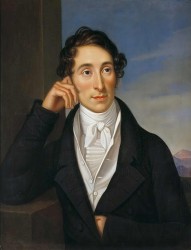
Carl Maria von Weber: Visionary of German Romanticism

23rd June 2026

When audiences think of early nineteenth-century German music, the towering figures of Beethoven, Schubert, and later Wagner often dominate the conversation. Yet between the Classical world of Mozart and the mature Romanticism of Wagner stands a composer whose influence was both profound and transformative: Carl Maria von Weber (1786–1826). Composer, conductor, pianist, critic, and visionary dramatist, Weber played a pivotal role in shaping the future of German opera and helping define the musical language of... read more

read more
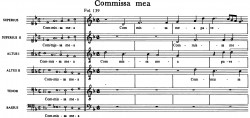
Music of the Iberian Peninsula, Part 3: More observations on the Golden Age

16th June 2026

Our last visit to the Iberian peninsula, a fortnight ago, was an insanely ambitious, necessarily broad-brush survey of the Spanish and Portuguese Golden Age, covering vocal and instrumental music, the sacred and the secular. This week, we take a more concise and (I hope) focussed look at a few of the sacred vocal masterpieces which exemplify the particular fervour and intensity of this remarkable period of musical history. They reflect the special place the peninsula had as a bulwark against the Reformation that had taken... read more

read more
View Full Archive