 FREE UK SHIPPING OVER £35!
The Spin Doctor Europadisc's Weekly Column
Remembering Norrington
22nd July 2025
22nd July 2025
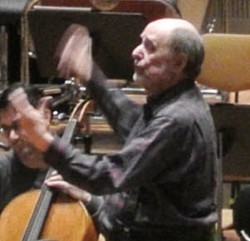 Only the most wilfully conservative sceptics could deny that Roger Norrington, who died last week at the age of 91, had a profound impact on the ‘Early Music’ revolution of the last 50 years. Through his work with the London Classical Players (the period instrument orchestra he founded in 1978) and then with the Stuttgart Radio Symphony Orchestra (1998–2011) he not only shook up playing standards and values in repertoire ranging from the Baroque to the 20th century, but also brought a mischievous joy to music-making as well as a collegial, collaborative approach to conducting which put many of his colleagues to shame. Even at his most didactic (on orchestral layout, tempi and vibrato-less playing), he was devoid of any pomposity, and his often theatrical antics on the podium endeared him to far more than they upset.
Norrington was born in Oxford on 16 March 1934; his father, Arthur Norrington, a leading figure at Oxford University Press and in the Oxford Bach Choir, would later become President of Trinity College, Oxford (1954), and in 1960 the University’s Vice-Chancellor. After being evacuated to Canada during World War II, Roger started violin lessons on his return to England. Following national service, he studied history and literature at Clare College, Cambridge, where he also sang in the choir. After a brief stint in the religious books section at OUP, he gained more work as a singer. His discovery of the music of Heinrich Schütz led to him founding the Schütz Choir (late the Schütz Choir of London) in 1962, and after studying at the Royal College of Music (where his teachers included Adrian Boult), by the late 1960s he was making recordings of Schütz’s music with his choir for the Argo label, alongside such starry soloists as Peter Pears, Benjamin Luxon and John Shirley-Quirk.
From 1969 to 1984, a key period in Norrington’s blossoming career was as music director of Kent Opera, with whom his repertoire ranged from Monteverdi to Britten and Tippett. It’s a huge pity that so little of his work there has been commercially available, but the Blu-ray transfer of a 1985 Nicholas Hytner production of Tippett’s King Priam, with Rodney Macann as Priam and Sarah Walker as Andromache, is an important exception. It is also a shame that so many of his Argo/Decca recordings of Schütz are currently unavailable. My own first live experience of Norrington was a wide-ranging 1981 concert of Schütz motets, Richard Strauss’s 2 Gesänge, op.34, for 16-part mixed choir, and Nigel Osborne’s new Gnostic Passion – a demanding programme which vividly illustrated the broad range of the conductor’s interests.
Another memorable concert came in the mid-1980s at St John’s, Smith Square, this time with the LCP towards the beginning of Norrington’s landmark cycle of Beethoven symphonies for EMI. The opening bars of the Second Symphony’s Larghetto, devoid of the usual vibrato, with the sound shaped instead by the bows, and at a wonderfully flowing speed, was one of those transformative moments which has lasted in the memory ever since. Whatever his detractors might say, it was Norrington’s conviction in his musical choices, and his ability to carry his musicians with him in a spirit of mutual cooperation and respect, that has resulted in many such revelations over the years. Another was his startlingly brisk take on the Crucifixus of Bach’s B minor Mass at the BBC Proms on the 250th anniversary of the composer’s death: in a sense, the rights or wrongs were immaterial – it changed the way I heard the music ever since.
Apart from his work with the Schütz Choir of London and the London Classical Players, Norrington had shorter but still significant stints with such groups as the Bournemouth Sinfonietta, the Orchestra of St Luke’s, the Camerata Salzburg, and the Zurich Chamber Orchestra. But the defining relationship of the latter part of his career was the dozen or so years he spent at the helm of the Stuttgart Radio Symphony Orchestra, transferring the historically-informed techniques and insights from period to modern instruments, and causing not a little controversy in the process. In Stuttgart he was able to revisit some of the repertoire he had tackled with the LCP – including cycles of Beethoven and Brahms symphonies – and take things further, most notably in the symphonies of Bruckner and Mahler, and in music by Elgar and Holst. He revisited Haydn, with one of the most stylish sets of the ‘London’ Symphonies ever committed to disc, and gave a particularly invigorating live cycle of Schumann symphonies, as well as confirming his strengths in Mozart, Schubert and Berlioz.
Unfortunately I never got to any of Norrington’s composer ‘Experience’ weekends on London’s South Bank, and I also regret never seeing him conduct opera live. But another cherished memory is a concert he gave twenty or so years ago with the Orchestra of the Age of Enlightenment in Bern. It was a programme of three composers who brought out the best in him: Beethoven, Mozart and Haydn. The latter’s Symphony no.95 in C minor had an astonishing directness and energy to it, but also a delightfully incisive wit. Mozart’s Clarinet Concerto with Antony Pay as soloist was affecting without being either affected or in the least bit chocolate-boxy. It was the opener, however, that was in many respects most remarkable. After the very opening chord of Beethoven’s Prometheus Oveture – a staccato, fortissimo take on the destabilising opening of the composer’s First Symphony – Norrington turned round to face the audience with arms extended, as if to ask ‘Well, what d’you reckon to that?!’ It was a moment of pure showmanship which few if any other conductors could have brought off, but the audience loved it. And then, following the (typically flowing) ‘slow’ introduction, came an Allegro con brio of such perilously mercurial swiftness as I’ve never otherwise heard, before or since: one of the double bass players confided that, at each concert on the tour, Norrington took it even faster.
Steeped in the study of scores, primary and secondary sources, Roger Norrington was a musician with strong opinions on many matters. Yet he conveyed his ideas with such a lack of self-importance (and, for that matter, sense of routine) and with such infectious good humour, that his legacy will surely be a lasting one.
Recommended recordings:
Roger Norrington: The Complete Erato Recordings (LCP et al.) 9029624527 (45 CDs)
Best of Stuttgart Sound (RSO Stuttgart) 93232 [a useful sampler of his work in Stuttgart]
Haydn - The London Symphonies (RSO Stuttgart) SWR19527CD
Mozart - Violin Concertos 1, 2 & 5 (F Dego, RSNO) CHAN20263
Schumann - Symphonies 1 & 3 (RSO Stuttgart) 93160
Tippett - King Priam (R Macann, S Walker, Kent Opera) 109179 (Blu-ray)
Latest Posts
Water, Moonlight and Memory: Dvořák’s ‘Rusalka’ – The Return of a Classic
21st July 2026
Few operas announce their emotional climate as immediately as Rusalka. Before a word is sung, the lower strings seem to stir the black water; a melody rises, reaches towards warmth and falls back into its own reflection. Dvořák’s ‘lyric fairy tale’, composed in 1900–01 to Jaroslav Kvapil’s Czech libretto and first performed in Prague in 1901, is built upon an adult unease: the desire to cross into another world, and the fear that fulfilment may destroy the self that desired it.
Recordings can prettify Rusalka into... read more
Music of the Iberian Peninsula, Part 5: Beyond Vienna – The Classical Era in Spain and Portugal
14th July 2026
The Classical period has long been mapped as though Europe’s musical imagination narrowed to a triangle drawn between Vienna, Mannheim and northern Italy. Spain and Portugal appear, if at all, as picturesque margins: lands of guitars, fandangos and imported opera, waiting for the 19th century to discover their national voices. Listen attentively to the Iberian repertory of roughly 1750 to 1830, however, and a more intricate picture emerges. Madrid and Lisbon were cosmopolitan courts, receptive to Italian opera, French... read more
read more
Hans Werner Henze at 100: An Outsider at the Heart of Modern Music
6th July 2026
Among the major composers of the post-war era, Hans Werner Henze occupies a singular position. Neither a doctrinaire modernist nor a nostalgic traditionalist, he fashioned a musical language of remarkable elasticity, capable of embracing serial procedures and sumptuous lyricism, classical forms and theatrical fantasy, political engagement and deeply personal expression. If his music has never enjoyed the ubiquity of Britten, Shostakovich or Ligeti, it has steadily acquired the stature of a body of work whose richness rewards... read more
read more
Music of the Iberian Peninsula Part 4: The Spanish and Portuguese Baroque
30th June 2026
For many music lovers, the Baroque era immediately conjures images of Bach's intricate counterpoint, Handel's majestic choruses, Vivaldi’s dazzling violin concertos or Charpentier’s sumptuous vocal music. Yet on the southwestern edge of Europe another remarkable musical tradition flourished during the seventeenth and early eighteenth centuries. The Iberian Peninsula developed a distinctive Baroque voice that combined religious intensity, courtly sophistication and popular vitality. Drawing upon centuries of cultural exchange... read more
read more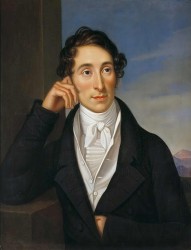
Carl Maria von Weber: Visionary of German Romanticism
23rd June 2026
When audiences think of early nineteenth-century German music, the towering figures of Beethoven, Schubert, and later Wagner often dominate the conversation. Yet between the Classical world of Mozart and the mature Romanticism of Wagner stands a composer whose influence was both profound and transformative: Carl Maria von Weber (1786–1826). Composer, conductor, pianist, critic, and visionary dramatist, Weber played a pivotal role in shaping the future of German opera and helping define the musical language of... read more
read more