 FREE UK SHIPPING OVER £35!
The Spin Doctor Europadisc's Weekly Column
Erik Satie: 100 Years On
2nd July 2025
2nd July 2025
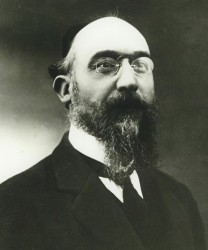 Of all the eccentrics and ‘outsiders’ who pepper the history of Western art music, one of the most fascinating is Erik Satie, who died 100 years ago, on 1 July 1925, at the age of 59. Shunning the conventional goal-directedness of late-19th-century Romantic music, his often disarmingly simple but tellingly inflected compositions anticipated later trends such as neo-classicism and minimalism, often by many decades. His early piano lessons with the local organist in his native Honfleur, Normandy, instilled a love of medieval religiosity and Gregorian chant; and this in turn surely influenced his later declaration that ‘the melody is the Idea ... the harmony is an illumination’. Satie’s childhood, disrupted first by the death of his mother (the English-born Jane Leslie née Anton) when he was aged six, and then by that of his grandmother with whom he lived while his father, Alfred, set up business in Paris, was further complicated when his father remarried. It was at his stepmother Eugénie Barnetche’s instigation that Satie was enrolled at the Paris Conservatoire in November 1879. He loathed his time there, and his teachers in their turn described him as ‘worthless’ and ‘the laziest student in the Conservatoire’.
Satie’s short spell of military service was curtailed when he went to great efforts to catch bronchitis, using his convalescence to discover the works of Flaubert and Péladan. Some of his earliest compositions were published by a small publishing house established by his father, but their strained relationship following the latter’s remarriage led Satie to take a room in Montmartre, which became his base for the best part of two decades. There he established a very public persona – the first of several he cultivated over the years – in frock coat and top hat, wearing his hair foppishly long. He could be charming and engaging in company, but also prickly, thin-skinned and detached, and it has since been suggested that these conflicting traits might have been symptoms of higher-order dyslexia. Certainly Satie’s undoubted intelligence and creative independence went hand-in-hand with a tendency to nurse lasting grudges against those he felt had slighted him. His musical output, dominated by miniatures or sets thereof, hints at an intellectual impatience and restlessness of spirit, even though individual pieces – like the now-ubiquitous Gymnopédies (1888–95) – suggest a sense of space and stillness that is unique for the period.
Another of the many contradictions of Satie’s life is that the early part of his career (if one can use that term of such a precarious existence) was spent balancing musical jobs in cafés and cabarets with an attempt to find his own serious (but never solemn) musical voice, free of the influence of the dominant post-Wagnerian Impressionism of the period. That he did so is testified by the admiration (at times bordering on jealousy) of Debussy, his ‘discovery’ by Ravel in 1911, and the young composers (including Les Six) who looked to him as a figurehead. Debussy – with whom Satie became friends before a spectacular falling out over his part in the scandalous Cocteau-Massine-Picasso collaboration Parade (1917) – described him as ‘the precursor’, and his fashioning of a style dépouillé (music stripped back to its essentials) looks simultaneously forward to both neoclassicism and postmodernism. So, too, does his fascination with mysticism (including a brief spell with the Parisian Rosicrucians, for whom he was the official composer).
Musically, Satie remained determinedly independent, free of any obvious influences (he was not among the many French composers who made the pilgrimage to Bayreuth in the 1880s and 90s), although in 1902 he was ‘absolutely astounded’ by the first performances of Debussy’s Pélleas et Mélisande. In 1895 his Rosicrucian phase gave way to the ‘Velvet Gentleman’ period, during which he sported seven identical brown velvet corduroy suits. In 1898 he moved to a cheaper room in the south Parisian suburb of Arcueil, where he lived in isolation, making the daily 10km trip to the city centre on foot, with frequent stops at cafés to drink and compose. In 1906 his look changed again, to that of a bourgeois functionary, complete with bowler hat, wing collar, black suit and rolled-up umbrella (which he sheltered beneath his jacket when it rained).
From 1912 Satie began a series of ironical writings, as well as piano pieces with such humorous titles as Véritables préludes flasques (pour un chien) (‘True Flabby Preludes (for a Dog)’), and the following year his one-act comedy Le piège de Méduse – which included music for prepared piano – anticipated elements of Surrealism. The success of his published piano works enabled Satie to give up his ‘degrading’ cabaret work, while the succès de scandale of Parade was the gateway to his later creations, culminating in the 1924 ballets Mercure (another Picasso-Massine collaboration, subtitled ‘plastic poses in three tableaux’) and the Dadaist Relâche (lit. ‘cancelled’) which included music for a cinematic entr’acte in which Satie himself appears. For many Satie cognoscenti, however, it is his cantata-like ‘symphonic drama in three parts’ Socrate that is his crowning masterpiece (a notion that would surely have amused, perhaps delighted or even disgusted, its composer). Commissioned by the Princesse de Polignac, and first performed in public in June 1920, it is a syllabic setting of an antiquated French translation of texts from Plato, including the death of Socrates, whose very detachment is singularly moving.
Satie’s heavy drinking eventually caught up with him: the final deterioration in his health was caused by cirrhosis of the liver, and many of the grudges nursed by him over the years remained unresolved. Two cartloads of accumulated rubbish were removed from his rooms before his remaining friends could sort through his papers. And yet, particularly since his ‘rediscovery’ in the 1960s by composers Peter Dickinson and John Cage, his legacy has been huge. His music – from unsettlingly trance-like to downright anarchic – has been admired not just by such classical music figures as Stravinsky, Birtwistle and Adams, but by musicians across genres (especially ambient music), while he anticipated such concepts as wallpaper music (muzak) and minimalism by many decades. In 1892 Debussy, in the dedication to his Cinq Poèmes de Baudelaire, described Satie as ‘a gentle medieval musician lost in this century’, but a century after his death he is both divisive and profoundly influential, a one-off of real consequence.
Recommended recordings:
Satie - The Magic of Satie (Thibaudet) 4871111
Satie - Gymnopédies, Gnossiennes, Songs, etc. (Planès, Mauillon) HMM902749
Satie & Cage - Letter(s) to Erik Satie (Chamayou) 5419769644
Satie - Piano Works & Songs (Ciccolini et al.) 9029565101
Satie - Socrate (Hannigan, de Leeuw) 9102342
Tout Satie - Erik Satie Complete Edition (various artists) 2564604796
Further reading:
Robert Orledge, Satie Remembered (London: Faber and Faber, 1995)
Roger Nichols, The Harlequin Years: Music in Paris 1917–1929 (London: Thames & Hudson, 2002)
Latest Posts
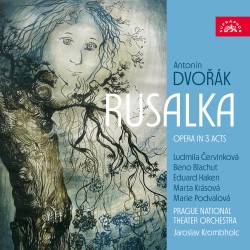
Water, Moonlight and Memory: Dvořák’s ‘Rusalka’ – The Return of a Classic
21st July 2026
Few operas announce their emotional climate as immediately as Rusalka. Before a word is sung, the lower strings seem to stir the black water; a melody rises, reaches towards warmth and falls back into its own reflection. Dvořák’s ‘lyric fairy tale’, composed in 1900–01 to Jaroslav Kvapil’s Czech libretto and first performed in Prague in 1901, is built upon an adult unease: the desire to cross into another world, and the fear that fulfilment may destroy the self that desired it.
Recordings can prettify Rusalka into... read more
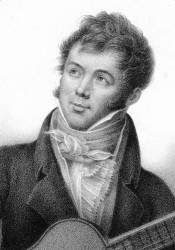
Music of the Iberian Peninsula, Part 5: Beyond Vienna – The Classical Era in Spain and Portugal
14th July 2026
The Classical period has long been mapped as though Europe’s musical imagination narrowed to a triangle drawn between Vienna, Mannheim and northern Italy. Spain and Portugal appear, if at all, as picturesque margins: lands of guitars, fandangos and imported opera, waiting for the 19th century to discover their national voices. Listen attentively to the Iberian repertory of roughly 1750 to 1830, however, and a more intricate picture emerges. Madrid and Lisbon were cosmopolitan courts, receptive to Italian opera, French... read more
read more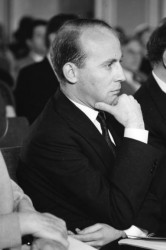
Hans Werner Henze at 100: An Outsider at the Heart of Modern Music
6th July 2026
Among the major composers of the post-war era, Hans Werner Henze occupies a singular position. Neither a doctrinaire modernist nor a nostalgic traditionalist, he fashioned a musical language of remarkable elasticity, capable of embracing serial procedures and sumptuous lyricism, classical forms and theatrical fantasy, political engagement and deeply personal expression. If his music has never enjoyed the ubiquity of Britten, Shostakovich or Ligeti, it has steadily acquired the stature of a body of work whose richness rewards... read more
read more
Music of the Iberian Peninsula Part 4: The Spanish and Portuguese Baroque
30th June 2026
For many music lovers, the Baroque era immediately conjures images of Bach's intricate counterpoint, Handel's majestic choruses, Vivaldi’s dazzling violin concertos or Charpentier’s sumptuous vocal music. Yet on the southwestern edge of Europe another remarkable musical tradition flourished during the seventeenth and early eighteenth centuries. The Iberian Peninsula developed a distinctive Baroque voice that combined religious intensity, courtly sophistication and popular vitality. Drawing upon centuries of cultural exchange... read more
read more
Carl Maria von Weber: Visionary of German Romanticism
23rd June 2026
When audiences think of early nineteenth-century German music, the towering figures of Beethoven, Schubert, and later Wagner often dominate the conversation. Yet between the Classical world of Mozart and the mature Romanticism of Wagner stands a composer whose influence was both profound and transformative: Carl Maria von Weber (1786–1826). Composer, conductor, pianist, critic, and visionary dramatist, Weber played a pivotal role in shaping the future of German opera and helping define the musical language of... read more
read more