FREE UK SHIPPING OVER £35!

The Spin Doctor Europadisc's Weekly Column

Music of the Iberian Peninsula, Part 5: Zarzuela – Spain’s theatre of song

  28th July 2026

28th July 2026

To describe zarzuela simply as ‘Spanish operetta’ is rather like describing tapas as a light lunch: not wholly false, but hopelessly inadequate. Zarzuela is less a single form than a capacious theatrical tradition, one that has accommodated pastoral allegory, political satire, drawing-room comedy, street farce, regional colour, sentimental romance and something approaching grand opera. Its essential mechanism is straightforward – spoken dialogue interleaved with music – yet across four centuries that framework proved remarkably elastic.

At its best, zarzuela does not merely decorate drama with song. It allows speech and music to glance off one another, so that a character may move in seconds from conversational irony to lyrical candour, from the bustle of a Madrid street to the private ache of a romanza. That flexibility is fundamental to the genre’s peculiar flavour – and one reason why its finest works resist easy translation into the categories of opera or operetta.

The name derives from the royal Palace of La Zarzuela outside Madrid, where 17th-century court entertainments combined drama, singing and dance. Spanish dramatist Pedro Calderón de la Barca (1600–1681) and the composer Juan Hidalgo (1614–1685) stand at the genre’s beginnings, though the Baroque zarzuela was a very different creature from the popular theatre that later conquered Madrid. Mythological subjects, elaborate allegory and courtly spectacle predominated.

The tradition also travelled early. La púrpura de la rosa (‘The Blood of the Rose’) by Tomás de Torrejón y Velasco (1644–1728), produced in Lima in 1701 to a Calderón text, demonstrates that zarzuela had already become an art of the wider Hispanic world rather than a narrowly peninsular phenomenon. Modern scholarship accordingly treats it not as a fixed equivalent of operetta, but as a Spanish-language theatrical form that developed through continuing dialogue with opera, French opéra comique and, later, the various traditions of European operetta.

After an 18th century increasingly dominated by Italian opera and the shorter tonadilla escénica, zarzuela returned with renewed force in the middle of the 19th century. Its revival was inseparable from arguments about national musical identity. Francisco Asenjo Barbieri (1823–1894), Joaquín Gaztambide (1822–1870), Rafael Hernando (1822–1888) and Emilio Arrieta (1821–1894) sought a viable Spanish lyric theatre that could command popular loyalty without merely imitating imported opera.

The opening of Madrid’s Teatro de la Zarzuela in 1856 supplied the movement with a permanent home, and Barbieri emerged as its presiding intelligence: composer, conductor, scholar, organiser and indefatigable advocate. Jugar con fuego (‘Playing with fire’, 1851) established his reputation, while Pan y toros (‘Bread and bulls’, 1864) and, above all, El barberillo de Lavapiés (‘The Little Barber of Lavapiés’, 1874) showed how readily political intrigue, popular song and sophisticated ensemble writing might coexist.

El barberillo de Lavapiés remains one of the surest points of entry. Its barber-hero Lamparilla is a cousin of Beaumarchais’s Figaro, quick-witted enough to move between aristocratic conspiracy and the life of the streets. Yet Barbieri’s score is no Spanish carbon copy of Rossini. Its rhythms, verbal inflections and communal energy are rooted in Madrid, and its finest pages possess a buoyant theatrical inevitability: melodies arrive as though they have already been circulating through the city. That ability to make composed music sound discovered rather than manufactured became one of zarzuela’s defining gifts.

By the later 19th century the genre had divided, though never neatly, into género grande and género chico. The former generally meant multi-act works on a scale approaching opéra comique; the latter consisted chiefly of compact one-act pieces associated with the teatro por horas, in which audiences could buy admission to an individual item rather than an entire evening. The distinction was economic and theatrical as much as aesthetic. A género chico score might last less than an hour, but its compression encouraged extraordinary sharpness of observation. These works offered recognisable characters, topical jokes and local speech while giving composers an opportunity to create music of concision, colour and rhythmic immediacy.

Federico Chueca (1846–1908) proved a master of urban nervous energy. In La Gran Vía (1886), written in collaboration with Joaquín Valverde (1875–1918), Madrid’s projected new avenue becomes the pretext for a revue in which streets and civic institutions acquire theatrical life. Agua, azucarillos y aguardiente (‘Water, sugar and brandy’, 1897) is slighter in scale but just as vivid: a miniature city symphony of nursemaids, vendors, flirtations and social embarrassment. Chueca’s music often appears artless, yet its rhythmic snap and instinct for the memorable refrain are anything but accidental. He could establish a crowd, a temperature and an entire social hierarchy in a handful of bars.

Ruperto Chapí (1851–1909) brought a broader technical command. El rey que rabió (‘The Raging King’, 1891) displays his flair for extended structures and comic ensembles, while La revoltosa (‘The Troublemaker’, 1897) compresses jealousy, neighbourhood gossip and sexual rivalry into a single brilliantly proportioned act. Its celebrated prelude has long enjoyed an independent concert life, but the complete work reveals the essential Chapí: ardent without heaviness, popular without condescension, and alert to every shift in the emotional balance between Mari Pepa and Felipe.

Tomás Bretón (1850–1923) , who spent much of his career campaigning for Spanish grand opera, achieved immortality with a one-act sainete. La verbena de la Paloma (‘The Fair of the Virgin of la Paloma’), premiered at Madrid’s Teatro Apolo in 1894, turns a festival-night lovers’ quarrel into a portrait of the capital itself. The jealous Julián, the teasing Susana, the elderly pharmacist Don Hilarión, the night watchman and the surrounding neighbours are not merely stock figures; Bretón and his librettist Ricardo de la Vega give them the warmth of people observed at close quarters. The score’s habanera, seguidillas and conversational ensembles move with irresistible naturalness. Few theatrical works achieve so complete an identity in so short a span.

Other composers enlarged the geographical and expressive map. Gigantes y cabezudos (‘Giants and Big-heads’, 1898) by Manuel Fernández Caballero (1835–1906) draws on Aragonese colour and choral splendour, while El dúo de La Africana (‘The Duet from L’Africaine’, 1893) is a delicious backstage comedy about a ramshackle opera company. Gerónimo Giménez (1854–1923) supplied orchestral interludes of dazzling rhythmic finesse in La boda de Luis Alonso (‘The Wedding of Luis Alonso’) and La tempranica (‘The Precocious Girl’, 1900). La canción del olvido (‘The Song of Forgetting’, 1916) by José Serrano (1873–1941) brought a more perfumed, early-20th-century lyricism, while Las golondrinas (‘The Swallows’, 1914) by José María Usandizaga (1887–1915) pushed towards verismo intensity.

El caserío (‘The Homestead’, 1926) by Jesús Guridi (1886–1961), steeped in Basque atmosphere, demonstrates that zarzuela’s geography was never confined to Madrid, even though Madrid remained its commercial and imaginative centre. Pablo Luna (1879–1942), Jacinto Guerrero (1895–1951), Manuel Penella (1880–1939), and Reveriano Soutullo (1880–1932) and Juan Vert (1890–1931) further enriched a repertory that could embrace exotic operetta, rural drama, sentimental comedy and urban social observation.

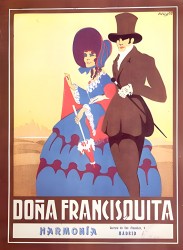
The new century did not diminish the genre so much as diversify it. Doña Francisquita by Amadeo Vives (1871–1932), first performed in 1923, is perhaps the supreme late flowering of the romantic zarzuela. Loosely based on Lope de Vega, it marries a deft comedy of courtship to music of exceptional abundance: the Song of the Nightingale, the tenor romanza ‘Por el humo se sabe’, the Chorus of the Romantics and the great Fandango follow one another with almost prodigal generosity. Vives can sound intimate, ceremonial, nostalgic and exuberant without breaking the work’s stylistic unity.

Set against the political unrest of 1868, Luisa Fernanda (1932) by Federico Moreno Torroba (1891–1982), offers a more autumnal emotional world. Its triangular love story is conventional; its treatment is not. Vidal’s devotion to Luisa, Javier’s divided loyalties and the heroine’s final renunciation are drawn with unusual sympathy, while the music continually transforms dance rhythms into psychological expression. Torroba’s melodic elegance can mislead an inattentive listener into hearing mere charm where there is, in fact, considerable dramatic tact.

Pablo Sorozábal (1897–1988) brought a still tougher theatrical intelligence. La tabernera del puerto (‘The Port Tavern-Keeper’, 1936) combines harbour melodrama with some of the repertory’s most enduring lyrical numbers, including ‘No puede ser’ and Marola’s dreamlike ‘En un país de fábula’. La del manojo de rosas (‘The One with the Armful of Roses’, 1934) places romance amid mechanics, flower sellers and class tensions in contemporary Madrid, its popular idiom sharpened by a modern ear for orchestral colour.

In Black, el payaso (‘Black, the Clown’, 1942), Sorozábal even employed the glittering surfaces of operetta as a vehicle for political unease. Zarzuela’s later history therefore resists any comfortable story of decline: the genre continued to absorb modern urban life, cinema, fashionable dances and the shadows of dictatorship. La tabernera del puerto, premiered in Barcelona in 1936, has sometimes been described as the last great zarzuela of the traditional repertory.

Why, then, has zarzuela remained peripheral outside the Spanish-speaking world? Language is only part of the answer. The spoken dialogue is difficult to export, and the music depends upon verbal rhythm, regional accent and a performance style poised between operatic amplitude and theatrical immediacy. Sing it as grand opera and the comedy stiffens; play it as lightweight operetta and the pathos evaporates.

Recordings pose their own difficulties, since dialogue is frequently cut and the theatrical atmosphere cannot always be reconstructed in the studio. Yet the best performances reveal a repertory of astonishing variety – one that deserves to stand beside Offenbach, Sullivan and Lehár without surrendering its difference. Zarzuela offers not an Iberian footnote to European music theatre but an alternative history of it: popular and cultivated, cosmopolitan and intensely local, capable of laughter, sentiment and genuine dramatic fire.

Recommended recordings:

Our thanks to the correspondent who pointed out our unintentional neglect of João Domingos Bomtempo in the recommended recordings to Part 4 of this series. We’re happy to rectify the omission here:

Latest Posts


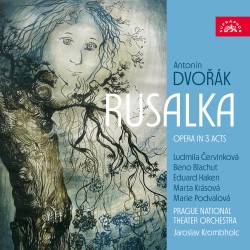
Water, Moonlight and Memory: Dvořák’s ‘Rusalka’ – The Return of a Classic

21st July 2026

Few operas announce their emotional climate as immediately as Rusalka. Before a word is sung, the lower strings seem to stir the black water; a melody rises, reaches towards warmth and falls back into its own reflection. Dvořák’s ‘lyric fairy tale’, composed in 1900–01 to Jaroslav Kvapil’s Czech libretto and first performed in Prague in 1901, is built upon an adult unease: the desire to cross into another world, and the fear that fulfilment may destroy the self that desired it.
Recordings can prettify Rusalka into... read more
read more

Music of the Iberian Peninsula, Part 5: Beyond Vienna – The Classical Era in Spain and Portugal

14th July 2026

The Classical period has long been mapped as though Europe’s musical imagination narrowed to a triangle drawn between Vienna, Mannheim and northern Italy. Spain and Portugal appear, if at all, as picturesque margins: lands of guitars, fandangos and imported opera, waiting for the 19th century to discover their national voices. Listen attentively to the Iberian repertory of roughly 1750 to 1830, however, and a more intricate picture emerges. Madrid and Lisbon were cosmopolitan courts, receptive to Italian opera, French... read more

read more
Hans Werner Henze at 100: An Outsider at the Heart of Modern Music

6th July 2026

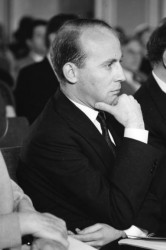
Among the major composers of the post-war era, Hans Werner Henze occupies a singular position. Neither a doctrinaire modernist nor a nostalgic traditionalist, he fashioned a musical language of remarkable elasticity, capable of embracing serial procedures and sumptuous lyricism, classical forms and theatrical fantasy, political engagement and deeply personal expression. If his music has never enjoyed the ubiquity of Britten, Shostakovich or Ligeti, it has steadily acquired the stature of a body of work whose richness rewards... read more

read more
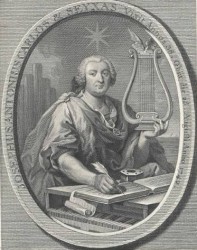
Music of the Iberian Peninsula Part 4: The Spanish and Portuguese Baroque

30th June 2026

For many music lovers, the Baroque era immediately conjures images of Bach's intricate counterpoint, Handel's majestic choruses, Vivaldi’s dazzling violin concertos or Charpentier’s sumptuous vocal music. Yet on the southwestern edge of Europe another remarkable musical tradition flourished during the seventeenth and early eighteenth centuries. The Iberian Peninsula developed a distinctive Baroque voice that combined religious intensity, courtly sophistication and popular vitality. Drawing upon centuries of cultural exchange... read more

read more
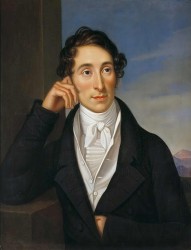
Carl Maria von Weber: Visionary of German Romanticism

23rd June 2026

When audiences think of early nineteenth-century German music, the towering figures of Beethoven, Schubert, and later Wagner often dominate the conversation. Yet between the Classical world of Mozart and the mature Romanticism of Wagner stands a composer whose influence was both profound and transformative: Carl Maria von Weber (1786–1826). Composer, conductor, pianist, critic, and visionary dramatist, Weber played a pivotal role in shaping the future of German opera and helping define the musical language of... read more

read more
View Full Archive