 FREE UK SHIPPING OVER £35!
The Spin Doctor Europadisc's Weekly Column
Celebrating György Kurtág’s 100th Birthday
10th February 2026
10th February 2026
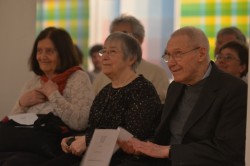 Like the rest of us mere mortals, few great composers live to celebrate their 100th birthday. Songwriter Irving Berlin (1888–1989) famously lived to the age of 101, although he retired from composing in his 70s. The widely respected American modernist master Elliott Carter (1908–2012) reached 103, and completed his last work just a few months before his death. This month sees the great Hungarian composer György Kurtág (b. 19 February 1926) mark his centenary in style, with a two-week festival of his music in Budapest, the highlight of which will be his new opera Die Stechardin, based on the letters and writings of the 18th-century German polymath Georg Christoph Lichtenberg.
Opera is a genre Kurtág has come to late in life: his only other work in the genre, Fin de partie (based on Samuel Beckett’s absurdist tragicomedy Endgame) was premiered at La Scala, Milan in 2018. Indeed, Kurtág (like another of music’s great individualists, Leoš Janáček) was something of a late developer. His Opus 1, the String Quartet no.1, dates from 1959, and his painstaking, often halting compositional process (frequently involving lengthy revisions) ensured that, even in his late 50s, his output had reached only Opus 23. Most of his contemporaries – including Boulez, Stockhausen, Nono, Feldman and his compatriot and close friend György Ligeti – had already earned wide acclaim by that stage in their careers.
It was in the mid-1980s that Kurtág really began to make his mark, above all with his Kafka-Fragmente (Kafka Fragments) for soprano and violin, a 40-movement song cycle that sets extracts from Franz Kafka’s diaries and letters, in highly condensed, epigrammatic form (many of the individual settings are under a minute long, the shortest a mere 15 seconds). These fragments offer a marvellous entry point into Kurtág’s music: they are compact, often uncompromising in their use of modernist gestures, and require the utmost concentration and focus on the part of both the performers and the listener. The rewards are a viscerally immediate world of expression, every bit as elusive and fascinating as Kafka’s texts themselves. The work’s very opening is instructive. It starts with the violin tolling on détaché middle C and D; when the voice enters, it commits one of the most grievous of musical sins: parallel fifths above the violin! This tiny detail in itself demonstrates that Kurtág has never been one to embrace musical orthodoxy.
Among Kurtág’s teachers in Budapest in the late 1940s were Sándor Veress, Ferenc Farkas and Leó Weiner. In the Paris of the late 1950s (following the Hungarian Uprising of 1956), Kurtág studied with Olivier Messiaen and Darius Milhaud. Other influences on his early development were the works of Bartók and Webern. His exposure to a wide range of music and musical ‘-isms’ only served to convince him that he was unable to find a way forward. It was the art psychologist Marianne Stein who came to the rescue: she persuaded Kurtág to work from the most basic musical elements, and this sense of every piece having its roots in the very basics of music is fundamental to grasping his typically aphoristic musical style.
Another crucial aspect of Kurtág’s music is the feeling of absolute focus, both technical and emotional. This is apparent in the ongoing series of pedagogical piano miniatures Játékok (‘Games’) for solo piano or two performers. Begun in 1973 and containing several hundred pieces organised in (to date) 10 volumes, with an eleventh in preparation, it contains everything from transcriptions of movements from Bach cantatas to postcard-like tributes to friends, colleagues and family. It is a kind of laboratory of micro-pieces which have served as calling cards for Kurtág himself, most often performing alongside his late wife Márta. Their rendition of the introductory Sonatina from Bach’s Actus tragicus cantata, BWV 106, is probably the best introduction to the extraordinarily intimate and delicately-poised sound-world they created together.
However, not all Kurtág’s works are on such a contained, miniature scale. As his music reached wider audiences, the commissions began to flow. 1994 brought the Berlin Philharmonic premiere under Claudio Abbado of Stele, a 12-minute, three-movement work for huge orchestra, including four percussionists and parts for celesta, grand and upright pianos, and cimbalom (the latter a nod to Kurtág’s Hungarian background). This large-scale funeral music also contains references to past traditions, such as the inclusion of four Wagner tubas, and although the music is edgily modernist in its harmonies, there are moments of luminescence and haunting stillness, as cryptically allusive as any music composed in the last century. In Kurtág’s own words, one particular passage creates an effect like ‘the scene in Tolstoy’s War and Peace where Prince Andrei is wounded at Austerlitz for the first time: all of a sudden, he no longer hears the battle but discovers the blue sky above him. That is what the music conjures up.’
While the operatic genre was a new departure for the nonagenarian (!) composer, his music for voices – solo or choral – goes back to a Dance Song he composed in 1950 for children’s choir. It also includes the remarkable Four Songs to Poems by János Pilinszky, op.11 (1975) with its astonishingly raw, guttural writing for solo bass, at times merely shadowed by an ensemble of instruments, at others further intensified and amplified by them. The Songs to Poems by Anna Akhmatova, op.41 (1997–2008), and the 21-movement Messages of the Late Miss R. Troussova, op.17 (1976–1980), to poems by Rimma Dalos, are even more remarkable. The number of movements in the latter (if not their organisation into three increasingly expansive parts) is clearly an hommage to Schoenberg’s Pierrot lunaire.
Kurtág’s music is peppered with such allusions. …quasi una fantasia…, op.27 no.1, for piano and groups of instruments ‘dispersed in space’, and Op.27 no.2 (a double concerto for piano, cello and two chamber ensembles) together pay tribute to Beethoven’s two piano sonatas with the same opus number. Yet there is never anything in the slightest bit predictable or formulaic about Kurtág’s musical language. The opus numbers, the involvement of the piano, and the tempo indications are the closest one gets to Beethoven being explicitly referenced here. The stark contrast between the aggressive timpani thwacks and brass chords of the third movement of …quasi una fantasia… and the fragile, otherworldly luminosity of the following Aria is as magical as anything in his output.
For the best part of half a century, György Kurtág and his music have earned the devoted admiration of his fellow musicians (not least for his close interest and involvement in their performances) and an increasingly wide audience. His combination of an uncompromisingly modernist harmonic language with a refusal to embrace any kind of dogmatism, and an exacting focus on the tiniest of gestures and nuances, make his music both challenging and immensely rewarding. His pearl-like miniatures continue to appeal to many for whom modern classical music might otherwise be a closed book. Above all, notwithstanding his music’s frequently exacting nature, there is an honesty, openness and focus to it that disarm any preconceptions.
With no signs of let-up in his creative powers, we wish György Kurtág many felicitations and congratulations on this milestone birthday, and a very big thank-you for his extraordinary and constantly rewarding output. Boldog 100. születésnapot!
Recommended recordings:
Kurtág - Complete Works for Ensemble and Choir (de Leeuw, Asko|Schönberg Ensemble et al.) 4812883
Kurtág - Complete String Quartets (Quatuor Molinari) ACD22705
Kurtág - Játékok (M & G Kurtág) 4535112
Kurtág - Kafka Fragments, op.24 (J Banse, A Keller) 4763099
Lines of Life: Schubert & Kurtág (B Appl, G Kurtág, P-L Aimard) ALPHA1145
Latest Posts
Music of the Iberian Peninsula, Part 2: ‘O quam gloriosum’ – The Spanish and Portuguese Golden Age
2nd June 2026
Over the past fortnight, I’ve been bathed in the most glorious, radiant, transformative light. Not the UK’s recent unseasonable heatwave, but the extraordinary vocal polyphony of the Siglo de Oro: the Spanish (and Portuguese) ‘Golden Century’. Extending from the late 15th to the early 17th century, this was a time of remarkable artistic flowering on the Iberian Peninsula, coinciding with the emergence of Spain and Portugal as global imperial powers with extensive colonial territories in the Americas, Africa and Asia. The... read more
read more
‘Call Me Flott’: A Tribute to Felicity Lott
26th May 2026
The acclaimed lyric soprano Felicity Lott, who has died at the age of 79, was an example of that rare breed among international singers: someone who combined star quality, wit, intelligence and humanity. During her half-century career she stood out for the refinement, clarity and textual responsiveness she brought to the music of Mozart and Richard Strauss, at a time when specialism in the former and sheer vocal power and OTT theatricality in the latter were increasingly the norm. These same strengths characterised her wider... read more
read more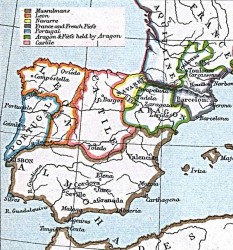
Music of the Iberian Peninsula: Beginnings
19th May 2026
Nestling at the southwestern-most tip of Europe, the Iberian Peninsula has long held charms for the rest of the continent. It is still one of the most popular destination for west-European holidaymakers seeking a mixture of sun and exoticism. In the world of classical music, it has attracted composers from the Neapolitan expat Domenico Scarlatti, and French composers like Bizet, Chabrier and Ravel, to Rimsky-Korsakov in far-away St Petersburg. The allure of Hispania is partly due to its geographic location as a peninsula... read more
read more
When the Music Vanishes
12th May 2026
Many of you may think that classical music has already vanished from our streets. The days when a modest-sized city like Europadisc’s home patch in Nottingham could boast no fewer than three specialist classical shops are long gone. In central London, where the likes of Caruso & Co, Farringdon Records, Direction Dean Street and Orchesography plied their trade, even the tenacious Harold Moores in Great Marlborough finally shut up shop in early 2017. Mounting rents, business rates and online competition have been... read more
read more
Five Years of the Spin Doctor!
6th May 2026
A couple of weeks ago, I was told by Europadisc’s proprietor that it is now five years since we first launched the Spin Doctor column. Where has the time gone? The original brief was fairly succinct and deliberately left open to a wide range of options: to write a weekly column, roughly the same length as (or a little longer than) our Disc of the Week reviews, on any subject broadly related to recorded classical music. As the first columns appeared while the knock-on effects of the Covid pandemic were still being felt, the... read more
read more