 FREE UK SHIPPING OVER £35!
The Spin Doctor Europadisc's Weekly Column
Amelia Freedman: Champion of the New and Neglected
30th July 2025
30th July 2025
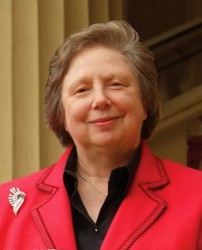 The name itself may not mean much to many record collectors, but Amelia Freedman, who has died at the age of 84, was co-founder of the Nash Ensemble, a flexible chamber grouping with a nucleus of wind and string quintets plus piano and harp, which she directed for six decades. As such, she was responsible for drawing to the attention of the record-buying public not just such relatively neglected figures as Hummel and Spohr, but a dazzling array of contemporary composers from Julian Anderson to Judith Weir, and important commissions from the likes of Harrison Birtwistle, Elliott Carter and Mark-Anthony Turnage. Whether in more mainstream repertoire by Beethoven and Schubert or the demanding soundscapes of new music, the Nash Ensemble set consistently high standards to which other groups then aspired, and it was Freedman’s artistic vision, coupled with her tenacious organisational skills, that ensured the group has remained at the peak of the profession for so long.
Freedman was born on 21 November 1940 in North London, and attended St George’s School, Harpenden, and Henrietta Barnett School in London, before entering the Royal Academy of Music to study clarinet. There, her administrative strengths were recognised by her fellow students, and it was at their urging that she set up the group that would become the Nash Ensemble (named after the elegant terraces in nearby Regent’s Park designed by John Nash). Established in 1965, they gave their first ‘outside’ engagement at the American Embassy in January 1965, while Freedman supported herself by teaching, and even serving as a backing singer on the Beatles film A Hard Day’s Night. For the first four years of the Nash’s existence, Freedman was also its clarinettist, but she soon took on an increasingly demanding organisational role, and by the 1970s this was her sole focus.
As the Nash Ensemble’s profile grew, Freedman found herself in demand as an artistic director: she was director of the Bath Festival for ten seasons from 1984 (persuading no less a figure than Olivier Messiaen to attend performances of his works, to huge ovations), at a time when the challenge of securing funding called for a figure of singular determination. After stepping down from that role, she retained close links with Bath by programming the city’s Mozartfest. The Nash Ensemble forged a particularly fruitful role at London’s esteemed Wigmore Hall, which was inevitably central to the group’s 60th anniversary celebrations in 2024. Freedman was also head of classical music at London’s South Bank Centre from 1995 to 2006, which may well come to be viewed in retrospect as a last golden hurrah for the days of intelligent yet challenging programming.
Under Freedman’s visionary guidance, the Nash Ensemble developed a wide-ranging discography. In its early days, it was a mainstay of the CRD catalogue, and happily many of those recordings are still available, from the Viennese classics to Russian and French repertoire (the latter soon becoming another Nash speciality). The group’s strong presence on the contemporary music scene is reflected in numerous discs on the NMC label, whose guiding light, Colin Matthews, is among the many composers Freedman championed. Others to whom she was particularly close were the two very contrasting enfants terribles of the New Manchester School, Birtwistle and Peter Maxwell Davies. The ensemble’s 2022 disc of Birtwistle’s late chamber music is essential listening, as is the 2014 Signum Classics release of his Moth Requiem on which they feature alongside the BBC Singers.
Another label on which they were particularly active was Hyperion, with French music again a strong focus in sets of chamber music by Saint-Saëns and Fauré, and a 60th-anniversary disc of Debussy including the String Quartet, of which we wrote that ‘the Nash players have all the mercurial skill to navigate a sure path through all the contrasting moods to bring the disc to a thrilling close.’ Nor did they neglect the less familiar Austro-German repertoire which they had long championed: their 2022 album of Sextets and a Trio by Ferdinand Ries ‘raise[d] them to levels they have seldom experienced before.’ My own personal favourites also include currently unavailable discs of Suk and four of the Terezín composers, as well as a classic Chandos recording of Schoenberg’s Pierrot lunaire with soprano Jane Manning and a young Simon Rattle – still one of the highlights of his long career.
With Amelia Freedman’s death, the world of classical music has lost one of its most committed champions of new and neglected repertoire, judged by Birtwistle to be ‘on the side of the angels’, but her legacy lives on, with the Nash Ensemble now jointly led by members Simon Crawford-Phillips and Adrian Brendel. Among her many honours were a CBE for services to music (2006) and Honorary Membership of the Royal Philharmonic Society (2024). We must be thankful that Freedman lived to celebrate the group’s 60th anniversary last year (a remarkable achievement in itself), and that she has left such a lasting imprint on the discography, taking her influence well beyond the many who witnessed the hundreds of live and broadcast concerts which she gave life to. To her family, friends and colleagues, we extend our deepest condolences.
The Nash Ensemble: a few recommendations
Birtwistle - Chamber Works BIS2561
Debussy - String Quartet & Sonatas CDA68463
Simon Holt - …era madrugada NMCD008
John Pickard - The Gardener of Aleppo BIS2461
Ries - Piano Trio & Sextets CDA68380
Spohr - Septet, Quintet CRD3399
Latest Posts

Music of the Iberian Peninsula, Part 2: ‘O quam gloriosum’ – The Spanish and Portuguese Golden Age
2nd June 2026
Over the past fortnight, I’ve been bathed in the most glorious, radiant, transformative light. Not the UK’s recent unseasonable heatwave, but the extraordinary vocal polyphony of the Siglo de Oro: the Spanish (and Portuguese) ‘Golden Century’. Extending from the late 15th to the early 17th century, this was a time of remarkable artistic flowering on the Iberian Peninsula, coinciding with the emergence of Spain and Portugal as global imperial powers with extensive colonial territories in the Americas, Africa and Asia. The... read more
read more
‘Call Me Flott’: A Tribute to Felicity Lott
26th May 2026
The acclaimed lyric soprano Felicity Lott, who has died at the age of 79, was an example of that rare breed among international singers: someone who combined star quality, wit, intelligence and humanity. During her half-century career she stood out for the refinement, clarity and textual responsiveness she brought to the music of Mozart and Richard Strauss, at a time when specialism in the former and sheer vocal power and OTT theatricality in the latter were increasingly the norm. These same strengths characterised her wider... read more
read more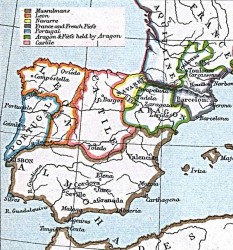
Music of the Iberian Peninsula: Beginnings
19th May 2026
Nestling at the southwestern-most tip of Europe, the Iberian Peninsula has long held charms for the rest of the continent. It is still one of the most popular destination for west-European holidaymakers seeking a mixture of sun and exoticism. In the world of classical music, it has attracted composers from the Neapolitan expat Domenico Scarlatti, and French composers like Bizet, Chabrier and Ravel, to Rimsky-Korsakov in far-away St Petersburg. The allure of Hispania is partly due to its geographic location as a peninsula... read more
read more
When the Music Vanishes
12th May 2026
Many of you may think that classical music has already vanished from our streets. The days when a modest-sized city like Europadisc’s home patch in Nottingham could boast no fewer than three specialist classical shops are long gone. In central London, where the likes of Caruso & Co, Farringdon Records, Direction Dean Street and Orchesography plied their trade, even the tenacious Harold Moores in Great Marlborough finally shut up shop in early 2017. Mounting rents, business rates and online competition have been... read more
read more
Five Years of the Spin Doctor!
6th May 2026
A couple of weeks ago, I was told by Europadisc’s proprietor that it is now five years since we first launched the Spin Doctor column. Where has the time gone? The original brief was fairly succinct and deliberately left open to a wide range of options: to write a weekly column, roughly the same length as (or a little longer than) our Disc of the Week reviews, on any subject broadly related to recorded classical music. As the first columns appeared while the knock-on effects of the Covid pandemic were still being felt, the... read more
read more