 FREE UK SHIPPING OVER £35!
The Spin Doctor Europadisc's Weekly Column
John Nelson: The Consummate Berlioz Conductor
8th April 2025
8th April 2025
 The death at the age of 83 of the American conductor John Nelson has robbed the musical world of one of the most devoted champions of the works of Hector Berlioz. Nelson had already recorded two of Berlioz’s operas – Béatrice et Bénédict in 1991 (Erato) and Benvenuto Cellini in 2003 (Virgin Classics – when his magnificent 2017 live account of Les Troyens, released on Erato and starring Joyce DiDonato, Michael Spyres and Marie-Nicole Lemieux, was greeted with critical superlatives and scooped a host of high-profile awards.
Nelson’s long association with Berlioz’s music started when, soon after his graduation, it was suggested to him by agent and producer Matthew Epstein that he should do ‘something spicy and interesting that’ll make a splash in New York’. The two accordingly collaborated to give the first New York performance of Les Troyens (an uncut concert performance), at the Carnegie Hall on 17 March 1972. Two years later, as assistant to Rafael Kubelík, he stepped in at a day’s notice for the ailing Czech maestro to make his Met debut with the same work. He would go on to conduct eight further productions of the five-act opera, becoming its most ardent advocate.
John Wilton Nelson was born on 6 December 1941 in San José, Costa Rica, to Protestant missionaries, and retained a strong Christian faith throughout his life. He studied at Wheaton College in Illinois, and then with the French-born conductor Jean Morel at the Juilliard School. Before his professional breakthrough with Les Troyens, he was music director of the Greenwich Philharmonia in Connecticut, and of the New Jersey Pro Arte Chorale, giving him an excellent grounding in the choral repertoire. He was also on the conducting staff at the Metropolian Opera.
From 1976 to 1987 he was music director of the Indianapolis Symphony Orchestra (from which time his first commercial recordings date), and held similar positions with the Opera Theatre of Saint Louis (1985–91) and the Caramoor Festival in Katonah. From 1998 his ten-year period as music director of the Ensemble Orchestral de Paris brought further recordings, including a fine Virgin Classics account of Mendelssohn’s complete A Midsummer Night’s Dream music with extensive spoken dialogue by professional actors: currently unavailable, it’s well worth searching out, as are Bach’s Mass in B minor (with soloists including DiDonato and Paul Agnew) and St Matthew Passion, both on DVD.
To anyone who knows only his late Berlioz recordings, Nelson’s recorded repertoire is unexpectedly wide-ranging. Notable collaborations with soprano Kathleen Battle on Deutsche Grammophon included Handel’s Semele in 1990 (with the English Chamber Orchestra and a cast that also boasted Marilyn Horne and Samuel Ramey). There was a complete Beethoven symphony cycle with the Ensemble Orchestral de Paris on the Ambroisie label, and a fine Missa solemnis, as well as more esoteric repertoire by Ellen Taaffe Zwilich and Loeffler. As recently as November 2023 there were recordings of Mozart’s Requiem (live in Lausanne, released on ICA Classics) and Handel’s Messiah with the English Concert (Erato).
Yet inevitably it is the Berlioz recordings – particularly the late ones – that will form Nelson’s lasting legacy, as essential to collectors in the new millennium as Colin Davis’s Philips recordings were in the 1960s and 70s. Most of them were made with the Orchestre Philharmonique de Strasbourg and in close partnership with DiDonato and Spyres: together, they made up a ‘dream team’ in this repertoire, minutely attuned to Nelson’s approach which embraced the composer’s wilder eccentricities while giving the lyrical moments crucial space to breathe. Their recording of Le Damnation de Faust is scarcely less powerful or remarkable than the (currently unavailable) Les Troyens, with an unerring feel for pacing in a work whose sudden changes of location and mood can derail less experienced performers.
Spyres’s ‘baritenor’ performance of Les Nuits d’été, with all the songs in the original keys, has to be heard to be believed: it’s not the first time Nelson had tackled the work on disc, and the experience shows, even in some of the more surprising choices of tempo. It’s coupled with an exceptionally vivid account of Harold en Italie featuring outstanding young violist Timothy Ridout. DiDonato and Nelson teamed up again for the Shakespearean reflection (or ‘symphonie dramatique’, in Berlioz’s term), Roméo et Juliette, where the conductor’s expert handling of transitions succeeds in binding together what can be an unwieldy structure. It is complemented by Berlioz’s 1829 Prix de Rome cantata Cléopâtre, with DiDonato at her compelling best in a gripping portrayal of the tragic Egyptian queen.
The best tribute that could currently be paid to John Nelson is the urgent reissue of both Les Troyens and the uniquely spiritual account of the Grande Messe des Morts (recorded with the augmented Philharmonia Orchestra in St Paul’s Cathedral, London, on the 150th anniversary of Berlioz’s death, in March 2019). Even better would be a box gathering together all of his Berlioz recordings. In the meantime, those who already have these discs will treasure them as witnesses to a truly illuminating musician, artist and human being, held in the greatest affection by his friends and colleagues.
John Wilton Nelson, born 6 December 1941, died 31 March 2025
Recommended recordings:
Berlioz - Benvenuto Cellini 9029568972
Berlioz - La Damnation de Faust 9029541735
Berlioz - Les Nuits d’été, Harold en Italie 5419719685
Berlioz - Roméo et Juliette, Cléopâtre 5419748138
Mozart - Requiem, etc. ICAC5175
Handel - Messiah 5419774160
Loeffler - La Mort de Tintagiles, Five Irish Fantasies NW80332
Latest Posts

Music of the Iberian Peninsula, Part 2: ‘O quam gloriosum’ – The Spanish and Portuguese Golden Age
2nd June 2026
Over the past fortnight, I’ve been bathed in the most glorious, radiant, transformative light. Not the UK’s recent unseasonable heatwave, but the extraordinary vocal polyphony of the Siglo de Oro: the Spanish (and Portuguese) ‘Golden Century’. Extending from the late 15th to the early 17th century, this was a time of remarkable artistic flowering on the Iberian Peninsula, coinciding with the emergence of Spain and Portugal as global imperial powers with extensive colonial territories in the Americas, Africa and Asia. The... read more
read more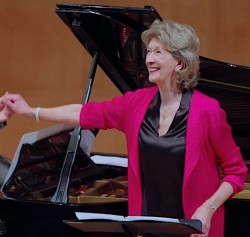
‘Call Me Flott’: A Tribute to Felicity Lott
26th May 2026
The acclaimed lyric soprano Felicity Lott, who has died at the age of 79, was an example of that rare breed among international singers: someone who combined star quality, wit, intelligence and humanity. During her half-century career she stood out for the refinement, clarity and textual responsiveness she brought to the music of Mozart and Richard Strauss, at a time when specialism in the former and sheer vocal power and OTT theatricality in the latter were increasingly the norm. These same strengths characterised her wider... read more
read more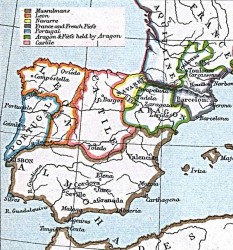
Music of the Iberian Peninsula: Beginnings
19th May 2026
Nestling at the southwestern-most tip of Europe, the Iberian Peninsula has long held charms for the rest of the continent. It is still one of the most popular destination for west-European holidaymakers seeking a mixture of sun and exoticism. In the world of classical music, it has attracted composers from the Neapolitan expat Domenico Scarlatti, and French composers like Bizet, Chabrier and Ravel, to Rimsky-Korsakov in far-away St Petersburg. The allure of Hispania is partly due to its geographic location as a peninsula... read more
read more
When the Music Vanishes
12th May 2026
Many of you may think that classical music has already vanished from our streets. The days when a modest-sized city like Europadisc’s home patch in Nottingham could boast no fewer than three specialist classical shops are long gone. In central London, where the likes of Caruso & Co, Farringdon Records, Direction Dean Street and Orchesography plied their trade, even the tenacious Harold Moores in Great Marlborough finally shut up shop in early 2017. Mounting rents, business rates and online competition have been... read more
read more
Five Years of the Spin Doctor!
6th May 2026
A couple of weeks ago, I was told by Europadisc’s proprietor that it is now five years since we first launched the Spin Doctor column. Where has the time gone? The original brief was fairly succinct and deliberately left open to a wide range of options: to write a weekly column, roughly the same length as (or a little longer than) our Disc of the Week reviews, on any subject broadly related to recorded classical music. As the first columns appeared while the knock-on effects of the Covid pandemic were still being felt, the... read more
read more