 FREE UK SHIPPING OVER £35!
The Spin Doctor Europadisc's Weekly Column
Works in Focus: Sibelius’s Tapiola
4th October 2023
4th October 2023
 Like his symphonies, Sibelius’s tone poems stand as milestones across his compositional career, from the early En saga (1892, rev. 1902) and Spring Song (1894–95) via the overtly nationalist Finlandia (1899) to such later works as The Bard, Luonnotar (both 1913) and The Oceanides (1914). Over the course of these works Sibelius took a quintessentially Germanic genre with origins in the symphonic poems of Liszt and turned it into something uniquely and powerfully Finnish, capturing both the mythology and the landscapes of his Nordic homeland. And at the apex stands his last completed large-scale work, composed just a year after his astonishing single-movement Seventh Symphony (1924): Tapiola, op.112 (1925).
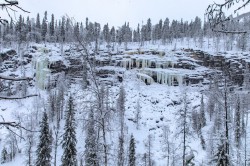
Commissioned by conductor Walter Damrosch for the New York Philharmonic Society, and premiered by Damrosch and the New York Philharmonic-Symphony Orchestra on 26 December 1926, Tapiola is far-removed from the cosmopolitan melting-pot of the United States’ economic and social capital. Its title – meaning literally ‘the realm of Tapio’ – comes from the Finnish god of the forest, a Green Man-type figure to whom hunters prayed before their expeditions. Accordingly, the work evokes the Nordic forest: its wildness as well as its stillness, its darkness penetrated only by shafts of piercing, low-elevation sunlight.
For many Sibelians, Tapiola stands at the summit of the composer’s output, reflecting the move toward greater conciseness as well as motivic and textural economy evident in his orchestral music from the Fourth and Fifth Symphonies onwards. And although the vestiges of sonata form are traceable in the compacted recapitulation of Tapiola’s later pages, Sibelius’s fabled ‘motivic logic’ (which he proposed as an alternative to Mahler’s philosophy of the symphony ‘embracing the world’ when the two composers met in 1907) is here at the service of a far broader picture. In his ‘analytical’ essay on the work, Donald Francis Tovey declared that the best way to appreciate Tapiola was ‘to listen to it’, before printing eleven one-line music examples with minimal commentary.
Wide-spread they stand, the Northland’s dusky forests,
Ancient, mysterious, brooding savage dreams;
Within them dwells the Forest’s mighty God,And wood-sprites in the gloom weave magic secrets.
For many years Tapiola was regarded as Sibelius’s unofficial ‘Eighth Symphony’, extending the move toward compression evident in the Seventh. But the score’s powerfully evocative sense of space and stasis would make an odd symphony even by Sibelius’s later standards, and he did in fact work on a separate Eighth Symphony – substantially completing it in the view of some experts – before destroying the score, with only a handful of sketches remaining. More recently, Tapiola has plausibly been co-opted into the discipline of ‘ecocriticism’ (few other composers have so successfully evoked a sense of place), with the storm section and subsequent ‘cry’ in the high strings representing a crisis as the otherwise passive observer is pulled in by the landscape, and offering food for thought amid the climate crisis, pointing to a relevance that few might have imagined in the long decades of neglect suffered by Sibelius’s music (see Grimley, cited below).
One of the performers who kept the Sibelian flame burning was Thomas Beecham, and his recordings Tapiola with the Royal Philharmonic Orchestra are still worth seeking out as among the most urgently committed on disc. Earlier still is the work’s first recording, by the London Symphony Orchestra under Sibelius’s close friend and colleague Robert Kajanus in 1930, which despite poor sound has a unique authority to it (Kajanus had conducted the work’s Finnish premiere just three years earlier). Although a relative rarity in the concert hall (it shouldn’t be: it’s one of the outstanding tone poems by any composer, and well worth the investment of rehearsal time), Tapiola has been frequently recorded in the years since Kajanus and Beecham. Performances range from the fleet-footed Berglund (his Helsinki recording is probably best) to the slow-burning Karajan (the 1965 Berlin account is the one to go for). It’s not always that native orchestras are the best instruments for home-grown composers, but in this case two Finnish bands really do ‘get’ the unique atmosphere of this powerful yet haunting work, right up to the beatific, transfigured glow of its final B major chord: the performances under Leif Segerstam and Hannu Lintu on the Ondine label stand head and shoulders above other modern recordings. Both are listed below.
Bibliography:
Donald Francis Tovey, Essays in Musical Analysis, vol.6 ‘Supplementary Essays, Glossary and Index’ (Oxford: OUP, 1939, R/1948), 93–5
Arnold Whittall, Music Since the First World War (London: J.M. Dent & Sons, 1977, R/1988), 23–4
Daniel M. Grimley, ‘Music, Landscape, Attunement: Listening to Sibelius's Tapiola’, Journal of the American Musicological Society, vol.64 no.2 (Summer 2011), 394–98
Recommended recordings;
Robert Kajanus conducts Sibelius Vol.1 (LSO/Kajanus) 8111393
Sibelius - Lemminkainen Suite, Tapiola (Helsinki PO/Segerstam) ODE8522
Sibelius - Tapiola, En Saga, 8 Songs (Finnish Radio SO/Lintu) ODE12895
Latest Posts

Music of the Iberian Peninsula, Part 2: ‘O quam gloriosum’ – The Spanish and Portuguese Golden Age
2nd June 2026
Over the past fortnight, I’ve been bathed in the most glorious, radiant, transformative light. Not the UK’s recent unseasonable heatwave, but the extraordinary vocal polyphony of the Siglo de Oro: the Spanish (and Portuguese) ‘Golden Century’. Extending from the late 15th to the early 17th century, this was a time of remarkable artistic flowering on the Iberian Peninsula, coinciding with the emergence of Spain and Portugal as global imperial powers with extensive colonial territories in the Americas, Africa and Asia. The... read more
read more
‘Call Me Flott’: A Tribute to Felicity Lott
26th May 2026
The acclaimed lyric soprano Felicity Lott, who has died at the age of 79, was an example of that rare breed among international singers: someone who combined star quality, wit, intelligence and humanity. During her half-century career she stood out for the refinement, clarity and textual responsiveness she brought to the music of Mozart and Richard Strauss, at a time when specialism in the former and sheer vocal power and OTT theatricality in the latter were increasingly the norm. These same strengths characterised her wider... read more
read more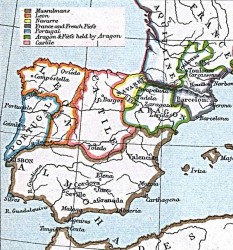
Music of the Iberian Peninsula: Beginnings
19th May 2026
Nestling at the southwestern-most tip of Europe, the Iberian Peninsula has long held charms for the rest of the continent. It is still one of the most popular destination for west-European holidaymakers seeking a mixture of sun and exoticism. In the world of classical music, it has attracted composers from the Neapolitan expat Domenico Scarlatti, and French composers like Bizet, Chabrier and Ravel, to Rimsky-Korsakov in far-away St Petersburg. The allure of Hispania is partly due to its geographic location as a peninsula... read more
read more
When the Music Vanishes
12th May 2026
Many of you may think that classical music has already vanished from our streets. The days when a modest-sized city like Europadisc’s home patch in Nottingham could boast no fewer than three specialist classical shops are long gone. In central London, where the likes of Caruso & Co, Farringdon Records, Direction Dean Street and Orchesography plied their trade, even the tenacious Harold Moores in Great Marlborough finally shut up shop in early 2017. Mounting rents, business rates and online competition have been... read more
read more
Five Years of the Spin Doctor!
6th May 2026
A couple of weeks ago, I was told by Europadisc’s proprietor that it is now five years since we first launched the Spin Doctor column. Where has the time gone? The original brief was fairly succinct and deliberately left open to a wide range of options: to write a weekly column, roughly the same length as (or a little longer than) our Disc of the Week reviews, on any subject broadly related to recorded classical music. As the first columns appeared while the knock-on effects of the Covid pandemic were still being felt, the... read more
read more