 FREE UK SHIPPING OVER £35!
The Spin Doctor Europadisc's Weekly Column
A Prolific Recording Artist: Jenő Jandó (1952–2023)
12th July 2023
12th July 2023
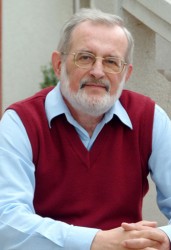 Over the past century, many musicians have made their reputations via the medium of recording, yet few have been known so exclusively from their discs – nor so extraordinarily prolific in the studio – as the Hungarian pianist Jenő Jandó, who died last week at the age of 71. Signed in 1988 to the Naxos label shortly after its establishment, Jandó went on to make hundreds of recordings for the company, his last (of late piano works by Liszt) being in 2020. As Naxos’s ‘house pianist’, he was a crucial part of its mission to combine quality, breadth, completeness and affordability. Among his most notable projects were the complete piano sonatas of Haydn, Mozart, Beethoven and Schubert, the complete Mozart piano concertos, and the complete piano works (including the concertos) of his compatriot Bartók.
When Naxos launched their internet subscription service (the Naxos Music Library) in 2003, Jandó’s already considerable discography was available to listeners such as music students in university and college libraries who might never have bought any of his physical discs. And, for those on tight budgets, Naxos’s discs (in those days in the ‘super-budget’ range) were well within reach at a time when more celebrated artists still came at a premium price. Both these factors ensured that Jandó’s performances reached a far wider audience than his low public concert profile might suggest.
Jenő Jandó was born in the city of Pécs in southwestern Hungary on 1 February 1952. His first piano teacher was his mother, but he went on to study with Katalin Nemes and Pál Kadosa at the Liszt Academy in Budapest, where he in turn was later to be appointed professor. His first successes were in the Georges Cziffra and Ciani piano competitions, but Jandó himself reckoned his breakthrough to be the third prize at the Beethoven Piano Competition at the age of 18. Further success came with first prize at the 1973 Hungarian Piano Concours and in the 1977 Sydney International Piano Competition.
As well as the composers mentioned above, Jandó’s vast discography encompassed Bach (including both books of The Well-Tempered Clavier), Brahms, Dvořák, Mussorgsky, Kodály, Schumann and Weber, as well as relative rarities like Dohnányi, Hofmann, Kuhlau. Inevitably across such a large spread there is some unevenness, and some critics were sniffy about anything coming from the budget end of the market. Yet Jandó’s insistence on putting the composer first – which led in some quarters to accusation of a lack of character – now seems refreshing in a time where everyone seems to be falling over to make their own interpretative ‘points’. In retrospect, the number of his recordings recommended (many with three-star ratings) in the now defunct Penguin Guide to Compact Discs speaks for itself.
Jandó’s straightforward but idiomatic feel for the music of his homeland is evident in his Bartók performances. Other recordings that show him at his considerable best are his bold, unaffected, direct late Beethoven sonatas (including a punchy ‘Hammerklavier’), and the incisive wit of his early Beethoven, all characterised by a commendably discreet use of the pedal. The clarity of his Bach, Haydn and Mozart is also exemplary. If his Schubert is at times short on poetry, he finds plenty in Schumann and Liszt, even if (in the opinion of the New Grove dictionary) he was ‘not primarily a subtle colourist’.
His chamber music collaborations, above all in Mozart and Beethoven with the Japanese violinist Takako Nishizaki, are models of musical partnership at the service of the music, and – like much of his solo work – are likely to attain greater durability than many starrier rivals. As the Naxos website puts it, Jenő Jandó’s art represented ‘the supremacy of the work over the ego of the performer’, and in his home country he was feted with honours, including the Liszt Prize and the Knight’s Cross of the Hungarian Order of Merit. At a more human level, he suppressed a Gould-like tendency to sing along while playing by placing an unlit cigarette in his mouth while recording. The last word, however, should go to his sometime collaborator Nishizaki: ‘The world has lost a wonderful musician. … He was highly intelligent and extremely musical with technique to spare and the ability to create tone colour always appropriate to the music. I will miss him.’
As a tribute to Jenő Jandó’s unique place in the classical record catalogues, Europadisc now has special offers on over 100 of his currently available Naxos titles (see link below). And we hope that Naxos might at some point issue box sets of his Beethoven and Mozart sonatas, as well as his Bartók, to stand as tribute alongside that of his Haydn sonatas!
https://www.europadisc.co.uk/offer/3158/In_Memory_of_Jeno_Jando.htm
Latest Posts
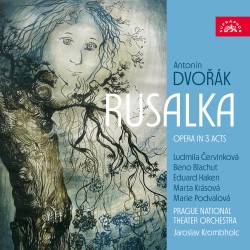
Water, Moonlight and Memory: Dvořák’s ‘Rusalka’ – The Return of a Classic
21st July 2026
Few operas announce their emotional climate as immediately as Rusalka. Before a word is sung, the lower strings seem to stir the black water; a melody rises, reaches towards warmth and falls back into its own reflection. Dvořák’s ‘lyric fairy tale’, composed in 1900–01 to Jaroslav Kvapil’s Czech libretto and first performed in Prague in 1901, is built upon an adult unease: the desire to cross into another world, and the fear that fulfilment may destroy the self that desired it.
Recordings can prettify Rusalka into... read more
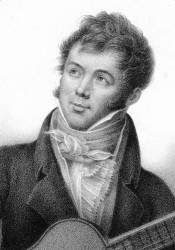
Music of the Iberian Peninsula, Part 5: Beyond Vienna – The Classical Era in Spain and Portugal
14th July 2026
The Classical period has long been mapped as though Europe’s musical imagination narrowed to a triangle drawn between Vienna, Mannheim and northern Italy. Spain and Portugal appear, if at all, as picturesque margins: lands of guitars, fandangos and imported opera, waiting for the 19th century to discover their national voices. Listen attentively to the Iberian repertory of roughly 1750 to 1830, however, and a more intricate picture emerges. Madrid and Lisbon were cosmopolitan courts, receptive to Italian opera, French... read more
read more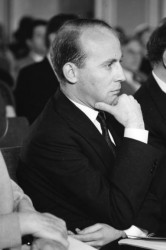
Hans Werner Henze at 100: An Outsider at the Heart of Modern Music
6th July 2026
Among the major composers of the post-war era, Hans Werner Henze occupies a singular position. Neither a doctrinaire modernist nor a nostalgic traditionalist, he fashioned a musical language of remarkable elasticity, capable of embracing serial procedures and sumptuous lyricism, classical forms and theatrical fantasy, political engagement and deeply personal expression. If his music has never enjoyed the ubiquity of Britten, Shostakovich or Ligeti, it has steadily acquired the stature of a body of work whose richness rewards... read more
read more
Music of the Iberian Peninsula Part 4: The Spanish and Portuguese Baroque
30th June 2026
For many music lovers, the Baroque era immediately conjures images of Bach's intricate counterpoint, Handel's majestic choruses, Vivaldi’s dazzling violin concertos or Charpentier’s sumptuous vocal music. Yet on the southwestern edge of Europe another remarkable musical tradition flourished during the seventeenth and early eighteenth centuries. The Iberian Peninsula developed a distinctive Baroque voice that combined religious intensity, courtly sophistication and popular vitality. Drawing upon centuries of cultural exchange... read more
read more
Carl Maria von Weber: Visionary of German Romanticism
23rd June 2026
When audiences think of early nineteenth-century German music, the towering figures of Beethoven, Schubert, and later Wagner often dominate the conversation. Yet between the Classical world of Mozart and the mature Romanticism of Wagner stands a composer whose influence was both profound and transformative: Carl Maria von Weber (1786–1826). Composer, conductor, pianist, critic, and visionary dramatist, Weber played a pivotal role in shaping the future of German opera and helping define the musical language of... read more
read more