 FREE UK SHIPPING OVER £35!
The Spin Doctor Europadisc's Weekly Column
Liszt and the Romantic Virtuoso
6th April 2022
6th April 2022
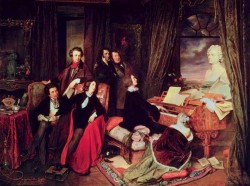 Music’s very particular nature as a performing art ensured it a unique place in the Romantic era. Whether as a vehicle for representation at various levels or as an embodiment of the period’s concern with artistic organicism, the fact that it unfolded in time meant that it highlighted certain aspects of artistic activity and ‘performativity’ over others. And surely none is more redolent of the era than the rise of the virtuoso. Earlier periods had their own virtuoso performers, especially with the emergence during the Baroque age of a dedicated instrumental repertoire. Violinists including Antonio Vivaldi and Giuseppe Tartini were trailblazers of virtuosity, as were the French clavecinistes (above all François Couperin ‘le grand’) and J.S. Bach at the keyboard. During the Classical period, Mozart, Weber and the young Beethoven were as feted during their lifetimes as performers as composers.
The heyday of the Romantic virtuoso, however, was made possible by the increased power and articulative capacity of instruments as makers developed instruments that could rise to the challenge of filling the larger public spaces dedicated to music-making for the growing audiences of the cultured bourgeoisie. And musicians immediately rose to the challenge of pushing these instruments to their limits. In the late 1820s, just as the last masters of Viennese classicism were breathing their last, the Genoan violinist Niccolò Paganini (1782–1840) – already famed in his native Italy – was making his mark across Europe as a touring virtuoso from Germany and Poland to France and Britain. His ‘diabolical’ profile only strengthened popular rumours of a Faustian pact made to secure his extraordinary technique, although this didn’t prevent him being honoured by the Pope. In truth, his playing was founded on techniques developed by Locatelli and Duranowski, as well as an unfashionable concentration on developing exceptional agility in the fingers and bow. His famed showmanship, and his use of harmonics and left-hand pizzicato, were just the most obvious aspects of a showy style founded on rock-solid technique.
It was an 1832 concert by Paganini that made a lasting impression on a 20-year-old Hungarian-born pianist who some ten years earlier, as a child prodigy in Vienna studying with Czerny, had met Beethoven and Schubert. Franz Liszt (1811–1886) became determined to equal at the piano keyboard Paganini’s virtuosity on the violin. His early penchant for virtuoso transcriptions and paraphrases of popular vocal works (similar to those of his contemporary Sigismond Thalberg, 1812–1871) was tempered by a wider concern with all aspects of piano technique, as well as a steadily developing gift for the poetic and lyrical, strongly influenced by his friendship with Chopin. Liszt’s years as a touring virtuoso, as well as his vast output of music for solo piano, seem to be the very embodiment of Goethe’s influential early-Romantic ideas of genius transferred to the medium of performance. The ‘cult of the virtuoso’ is a quintessentially Romantic concept, and one that cast a long shadow, later becoming something of a caricature. Yet such figures as Busoni, Kreisler and Rachmaninov carried the flame well into the modernist era, and the extreme technical demands made on performers by musical modernism could scarcely have been met without the advances in playing technique which the virtuoso performers of the 19th century had set in motion.
Alongside his volumes of transcriptions and paraphrases, Liszt’s original compositions also mark him out as one of the very epitomes of musical Romanticism. The overt concern with thematic integrity, as represented most memorably in the one-movement, four-section Piano Sonata in B minor, reflects a Romantic preoccupation with organic unity that fostered the hugely influential Lisztian concept of ‘thematic transformation’. The representational and poetic preoccupations of the three sets of Années de pèlerinage (1835–38) overflow with Romantic imagery, while the great keyboard Études (both those based on Paganini and the self-styled ‘Transcendental Studies’) reveal a fascination with the transcendent that is also a typically Romantic trait. Even the spirituality of those works (such as the Harmonies poétiques et religieuses) informed by Liszt’s increasing religiosity can be seen in a Romantic light, although Liszt was atypical of the period in coming to religion relatively late in life.
Interest in Liszt’s output, held somewhat in disdain by 20th-century modernists, has in recent decades been revived, thanks to the pioneering work of Alfred Brendel, Jorge Bolet and Leslie Howard among others. And more recently still, building on this musical ‘rehabilitation’, there has been renewed interest in other Romantic virtuoso pianist-composers, notably Thalberg, Charles-Valentin Alkan (1813–1888) and Leopold Godowsky (1870–1938).
One other area in which Liszt left a significant legacy, at the opposite end of the scale from the virtuoso piano work, was the symphonic poem. Pioneered by Liszt and the somewhat less prolific César Franck (1822–1890), this is another quintessentially Romantic genre, hugely influential right up to the early years of modernism, even if the ‘poetic’ and programmatic content of individual works varies enormously. The Lisztian symphonic poem – epitomised by his most famous works in the genres, Les Préludes and Mazeppa – was taken up enthusiastically by the German-speaking Czech composer Bedřich Smetana (1824–1884), notably in his epic nationalist cycle Má vlast (My Country), and in very different guise by Dvořák and other Czechs. Franck’s influence is felt in the symphonic poems of Saint-Saëns (1835–1921), while the leading post-Lisztian German exponent was undoubtedly Richard Strauss, whose works in the genre provide a link between late-Romanticism and the early modernism of Zemlinsky, Schoenberg, and even the tone poems of Sibelius. Although, like the virtuoso piano work, the sometimes blatant pictorialism of the symphonic poem was viewed with contempt by high modernists, its influence has been enormous, most obviously in the field of film music as well as in shaping the dimensions and layout of concert halls from the mid-19th century onwards.
Next time: after an Easter interlude, we take a closer look at aspects of Romantic opera.
A few recommended recordings:
Paganini - 24 Caprices (Hadelich) 9029572822
Ysaÿe - Sonatas for Solo Violin (Ibragimova) CDA67993
Liszt & Thalberg - Opera Transcriptions & Fantasies (Hamelin) CDA68320
Transcendental: Daniil Trifonov plays Franz Liszt (Transcendental & Paganini Études) 94795529
Liszt - Piano Sonata in B minor (Argerich) 4474302
Liszt - Années de Pèlerinage (Lortie) CHAN106622
Alkan - Grande Sonate ‘Les Quatre Ages’ etc. (Viner) PCL10209
Godowsky - The Complete Studies on Chopin’s Etudes (Hamelin) CDA674112
Liszt - Symphonic Poems etc. (Haselböck) 99150
Franck - Psyché, Les Éolides, Le Chasseur maudit (Tingaud) 8573955
Saint-Saëns - Symphonic Poems (Märkl) 8573745
Latest Posts
Music of the Iberian Peninsula, Part 3: More observations on the Golden Age
16th June 2026
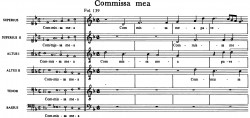
Our last visit to the Iberian peninsula, a fortnight ago, was an insanely ambitious, necessarily broad-brush survey of the Spanish and Portuguese Golden Age, covering vocal and instrumental music, the sacred and the secular. This week, we take a more concise and (I hope) focussed look at a few of the sacred vocal masterpieces which exemplify the particular fervour and intensity of this remarkable period of musical history. They reflect the special place the peninsula had as a bulwark against the Reformation that had taken... read more
read more
Music of the Iberian Peninsula, Part 3: More observations on the Golden Age
16th June 2026
Our last visit to the Iberian peninsula, a fortnight ago, was an insanely ambitious, necessarily broad-brush survey of the Spanish and Portuguese Golden Age, covering vocal and instrumental music, the sacred and the secular. This week, we take a more concise and (I hope) focussed look at a few of the sacred vocal masterpieces which exemplify the particular fervour and intensity of this remarkable period of musical history. They reflect the special place the peninsula had as a bulwark against the Reformation that had taken... read more
read more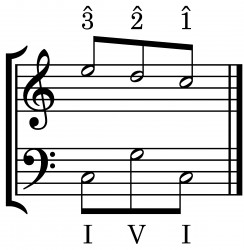
Carl Schachter, Arnold Whittall, and why music analysis matters
9th June 2026
Two recent deaths have robbed the world of music analysis of a pair of its most revered figures. Carl Schachter, who has died at the age of 93, was a pupil of (and subsequently collaborator with) Felix Salzer, himself one of Heinrich Schenker’s foremost students. Schachter continued to enrich and broaden the teaching of Schenkerian analysis, including important work on its application to issues of rhythm (which Schenker, focussing on harmonic and contrapuntal matters, largely bypassed). His influence went well beyond the... read more
read more
Carl Schachter, Arnold Whittall, and why music analysis matters
9th June 2026
Two recent deaths have robbed the world of music analysis of a pair of its most revered figures. Carl Schachter, who has died at the age of 93, was a pupil of (and subsequently collaborator with) Felix Salzer, himself one of Heinrich Schenker’s foremost students. Schachter continued to enrich and broaden the teaching of Schenkerian analysis, including important work on its application to issues of rhythm (which Schenker, focussing on harmonic and contrapuntal matters, largely bypassed). His influence went well beyond the... read more
read more
Music of the Iberian Peninsula, Part 2: ‘O quam gloriosum’ – The Spanish and Portuguese Golden Age
2nd June 2026
Over the past fortnight, I’ve been bathed in the most glorious, radiant, transformative light. Not the UK’s recent unseasonable heatwave, but the extraordinary vocal polyphony of the Siglo de Oro: the Spanish (and Portuguese) ‘Golden Century’. Extending from the late 15th to the early 17th century, this was a time of remarkable artistic flowering on the Iberian Peninsula, coinciding with the emergence of Spain and Portugal as global imperial powers with extensive colonial territories in the Americas, Africa and Asia. The... read more
read more