 FREE UK SHIPPING OVER £35!
The Spin Doctor Europadisc's Weekly Column
The Classical Music of Ukraine: A Brief Overview
2nd March 2022
2nd March 2022
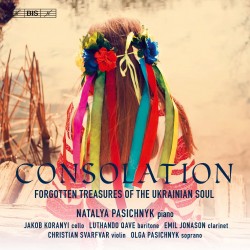 Amid the geopolitical turmoil and torment of the last week, much attention has been given in the music press to the activities of several high-profile Russian musical artists, as well as to gestures of support for the population of Ukraine. However, for centuries now, the cultural life of Ukraine has been overshadowed and dominated by the culture (both Russian and Soviet) of its much larger neighbour. Music-lovers may know that a wide range of famous classical musicians were born in Ukraine, from Prokofiev and Horowitz to the Oistrakhs (David and Igor), Emil Gilels and Sviatoslav Richter, yet few of those identified at heart as Ukrainian, and most were subsumed into the vast melting pot of the pan-national Soviet Union.
The forging of a distinctive Ukrainian musical culture has been a fitful one over the centuries, yet it finds parallels in several other nations whose fate it was to be dominated by larger, more powerful neighbours. In the words of the New Grove Dictionary of Music and Musicians (2001), ‘Discussion of Ukrainian culture has always been in the context of countries and empires that ruled various parts of it and its accomplishments were used as fodder to build other cultures opposed to its development, even its existence. In a sense, Ukrainian culture has lived in diaspora in its own homeland.’
Up to the 17th century, it was the church that dominated activity (as it did elsewhere in Europe) in what we would now call ‘classical music’. The leading Ukrainian composer of the mid-17th century was Nikolay Diletsky (c.1630–after 1680), a resident of Kyiv before moving to Vilnius and then Smolensk. His theoretical treatise Grammatika musikiyskago peniya (‘A grammar of musical song’, 1677/79/81) was the first to describe the formula of the ‘circle of fifths’ as a device for moving through a range of different keys, predating western formulations of the idea by several decades. His surviving output includes three settings of the Divine Liturgy and two sacred concertos, the latter being a genre that would assume great importance for following generations of Ukrainian composers.
The multi-movement sacred concerto for homophonic (usually four-part) choir was particularly important in the output of the ‘Golden Three’ composers whose music was foremost in shaping a Ukrainian Classical style. The short-lived Maksim Berezovs'ky (1745–1777) is often seen as a transitional figure between the late Baroque and the mature Classicism of Dmytro Bortnyans'ky (1751–1825). Berezovs'ky started his musical career as an opera singer, but after his voice broke he seems to have concentrated increasingly on composition. Roughly half of his 40 choral works survive, including his popular and expressively powerful choral concerto Ne otverzhi mene vo vremya starosti (‘Forsake me not in my old age’) which includes rhetorical gestures similar to Bach’s Jesu, meine Freude. He studied under Italian musicians (including Baldassare Galuppi) in St Petersburg, and in 1769 was sent for further training at the Accademia Filarmonica di Bologna, making him the first eastern Slav composer to study music in western Europe. His opera Demofoonte, of which only four arias survive, was performed in Livorno in 1773.
Like Berezovs'ky, Bortnyans'ky studied in St Petersburg with Galuppi, who took the young Dmytro with him to Venice where he furthered his training, enjoying success as an opera composer. Again like Berezovs'ky, he composed a number of instrumental works, among them an engaging Sinfonia concertante for piano, harp, two violins, viola da gamba, cello and bassoon. But it is for his vast output of sacred concertos (some 45 in total) that Bortnyans'ky is best remembered, both in Russia and Ukraine, adding a structural rigour to the early Classicism of his predecessors, although regrettably only two volumes of the complete recording on Chandos are still in the catalogue. Under Catherine the Great and Paul I, he rose to a high position at the St Petersburg court, which under his directorship heard performances of important works by Handel, Haydn, Mozart and even (in 1813) Beethoven’s Christus am Ölberge. The other member of this ‘Golden’ triumvirate, Artemy Vedel (c.1767–1808), trained in Russia under Giuseppe Sarti, but for most of his career was based in Kharkiv and his native Kyiv. His output is similarly dominated by sacred concertos in a distinctively individual style, although commercial recordings are few and elusive. In a move all too prophetic of later Soviet practices, in 1799 he was sent by church authorities on spurious grounds (accused of scribbling marginalia in a religious book) to a mental asylum, which hastened his early death.
Ukrainian composers of the mid-19th century include Mykhaylo Verbyts'ky (1815–1870) – whose compositions include Shche ne vmerla Ukrainy, which in 1992 became the official Ukrainian national anthem, as well as several national-flavoured operas – and Ivan Lavrivsky (1823–1873), a priest whose output encompassed religious music, songs and even operetta. Semen Hulak-Artemovs'ky (1813–1873) was an accomplished operatic baritone (in repertoire including Glinka, Mozart and Donizetti) as well as composing operas himself, notably Zaporozhets za Dunayem (‘Cossacks beyond the Danube’, 1863). The Ukrainian element in his music was undoubtedly enriched by his lifelong friendship with the poet Taras Shevchenko (1814–1861), who played a crucial part in the rediscovery of Ukrainian folk roots and language.
But the real ‘Father of Ukrainian music’ was Mykola Lysenko (1842–1912), who served as one of the pallbearers at Shevchenko’s funeral, and whose interest in folk culture led to folksong collecting and the shaping of a national style that was grounded not just in Ukrainian music but also its distinctive form of Slavic language. Chief among his compositions is his sixth opera, Taras Bulba (1880–24, but unperformed until 1924), based on Nikolai Gogol’s historical novella on Ukrainian Cossack life, which is long overdue a complete recording. Many of Lysenko’s vocal works are to texts by Shevchenko, while he also left an attractive body of piano and chamber music, some of which has recently been recorded on Toccata Classics. Lysenko’s legacy was to establish a firm foundation for the following generation: a year after his death, the Kyiv Conservatory was created, under the directorship of Reinhold Glière, a native of the city.
The 20th century, with its traumatic upheavals, nevertheless saw a great flowering of musical art in Ukraine, often against huge odds. Key figures include the fundamentally expressionistic Borys Lyatoshyns'ky (1895–1968), whose symphonies have gained deserved attention in recent years with a complete cycle on Naxos; the neoclassical/post-modernist Valentyn Silvestrov (b. 1937), who has also set the words of Shevchenko; and Myroslav Skoryk (1938–2020), whose ‘new folklorism’ had its roots in the preoccupations of his 19th-century predecessors. Along with Ivan Karabyts (1945–2002) – father of conductor Kirill – they represent just a small portion of a rich artistic legacy that deserves, now more than ever, to be investigated and celebrated by all inquisitive music-lovers. And with a repertoire that ranges from the sacred right through to the earthily secular, from instrumental miniatures to ambitious four-act operas, there’s really no excuse not to support this fascinating part of European musical life.
Latest Posts
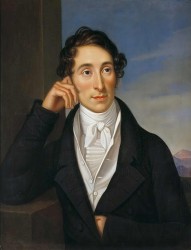
Carl Maria von Weber: Visionary of German Romanticism
23rd June 2026
When audiences think of early nineteenth-century German music, the towering figures of Beethoven, Schubert, and later Wagner often dominate the conversation. Yet between the Classical world of Mozart and the mature Romanticism of Wagner stands a composer whose influence was both profound and transformative: Carl Maria von Weber (1786–1826). Composer, conductor, pianist, critic, and visionary dramatist, Weber played a pivotal role in shaping the future of German opera and helping define the musical language of... read more
read more
Music of the Iberian Peninsula, Part 3: More observations on the Golden Age
16th June 2026
Our last visit to the Iberian peninsula, a fortnight ago, was an insanely ambitious, necessarily broad-brush survey of the Spanish and Portuguese Golden Age, covering vocal and instrumental music, the sacred and the secular. This week, we take a more concise and (I hope) focussed look at a few of the sacred vocal masterpieces which exemplify the particular fervour and intensity of this remarkable period of musical history. They reflect the special place the peninsula had as a bulwark against the Reformation that had taken... read more
read more
Music of the Iberian Peninsula, Part 3: More observations on the Golden Age
16th June 2026
Our last visit to the Iberian peninsula, a fortnight ago, was an insanely ambitious, necessarily broad-brush survey of the Spanish and Portuguese Golden Age, covering vocal and instrumental music, the sacred and the secular. This week, we take a more concise and (I hope) focussed look at a few of the sacred vocal masterpieces which exemplify the particular fervour and intensity of this remarkable period of musical history. They reflect the special place the peninsula had as a bulwark against the Reformation that had taken... read more
read more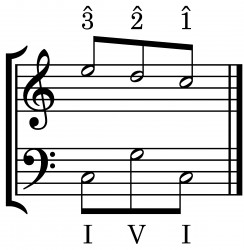
Carl Schachter, Arnold Whittall, and why music analysis matters
9th June 2026
Two recent deaths have robbed the world of music analysis of a pair of its most revered figures. Carl Schachter, who has died at the age of 93, was a pupil of (and subsequently collaborator with) Felix Salzer, himself one of Heinrich Schenker’s foremost students. Schachter continued to enrich and broaden the teaching of Schenkerian analysis, including important work on its application to issues of rhythm (which Schenker, focussing on harmonic and contrapuntal matters, largely bypassed). His influence went well beyond the... read more
read more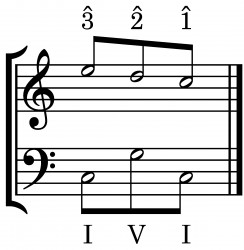
Carl Schachter, Arnold Whittall, and why music analysis matters
9th June 2026
Two recent deaths have robbed the world of music analysis of a pair of its most revered figures. Carl Schachter, who has died at the age of 93, was a pupil of (and subsequently collaborator with) Felix Salzer, himself one of Heinrich Schenker’s foremost students. Schachter continued to enrich and broaden the teaching of Schenkerian analysis, including important work on its application to issues of rhythm (which Schenker, focussing on harmonic and contrapuntal matters, largely bypassed). His influence went well beyond the... read more
read more