 FREE UK SHIPPING OVER £35!
The Spin Doctor Europadisc's Weekly Column
Pulling the Plug on Music
26th November 2025
26th November 2025
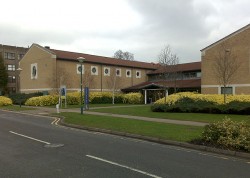 No-one with any interest in the wider plight of the arts and humanities in British universities will fail to have noticed the brutal wave of cuts currently being proposed at the University of Nottingham (UoN), which has hit the headlines in the past month. Among the staggering 48 courses under threat of closure (and with new applications currently suspended) are not only modern languages but also theology and (less esoterically) some nursing programmes. But it is the proposed axing of music degrees that has been greeted with the greatest dismay in the arts sector; and, as it is Europadisc’s ‘local’ university, we feel a particular alarm at the prospect. Several of our past and present employees have passed through UoN’s undergraduate music programme. The very idea that an institution which prides itself on being a member of the prestigious Russell Group can contemplate such swingeing cuts in the humanities is symptomatic of the wider threats facing the arts in academia.
Music education has formed part of the curriculum in Nottingham since the 1880s (in the days when it was University College Nottingham; its own royal charter was eventually granted in 1948). Between 1954 and 1998, the music department was headed successively by Ivor Keys, Denis Arnold, Ian Bent and Robert Pascall, who each contributed to its burgeoning national and international reputation. In 1994 a brand new, purpose-built departmental building was opened, including a dedicated recital hall which has since been used for both recordings and broadcasts. While the undergraduate music curriculum has evolved over time (students are no longer required to master the art of writing fugues, score-reading or realising a figured bass), the music department has maintained a strong research profile, although the days when new scholarly findings on Brahms featured on the front page of The Times are now past.
Research specialisms have ranged from the medieval and Renaissance eras to computer analysis and contemporary composition, as well as 19th-century Romanticism and Czech music (particularly opera). Several have been of international significance. While the trend in recent years has been for cross-disciplinary approaches, the truth is that staff-led research was always very connected with the world of public performance and wider dissemination. As well as hundreds of students who have gone on to become teachers themselves, the UoN music department has also produced an impressive array of composers (including Colin Matthews and Graham Fitkin), performers, researchers and administrators, who have left their mark on the wider arts community.
As with many other university music departments, Nottingham’s has fostered a vibrant musical scene, both on- and off-campus. Over the years, it has attracted such visiting figures as Benjamin Britten and Peter Pears, and Steve Reich. The university was a regular port of call for new music concerts by such ensembles as the London Sinfonietta and Electric Phoenix; I can also recall visits by such groups as the English Concert in the early 1980s as part of the series of concerts given at the campus’s halls of residence. A particular feature of the 1970s and early 80s was the student-run Nottingham University Opera Group, strongly supported by the department, which mounted groundbreaking productions of operatic rarities by (among others) Grétry, Spontini, Meyerbeer, Dvořák and Berwald, and attracted early-career soloists and producers, among them tenor Graeme Matheson-Bruce, baritone Andrew Shore (who went onto sing Alberich at Bayreuth) and soprano Elaine Padmore (whose subsequent career in opera administration culminated as Director of Opera at the Royal Opera House, Covent Garden).
Student-run musical activities continue to be popular at Nottingham, and the university claims that, despite the proposed closure of the music courses, it will continue to encourage these. The truth, however, is that without the strong support of an active academic department, any such activities will be irreparably weakened. Already, the dwindling number of single honours music students is having a deleterious effect on ensembles that, within recent memory, gave memorable performances of Mahler’s ‘Resurrection’ Symphony, Janáček’s Glagolitic Mass and (under no less a figure than Sir Charles Mackerras) Beethoven’s Ninth.
Music departments up and down the country are feeling the strain of changes to the school curriculum and practical music provision, which have resulted in ever decreasing numbers of pupils. Add to this a pervasive mood which values utilitarianism and narrow vocational training over wider cultural learning and you have a recipe for disaster in the humanities, which have historically formed one of the cornerstones of university education. The problem is not unique to the United Kingdom, but its effects are now really beginning to bite. For all the fine words coming out of the present government, the arts – particularly those like music which are cost-intensive – are chronically undervalued in Britain. The overstretched, underfunded nature of the university sector, too reliant on a supply of overseas student cash-cows which is now in decline, makes institutions like Nottingham – where a focus on hubristic, headline-grabbing building projects rather than long-term vision has led to a financial black hole that has only grown in recent years – especially vulnerable.
If this reads something like an institutional obituary, I sincerely hope that it proves premature. It is still possible, at the time of writing, that the situation might change in response to steadily growing petitions, yet the omens are not good. Once the bean-counters have made up their minds, the most persuasive arguments in the world are unlikely to change them. A department that took many decades to build up and nurture now risks being closed; once closed, it will be well-nigh impossible to bring back. Nottingham – and the East Midlands region as a whole – deserves better. The list below gives some idea of the composers, performers and research projects that have been nurtured here in Nottingham; they barely scratch the surface of the broader cultural impact that has been made.
A few UoN composers (staff and students):
Colin Matthews - Divertimento, Triptych, etc. NMCD149
Nigel Osborne - I am Goya, Flute Concerto NMCD087
Nicholas Sackman - Scorpio MSVCD92049
Laurence Crane - Solo Piano Pieces (M Finnissy) MSV28506
Graham Fitkin - String Quartets (Sacconi Qt) SIGCD518
Research projects and performers:
Scaramella: Obrecht, Fitch, Brumel, Agricola (Binchois Consort/Kirkman) CDA68460
Venice 1629 (The Gonzaga Band) RES10218
JS Bach - St Matthew Passion (cond. Paul Goodwin) 97010
Brahms - Symphony no.3, Haydn Variations (LPO/Alsop) 8557430
Janáček - Jenůfa (WNO/Mackerras) CHAN31062
Latest Posts
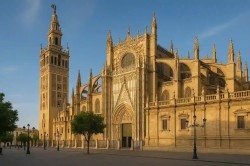
Music of the Iberian Peninsula, Part 2: ‘O quam gloriosum’ – The Spanish and Portuguese Golden Age
2nd June 2026
Over the past fortnight, I’ve been bathed in the most glorious, radiant, transformative light. Not the UK’s recent unseasonable heatwave, but the extraordinary vocal polyphony of the Siglo de Oro: the Spanish (and Portuguese) ‘Golden Century’. Extending from the late 15th to the early 17th century, this was a time of remarkable artistic flowering on the Iberian Peninsula, coinciding with the emergence of Spain and Portugal as global imperial powers with extensive colonial territories in the Americas, Africa and Asia. The... read more
read more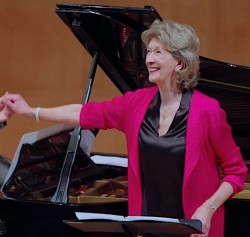
‘Call Me Flott’: A Tribute to Felicity Lott
26th May 2026
The acclaimed lyric soprano Felicity Lott, who has died at the age of 79, was an example of that rare breed among international singers: someone who combined star quality, wit, intelligence and humanity. During her half-century career she stood out for the refinement, clarity and textual responsiveness she brought to the music of Mozart and Richard Strauss, at a time when specialism in the former and sheer vocal power and OTT theatricality in the latter were increasingly the norm. These same strengths characterised her wider... read more
read more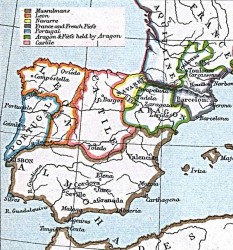
Music of the Iberian Peninsula: Beginnings
19th May 2026
Nestling at the southwestern-most tip of Europe, the Iberian Peninsula has long held charms for the rest of the continent. It is still one of the most popular destination for west-European holidaymakers seeking a mixture of sun and exoticism. In the world of classical music, it has attracted composers from the Neapolitan expat Domenico Scarlatti, and French composers like Bizet, Chabrier and Ravel, to Rimsky-Korsakov in far-away St Petersburg. The allure of Hispania is partly due to its geographic location as a peninsula... read more
read more
When the Music Vanishes
12th May 2026
Many of you may think that classical music has already vanished from our streets. The days when a modest-sized city like Europadisc’s home patch in Nottingham could boast no fewer than three specialist classical shops are long gone. In central London, where the likes of Caruso & Co, Farringdon Records, Direction Dean Street and Orchesography plied their trade, even the tenacious Harold Moores in Great Marlborough finally shut up shop in early 2017. Mounting rents, business rates and online competition have been... read more
read more
Five Years of the Spin Doctor!
6th May 2026
A couple of weeks ago, I was told by Europadisc’s proprietor that it is now five years since we first launched the Spin Doctor column. Where has the time gone? The original brief was fairly succinct and deliberately left open to a wide range of options: to write a weekly column, roughly the same length as (or a little longer than) our Disc of the Week reviews, on any subject broadly related to recorded classical music. As the first columns appeared while the knock-on effects of the Covid pandemic were still being felt, the... read more
read more