 FREE UK SHIPPING OVER £35!
The Spin Doctor Europadisc's Weekly Column
Musicae Princeps: Celebrating Palestrina
21st January 2025
21st January 2025
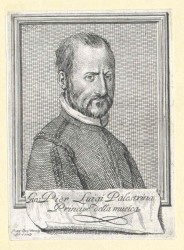 For more than four centuries, the music of Giovanni Pierluigi da Palestrina has been held as the epitome of late Renaissance polyphonic mastery, clarity and balance. Only Josquin, Lassus and Victoria come close to rivalling his reputation. His exact date and place of birth are unknown, but he was 68 at the time of his death in Rome on 2 February 1594, and it is likely that he was born either in the town of Palestrina, near Rome, or in the Eternal City itself, where he was based (apart from a brief stint in Palestrina) for the entirety of his life. From the 1560s onwards his standing was already formidable, and it continued to grow in the centuries after his death. The late Baroque composer and theorist Johann Joseph Fux based his classic treatise on counterpoint, Gradus ad Parnassum, on Palestrina’s music, and his works were also studied by J.S. Bach.
In the 19th century, Palestrina became the first ‘early’ composer to have a complete works edition dedicated to their music, and in 1917 he joined the select band of composers to become the subject of an opera, Hans Pfitzner’s Palestrina. Until relatively recently, writing in the ‘Palestrina style’ was a central component of many university music courses, and his music still forms a key part of the liturgical repertoire in many institutions, as well as being widely performed in the concert hall and on disc.
As with many composers of his era, the details of Palestrina’s early life are sketchy. From 1537 he was a chorister at the basilica of Santa Maria Maggiore in Rome (his teachers at this time included two French musicians, Robin Mallapert and Firmin Lebel). In 1544, in his late teens, he secured his first appointment, as organist at the Cathedral of St Agapitus in Palestrina. Three years later he married a local woman, Lucrezia Gori, with whom he would have three sons and a daughter. In 1551 (the year his second son was born) he was appointed magister cantorum of the Cappella Giulia at St Peter’s in Rome, becoming magister cappellae two years later.
1554 saw the publication of Palestrina’s first book of masses (in large choirbook format and dedicated to Pope Julius III), which would be followed by a further five books during his lifetime and seven more published posthumously. On 13 January 1555 he was admitted to membership of the Cappella Sistina (the Pope’s personal chapel), but his time there was brief. Following the Julius III’s death on March 23, and the short-lived papacy of Marcellus II (who reigned for just 22 days), the next pontiff, Paul IV, strictly enforced the Sistine Chapel’s rule on celibacy. Palestrina was thus dismissed, albeit with a small pension. He then spent five unhappy years as maestro di cappella of San Giovanni Laterano, leaving abruptly in 1560 after disagreements with the chapter there.
In 1561 he returned to Santa Maria Maggiore, and in 1566 became maestro at the newly-built Seminario Romano. He also entered the private service of Cardinal Ippolito II d’Este. By this time Palestrina had refined the style he had steadily been shaping, notable for its balance between parts, clarity of word and line, and a restrained lyricism that allowed for a certain degree of word-painting without overdoing things. Whether or not the myths surrounding his most famous work, the Missa Papae Marcelli (supposed by some to be written in response to the Council of Trent’s discussions on intelligibility in church music), have any substance to them, Palestrina’s grasp of musical architecture, texture and balance, combined with a transcendent radiance, became the epitome of the prima prattica.
No wonder, then, that he was the recipient of numerous job offers, not just in Mantua (from the ruling Gonzaga family) but even from Emperor Maximilian II himself in Vienna. But Palestrina, who so often touched the sublime in his music, had a practical head on his shoulders as well as family commitments, and turned down offers that were insufficiently recompensed. The result was that in 1571 he returned to the Cappella Giulia as choirmaster; even there, he drove a hard bargain to prevent him transferring back to Santa Maria Maggiore. The deaths of his two eldest sons in 1572 and 1575, and of his wife Lucrezia in 1580, all from plague, must have been severe blows. For a while he considered joining the priesthood, even securing a benefice. However, in February 1581 he married an affluent widow, Virginia Dormoli, and was as assiduous in following her business affairs as he was in achieving technical perfection in his music.
During his final decade, Palestrina saw through the publication of several collections of his music: not just masses (of which he wrote over 100), but motets (over 300, many unpublished), motets, Lamentations, Magnificats, litanies and so on. Taken as a whole, Palestrina’s output – mostly sacred, but with some secular items among the madrigals – is one of the most impressive not just of its era but of the entire western tradition. Reverence for his very name should not blind us to the beauties of his works, the understated sensuality of much of the writing, amenable to a surprisingly wide variety of interpretative approaches. The beguiling vibrato of such groups as Pro Cantione Antiqua in the 1970s and 80s has given way to the cleaner lines of groups like The Tallis Scholars, The Sixteen, and (most recently) Stile Antico on their latest disc for Decca. There’s still a very special thrill to hearing this music sung with boys voices on the top lines (as in the Westminster Cathedral Choir’s recordings on Hyperion under David Hill, James O’Donnell and Martin Baker).
However you choose to approach the music – whether through the voluptuousness of the Canticum Canticorum (Song of Songs), the intensity of the Lamentations, or the rare beauties of the Missa Papae Marcelli (which can serve as a gateway to the other masses) – this year will, we hope, offer plenty of opportunities for experiencing and celebrating the composer dubbed after his death ‘the Prince of Music’.
Recommended recordings:
The Golden Renaissance: Palestrina (Stile Antico) 4870791
Palestrina - Lamentations Book 2 (Cinquecento) CDA68284
Palestrina - Missa Papae Marcelli, Missa Brevis (Westminster Cath/Hill) CDA66266
Palestrina - The Song of Songs (Pro Cantione Antiqua) CDH55095
Palestrina – Missae Assumpta est Maria & Sicut lilium (Tallis Scholars) CDGIM020
Latest Posts
Music of the Iberian Peninsula, Part 2: ‘O quam gloriosum’ – The Spanish and Portuguese Golden Age
2nd June 2026
Over the past fortnight, I’ve been bathed in the most glorious, radiant, transformative light. Not the UK’s recent unseasonable heatwave, but the extraordinary vocal polyphony of the Siglo de Oro: the Spanish (and Portuguese) ‘Golden Century’. Extending from the late 15th to the early 17th century, this was a time of remarkable artistic flowering on the Iberian Peninsula, coinciding with the emergence of Spain and Portugal as global imperial powers with extensive colonial territories in the Americas, Africa and Asia. The... read more
read more
‘Call Me Flott’: A Tribute to Felicity Lott
26th May 2026
The acclaimed lyric soprano Felicity Lott, who has died at the age of 79, was an example of that rare breed among international singers: someone who combined star quality, wit, intelligence and humanity. During her half-century career she stood out for the refinement, clarity and textual responsiveness she brought to the music of Mozart and Richard Strauss, at a time when specialism in the former and sheer vocal power and OTT theatricality in the latter were increasingly the norm. These same strengths characterised her wider... read more
read more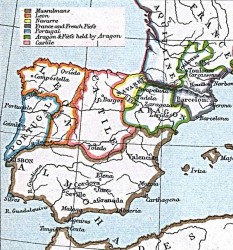
Music of the Iberian Peninsula: Beginnings
19th May 2026
Nestling at the southwestern-most tip of Europe, the Iberian Peninsula has long held charms for the rest of the continent. It is still one of the most popular destination for west-European holidaymakers seeking a mixture of sun and exoticism. In the world of classical music, it has attracted composers from the Neapolitan expat Domenico Scarlatti, and French composers like Bizet, Chabrier and Ravel, to Rimsky-Korsakov in far-away St Petersburg. The allure of Hispania is partly due to its geographic location as a peninsula... read more
read more
When the Music Vanishes
12th May 2026
Many of you may think that classical music has already vanished from our streets. The days when a modest-sized city like Europadisc’s home patch in Nottingham could boast no fewer than three specialist classical shops are long gone. In central London, where the likes of Caruso & Co, Farringdon Records, Direction Dean Street and Orchesography plied their trade, even the tenacious Harold Moores in Great Marlborough finally shut up shop in early 2017. Mounting rents, business rates and online competition have been... read more
read more
Five Years of the Spin Doctor!
6th May 2026
A couple of weeks ago, I was told by Europadisc’s proprietor that it is now five years since we first launched the Spin Doctor column. Where has the time gone? The original brief was fairly succinct and deliberately left open to a wide range of options: to write a weekly column, roughly the same length as (or a little longer than) our Disc of the Week reviews, on any subject broadly related to recorded classical music. As the first columns appeared while the knock-on effects of the Covid pandemic were still being felt, the... read more
read more