 FREE UK SHIPPING OVER £35!
The Spin Doctor Europadisc's Weekly Column
Works in Focus: Gustav Holst’s ‘Egdon Heath’
17th September 2024
17th September 2024
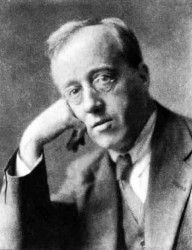 Holst regarded it as his masterpiece, and so did his friend Vaughan Williams. Yet ever since its premiere in February 1928 Egdon Heath has stood in the shadow of two works Holst composed more than a decade previously, the St Paul’s Suite (1912–13) and The Planets (1914–16). Though it lacks the immediate tuneful appeal of those two works, this short tone-poem (under 15 minutes in duration) has in common with some of the more mystical passages of The Planets an atmosphere of detachment, coupled with passages reminiscent of the sombre yet noble tread of the trombones’ theme in ‘Saturn’.
Egdon Heath bears the subtitle ‘Homage to Thomas Hardy’, and its title refers to the fictional heathland described so memorably in the opening chapter of Hardy’s 1878 novel The Return of the Native. Holst prefaced the score with a quotation from the novel:
‘A place perfectly accordant with man's nature – neither ghastly, hateful, nor ugly; neither common-place, unmeaning, nor tame; but, like man, slighted and enduring; and withal singularly colossal and mysterious in its swarthy monotony!’
Holst had long been an admirer of Hardy’s work, having set three of his poems to music in the early 1900s as part of the Six Baritone Songs, op.15. A more immediate impetus was the gift from Holst’s American friend, Austin Lidbury, of Hardy’s novel in the spring of 1926, as well as a walk over the heathland between Wool and Bere Regis in Dorset. A commission for a symphony from the New York Symphony Orchestra was the final catalyst, and on 9 August 1927 Holst paid a visit to Hardy – their only verified meeting – when they drove to the heath itself, ‘just then purple with heather’, in Hardy’s own words.
Hardy died just three weeks before Egdon Heath’s New York premiere, under the baton of Walter Damrosch, on 12 February 1928. The following day Holst himself conducted the British premiere with the City of Birmingham Orchestra in Cheltenham, while the London premiere on 23 February was conducted by Václav Talich, and was received (according to contemporary accounts) with respect rather than enthusiasm.
Critics have debated the extent to which Egdon Heath chimes with or diverges from Hardy’s own worldview. Its brooding detachment seems to lack that very human quality that gives vitality even to the author’s lesser works. The scoring is restrained – a standard orchestra including brass but no percussion or harp, and an enlarged string section – and the outer sections, framed by a downward-groping theme first heard on the double-basses and then in close imitation in the upper strings, paint a bleak picture of a desolate landscape. The sudden liveliness of the string writing at the Poco Allegro after figure 2 in the score perhaps suggests human activity, though seen from a distance, as if it were so many ants.
This is followed by the steady progress of an Andante maestoso led by the trombones, alternating with a slightly more animated passages. But then – after call-and response woodwind solos – comes perhaps the most haunting music of all, when against string drones first the flutes, then the inner strings, and finally flutes and bassoons deliver a mournful lament in parallel fourths, creating a chillingly unsettling effect. Even when the rhythms are inflected with compound-time folk rhythms, the mood is one of ‘empty solitude’ (to quote Holst’s daughter Imogen). A final return of the steadily-treading brass is preceded by a gentle upward sweep in the strings: the closest we get to real warmth in the score. The closing Molto Adagio (fig. 11) seems to move the listener to an even more distant perspective. Holst’s philosophical detachment (evident from his Hindu-themed earlier works onwards) seems to win out of Hardy’s essentially human philosophy.
Some commentators have maintained that Egdon Heath was a ‘cri de cœur’, yet Holst’s own high regard for the work as well as its singular beauty in the right hands suggest something altogether more nuanced. Whether in the surely-paced recording of that ardent Holst champion Adrian Boult, or the rapt beauty of Richard Hickox’s more expansive account on Chandos, Egdon Heath is an evocation and inhabitation of place that is unique for its time, far removed from the typical English rural idyll of the period. While anticipating (not least in its tonal ambiguity) later musical trends, it is perhaps also the closest a British composer has come to the evocative yet remote landscapes of Sibelius’s more challenging tone-poems.
Given all that, the popularity of The Planets would be completely anathema to the gaunt world of Egdon Heath. Yet it deserves to be far better known than its rarity in the concert hall and on disc testifies. It is a work that rewards perseverance and ‘deep listening’, and what better time than now in the composer’s sesquicentennial year, to take the plunge? Imogen Holst’s biography of her father states that the audience at the London premiere found it ‘profoundly uncomfortable’, but in the final analysis ‘uncomfortably profound’ might be nearer the mark.
Further reading:
- Andrew R. Deane, ‘Holst, Hardy and a Heath’, The Thomas Hardy Journal, vol.12 no.1 (February 1996), 62–72
Recommended recordings:
Holst - Hymn of Jesus, Egdon Heath, Perfect Fool, etc (LPO/Boult) ALC1359 🔗
Holst - Orchestral Works (LSO/Hickox) CHAN10911X 🔗
Latest Posts
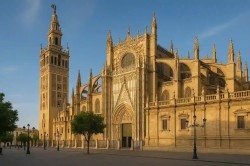
Music of the Iberian Peninsula, Part 2: ‘O quam gloriosum’ – The Spanish and Portuguese Golden Age
2nd June 2026
Over the past fortnight, I’ve been bathed in the most glorious, radiant, transformative light. Not the UK’s recent unseasonable heatwave, but the extraordinary vocal polyphony of the Siglo de Oro: the Spanish (and Portuguese) ‘Golden Century’. Extending from the late 15th to the early 17th century, this was a time of remarkable artistic flowering on the Iberian Peninsula, coinciding with the emergence of Spain and Portugal as global imperial powers with extensive colonial territories in the Americas, Africa and Asia. The... read more
read more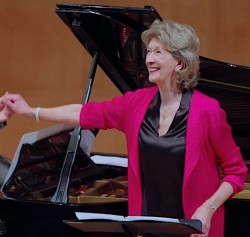
‘Call Me Flott’: A Tribute to Felicity Lott
26th May 2026
The acclaimed lyric soprano Felicity Lott, who has died at the age of 79, was an example of that rare breed among international singers: someone who combined star quality, wit, intelligence and humanity. During her half-century career she stood out for the refinement, clarity and textual responsiveness she brought to the music of Mozart and Richard Strauss, at a time when specialism in the former and sheer vocal power and OTT theatricality in the latter were increasingly the norm. These same strengths characterised her wider... read more
read more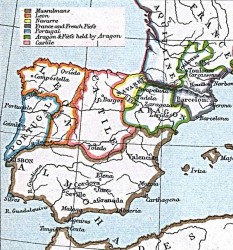
Music of the Iberian Peninsula: Beginnings
19th May 2026
Nestling at the southwestern-most tip of Europe, the Iberian Peninsula has long held charms for the rest of the continent. It is still one of the most popular destination for west-European holidaymakers seeking a mixture of sun and exoticism. In the world of classical music, it has attracted composers from the Neapolitan expat Domenico Scarlatti, and French composers like Bizet, Chabrier and Ravel, to Rimsky-Korsakov in far-away St Petersburg. The allure of Hispania is partly due to its geographic location as a peninsula... read more
read more
When the Music Vanishes
12th May 2026
Many of you may think that classical music has already vanished from our streets. The days when a modest-sized city like Europadisc’s home patch in Nottingham could boast no fewer than three specialist classical shops are long gone. In central London, where the likes of Caruso & Co, Farringdon Records, Direction Dean Street and Orchesography plied their trade, even the tenacious Harold Moores in Great Marlborough finally shut up shop in early 2017. Mounting rents, business rates and online competition have been... read more
read more
Five Years of the Spin Doctor!
6th May 2026
A couple of weeks ago, I was told by Europadisc’s proprietor that it is now five years since we first launched the Spin Doctor column. Where has the time gone? The original brief was fairly succinct and deliberately left open to a wide range of options: to write a weekly column, roughly the same length as (or a little longer than) our Disc of the Week reviews, on any subject broadly related to recorded classical music. As the first columns appeared while the knock-on effects of the Covid pandemic were still being felt, the... read more
read more