 FREE UK SHIPPING OVER £35!
The Spin Doctor Europadisc's Weekly Column
The Wrong Side of History: Karel Ančerl
3rd August 2021
3rd August 2021
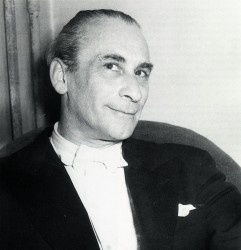 Two boys born within a week of one another in April 1908 went on to become two of the most important conductors of the post-WW2 era. The elder was born on 5 April (the same day as Bette Davis) to a well-to-do Salzburg family of Macedonian and Slovenian descent. Musically precocious, he studied at the Salzburg Mozarteum with Bernhard Paumgartner and the Vienna Academy with Alexander Wunderer and Franz Schalk. Having determined on the path of conducting, Herbert von Karajan (for it was he) made rapid progress via operatic appointments in Ulm and, from 1935, in Aachen, where he became Germany’s youngest Generalmusikdirektor. His career prospered during the war years, and although there was a minor hiccup after the war because of his Nazi party membership, his meteoric rise continued, including frequent collaborations with the Vienna Philharmonic, engagements at the first two post-war Bayreuth festivals, and a significant role in the development of Walter Legge’s newly-founded Philharmonia Orchestra. In 1956 he was appointed as Furtwängler’s successor at the Berlin Philharmonic, and the rest, as they say, is history. Further appointments in Vienna, Milan and Paris led to him being dubbed the ‘Generalmusikdirektor of Europe’, and he established the Salzburg Easter Festival as well as being a leading figure at the main summer festival. His involvement with the recording industry is well-documented (in every sense), and today his recordings, remastered and repackaged, are still big business.
Just six days after Karajan, however, another child destined for the rostrum entered the world. Born in southern Bohemia to a prosperous Jewish family, his father was a large-scale producer of spirits (an important business to this day in the Czech lands!). His name was Karel Ančerl. Showing musical aptitude, he studied at the Prague Conservatoire, and was further mentored by Václav Talich and by Hermann Scherchen, alongside whom he was assistant conductor of Alois Hába’s groundbreaking quarter-tone opera Mother (1931). A crucial early appointment was as conductor at Prague’s avant-garde Liberated Theatre (Osvobozené divadlo), where he worked with the innovative classical and jazz composer Jaroslav Ježek. These experiences fostered a lifelong commitment to new music, particularly that of his compatriots, and a keen sensitivity to the nuances and demands of contemporary scores. This was an apprenticeship very different from that of the young Karajan in the repertoire system of German opera houses. From 1933 Ančerl conducted for Czechoslovak radio, but in September 1938 the horrors began with the annexation of the Sudetenland and then, in March 1939, the invasion of the remaining Czech lands. Fatefully, Ančerl decided to stay put. In 1942 he and his family were sent to the Terezín ghetto (the Theresienstadt concentration camp in northwest Bohemia). There he found some sort of consolation in throwing himself into the camp’s musical activities; he was even featured conducting Pavel Haas’s Study for strings in the now notorious Nazi propaganda film Theresienstadt: A Documentary Film from the Jewish Settlement Area. What the film carefully hid was the fact that many of the performers were barefoot.
Haas didn’t survive the war, and nor did Ančerl’s wife and son: sent, like Ančerl himself, to Auschwitz, they died in the gas chambers there. Ančerl was sent into forced labour. After the liberation, he had to pick up the pieces, initially as conductor for Radio Prague. Several opera broadcasts survive from these years, mostly Smetana but also a fine Boris Godunov with Václav Bednář in the title role and the great Beno Blachut as Grigoriy (the false Dmitry). At this period, like many intellectuals, Ančerl was committed to the communist cause (Czechoslovakia had become a communist Soviet satellite state in 1948). In 1950, after the emigration of Rafael Kubelík, Ančerl was appointed by the authorities as chief conductor of the Czech Philharmonic, following a brief interregnum by double bassist-turned maestro Karel Šejna (the orchestra’s preferred choice). Ančerl’s early years with the orchestra were by no means easy: he was not popular with his players, not least because of his demanding rehearsals and sharp ear for detail. There were also lingering anti-Semitic sentiments. Additionally, Ančerl was committed to introducing his musicians to works by modern Czech and foreign composers while they were most comfortable with more Romantic repertoire. Yet his rhythmic acuity, articulate, business-like manner, free from histrionic mannerisms, and sheer hard work paid off: his many recordings from these years testify to the marked increase in playing standards, while still preserving and even highlighting the Czech Philharmonic’s distinctive sound, with rich yet pliant string sound and characterful wind and brass, most notably the unmistakable clarinets and horns with their glorious vibrato. Foreign tours raised the profile of both Ančerl and the orchestra, and soon he was in demand abroad as a guest conductor. Surviving television broadcasts from these years provide evidence of his unique conducting style, his tall, slim, almost gaunt figure gesturing with a fine combination of elegance, economy and absolute clarity. In louder, more animated passages his arms become like two huge windmills, swivelling from the elbow, producing a palpable difference in the music’s trajectory.
Yet it is his audio recordings that best document his astonishing achievements, many of them included in Supraphon’s Karel Ančerl Gold Edition and now highly sought-after. The Czech classics are well represented, with thrillingly straightforward and direct performances of Dvořák and Smetana, powerful, rhythmically alert Janáček, and deeply probing accounts of Martinů symphonies and other works. In the wider classical repertoire his range was broad: from Mozart, Beethoven and Brahms to Mahler and Berg (the solo horn passage at the end of the first movement of Brahms’s Second Symphony is almost unbearably beautiful, while Mahler’s Ninth is starkly honest, with deeply grained textures, laying the music’s expressive content bare like no other account on disc). Ančerl was often at his best in the music of his own time: not just that of such now-neglected contemporaries as Bořkovec, Dobiáš, Hurník, Kabeláč, Mácha and Vycpálek, but such 20th-century classics as Bartók, Britten, Hindemith, Prokofiev, Shostakovich and (perhaps above all) Stravinsky – in performances that can still knock spots off starrier and more recent competition. And he was also (unlike many of his more famous colleagues) an uncommonly sensitive and dependable partner in the concerto repertoire, as great recordings with the likes of Richter, Oistrakh, Haendel and Suk testify.
After the heady days of the Prague Spring of 1968, the Soviet-led occupation and the ensuing period of ‘normalisation’ left Ančerl deeply disillusioned. Fearing a repeat of the early 1940s, he left his home country for good in 1969, finding sanctuary, like many of his compatriots, in Canada, where he became music director of the Toronto Symphony Orchestra. Once again his talents as an orchestra builder and innovative programmer came to the fore, and he worked miracles with what was then regarded as a distinctly provincial orchestra, as evidenced by a marvellous live recording of Martinů’s Fifth Symphony. Guest performances increased, including notable appearances with the Cleveland and Concertgebouw Orchestras, the Boston and San Francisco Symphony Orchestras and many others. But also increased was the toll on Ančerl’s health, after the strain of twice being on the wrong side of history. He died on 3 July 1973 at the age of 65. Still remembered with affection in Toronto, and belatedly recognised in his Czech homeland as one of its truly great conductors, his reputation is (except among aficionados) nowhere near as high as it should be. Without the commercial clout of a major western label behind him, his recordings have suffered from sporadic availability and sometimes poor transfers. Yet put his performances side-by-side with his exact contemporary Karajan and you will find that, while often less glossily beautiful, time and again it is Ančerl’s performances that give you goosebumps, not to mention expressive directness and honesty, whether in Shostakovich, Mahler, Stravinsky, or even Brahms.
A few essential recordings:
SU70159: Karel Ančerl -My Country (DVD)
- includes a marvellously uplifting performance of Smetana’s Má vlast from the 1968 Prague Spring Festival, plus revealing interview footage in the accompanying documentary
SU36672: Janáček - Glagolitic Mass, Taras Bulba
- a blazing account of Janacek’s late choral masterpiece with an impressive line-up of singers, and an equally involving performance of the orchestral rhapsody Taras Bulba
SU36932: Mahler - Symphony no.9
SU36832: Shostakovich - Symphony no.7
SU36742: Stravinsky - Oedipus rex, Symphony of Psalms
- Ančerl’s Stravinsky at its finest
SU36942: Martinů – Symphonies 5 & 6, Memorial to Lidice
- mono sound, but performances of huge commitment
SU36632: Berg, Bruch & Mendelssohn - Violin Concertos
- accompanying Josef Suk (grandson of the composer) in three great concertos
SWR19055CD: Suk - Asrael Symphony; Krejčí - Serenata
- a powerful 1967 recording of Suk’s orchestral masterpiece, plus the lovely Serenata by Ancerl’s contemporary Iša Krejčí (1904-1968)
Further reading:
Jindřich Bálek: ‘Karel Ančerl: The Legendary Conductor’, Czech Music Quarterly, 4/2007, 19-25 - Clicke HERE for PDF
- A sympathetic, detailed overview of the conductor’s life and career with some fascinating letters, including Ančerl’s amusingly succinct and honest impressions of Arturo Benedetti Michelangeli and Glenn Gould!
Latest Posts

Music of the Iberian Peninsula, Part 2: ‘O quam gloriosum’ – The Spanish and Portuguese Golden Age
2nd June 2026
Over the past fortnight, I’ve been bathed in the most glorious, radiant, transformative light. Not the UK’s recent unseasonable heatwave, but the extraordinary vocal polyphony of the Siglo de Oro: the Spanish (and Portuguese) ‘Golden Century’. Extending from the late 15th to the early 17th century, this was a time of remarkable artistic flowering on the Iberian Peninsula, coinciding with the emergence of Spain and Portugal as global imperial powers with extensive colonial territories in the Americas, Africa and Asia. The... read more
read more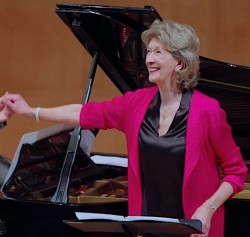
‘Call Me Flott’: A Tribute to Felicity Lott
26th May 2026
The acclaimed lyric soprano Felicity Lott, who has died at the age of 79, was an example of that rare breed among international singers: someone who combined star quality, wit, intelligence and humanity. During her half-century career she stood out for the refinement, clarity and textual responsiveness she brought to the music of Mozart and Richard Strauss, at a time when specialism in the former and sheer vocal power and OTT theatricality in the latter were increasingly the norm. These same strengths characterised her wider... read more
read more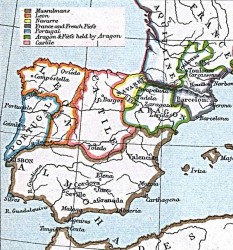
Music of the Iberian Peninsula: Beginnings
19th May 2026
Nestling at the southwestern-most tip of Europe, the Iberian Peninsula has long held charms for the rest of the continent. It is still one of the most popular destination for west-European holidaymakers seeking a mixture of sun and exoticism. In the world of classical music, it has attracted composers from the Neapolitan expat Domenico Scarlatti, and French composers like Bizet, Chabrier and Ravel, to Rimsky-Korsakov in far-away St Petersburg. The allure of Hispania is partly due to its geographic location as a peninsula... read more
read more
When the Music Vanishes
12th May 2026
Many of you may think that classical music has already vanished from our streets. The days when a modest-sized city like Europadisc’s home patch in Nottingham could boast no fewer than three specialist classical shops are long gone. In central London, where the likes of Caruso & Co, Farringdon Records, Direction Dean Street and Orchesography plied their trade, even the tenacious Harold Moores in Great Marlborough finally shut up shop in early 2017. Mounting rents, business rates and online competition have been... read more
read more
Five Years of the Spin Doctor!
6th May 2026
A couple of weeks ago, I was told by Europadisc’s proprietor that it is now five years since we first launched the Spin Doctor column. Where has the time gone? The original brief was fairly succinct and deliberately left open to a wide range of options: to write a weekly column, roughly the same length as (or a little longer than) our Disc of the Week reviews, on any subject broadly related to recorded classical music. As the first columns appeared while the knock-on effects of the Covid pandemic were still being felt, the... read more
read more