 FREE UK SHIPPING OVER £35!
The Spin Doctor Europadisc's Weekly Column
On Rhythm
1st May 2024
1st May 2024
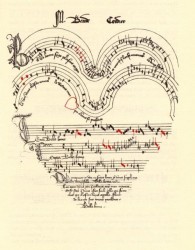 Of all the elements of music, one of the most fundamental is also the most difficult to pin down: rhythm. It’s something we think we understand (or at least can identify), until we start to think about it. The short definition in The Oxford English Dictionary is ‘a strong, regular, repeated pattern of sounds or movements’, while The New Harvard Dictionary of Music is more circumspect in defining it in brief as ‘The pattern of music in time’. Even if not marked by ‘strong, regular, repeated pattern[s] of sounds’, a piece of music will still have rhythm: think of the seamless lines of Renaissance polyphony, which would be considerably more difficult to perform and coordinate if they did not have durational values ascribed to their notes!
Television viewers of a certain age may remember the ‘dummy keyboard’ round of Joseph Cooper’s musical quiz show Face the Music, and how tricky it was to identify a piece of music from its rhythmic impulses alone. In fact, rhythm in music is a huge topic, and it arises from the interaction of many different parameters: tempo, metre, duration, attack, regularity/irregularity of pulse, accentuation, timbre, even acoustics. All these factors will affect the listener’s perception of music’s rhythmic profile.
Throughout the history of music, rhythm has been a recurring concern for musicians, theorists and critics. In some periods it has been a more prominent topic than in others. The rhythmic modes of early medieval polyphony are different groupings of long and short notes (longas and breves), donated by the shapes of the noteheads (neumes) by which the music was notated. There were six rhythmic modes (or short patterns), which bear similarities to the metrical ‘feet’ of classical poetry. They were crucial in the performance of the discant clausula of Notre Dame polyphony.
Subsequent transformation in note shapes led to what is known as the ‘mensural notation’ of the late medieval period, which was able to distinguish more precisely the rhythmic durations of the various notes, enabling the creation of music of considerable rhythmic sophistication. Arguably the height of these developments was the ars subtilior (‘more subtle art’) of the late 14th century, which used coloured notation (black notes and red notes, the latter being two-thirds the duration of the former) resulting in music of great complexity. Among the composers who perfected this rarified compositional technique were Anthonello de Caserta, Matteo da Perugia, Philipoctus de Caserta, Jacob Senleches and Baude Cordier.
In the Renaissance era, strong rhythmic profiles were less to the fore than a seamless flow of lines, although the imitative polyphony of the period often relied on distinctive ‘head motifs’ as points of imitation, often taken from more popular music like chansons. (Popular song, with its often close relation to the dance, has always been a fertile supply of strongly ‘rhythmic’ music: regular metric and pitch patterns which are easy to remember.)
The Baroque era is often characterised as a the summation of the polyphonic era (in the shape of the fugue) and the heyday of the near-ubiquitous dance suite with its movements based on popular dance forms. In truth, the two distinct trends actually overlapped considerably. Many of J.S. Bach’s fugues, for example, have a consciously dance-like character, while dances of all types incorporated elements of imitative polyphony. In France, the practice of notes inégales by which regular duple rhythms were inflected with a hint of triplets is one that still preoccupies performers, its idiomatic deployment as elusive to analysis as the distinctive accompanimental rhythms of the Viennese waltz.
The hegemony of the four-bar phrase in the Classical and Romantic periods is often overstated, yet it undoubtedly gave something for composers like Haydn, Beethoven and Brahms to work against, with their disruptive phrases and ambiguous rhythmic patterns. A key moment in the emancipation of rhythm was the first movement of Beethoven’s ‘Eroica’ Symphony (first performed in 1805), where the insistent hyper-rhythms (combinations of strongly accented rhythmic displacement and hemiola-like passages, coming to a head at the climax of the development) boldly challenged the ‘tyranny of the barline’. What one wag described as Brahms’s ‘rhythmic perversity’ was a relatively lone voice in a period which saw the expansion and stretching of tonality (most famously in Wagner’s Tristan und Isolde), but little that was comparable in the field of rhythm.
The moment when rhythm was finally judged to have burst its bonds was in Stravinsky’s Le Sacre du printemps (The Rite of Spring, 1913), a ballet in which the rhythmic impulse was to the fore as never before, but still shaped/inflected by melodic and harmonic forces. (Significantly, many of those melodies came from folk tunes.) A greater pointer to things to come was ten years later in Stravinsky’s cantata Les Noces (The Wedding) which, with its instrumental forces of unpitched and pitched percussion (including four pianos), had an immediacy of attack and use of folk elements that still retain their power and freshness.
Another composer whose works were strongly concerned with both rhythm and folk music was Béla Bartók, whose vast collection of graded piano pieces Mikrokosmos (written between 1926 and 1939) concludes with the Six Dances in Bulgarian Rhythm, with their bars of ‘modular’ metre. The increasing preoccupation of composers with rhythm in the postwar years found some of its most intriguing outlets in the broader minimalist movement. Steve Reich’s gradual rhythmic displacements in works like Clapping Music (1972) with its palindromic base rhythm require immense concentration on the part of the performers while reducing the percussive element to its most basic form.
Ten years earlier, György Ligeti had placed the performer at arm’s length in his Poème symphonique for 100 metronomes, all starting simultaneously but set at different speeds which gradually get mind-bendingly out of sync. Pulse was an abiding concern for Harrison Birtwistle, whose works often involved layers of musical material moving at different speeds. Yet his most immediate engagement with the issue was in one of his smallest-scale pieces, Pulse Sampler for oboe and claves (1980), where the rhythmic element (in the form of pulses on the wooden claves) sets the tempo for the oboist, but then constantly changes.
Rhythm in music is a vast subject, and we can scarcely give more than a few pointers in the space available here, but our shortlist of recommended pieces all deserve consideration as key works in the history of rhythm in music.
L Couperin - Non mesuré: Keyboard Preludes (Bogner) FB2105989
Beethoven - Symphony no.3 (Les Siècles / Roth) HMM902421
Stravinsky - Les Noces (New London Chamber Choir / Wood) CDH55467
Bartók - Mikrokosmos (Jandó) 855782122
Reich - Sextet, Clapping Music, Music for Pieces of Wood (LSO Percussion Ensemble) LSO5073
Latest Posts
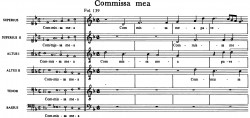
Music of the Iberian Peninsula, Part 3: More observations on the Golden Age
16th June 2026
Our last visit to the Iberian peninsula, a fortnight ago, was an insanely ambitious, necessarily broad-brush survey of the Spanish and Portuguese Golden Age, covering vocal and instrumental music, the sacred and the secular. This week, we take a more concise and (I hope) focussed look at a few of the sacred vocal masterpieces which exemplify the particular fervour and intensity of this remarkable period of musical history. They reflect the special place the peninsula had as a bulwark against the Reformation that had taken... read more
read more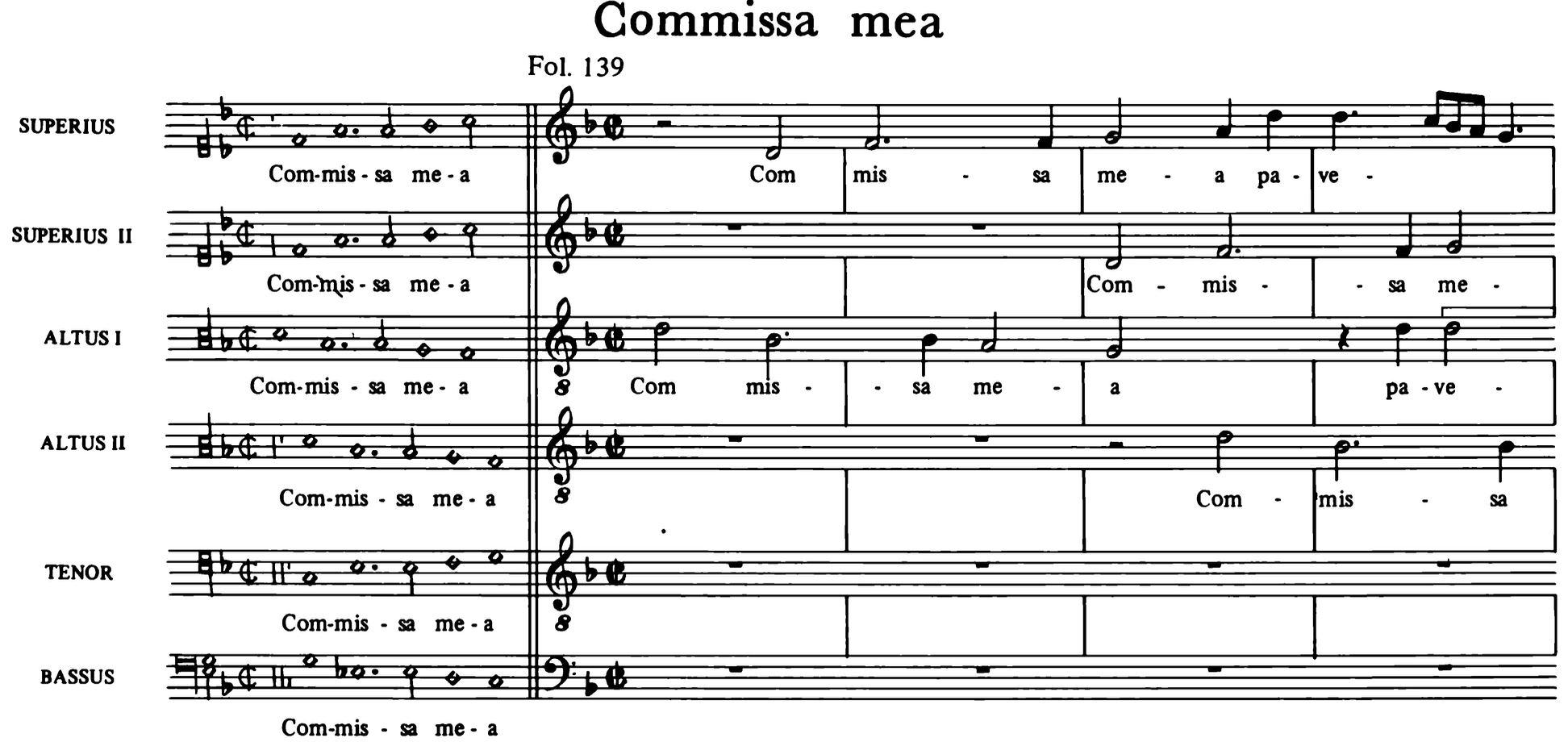
Music of the Iberian Peninsula, Part 3: More observations on the Golden Age
16th June 2026
Our last visit to the Iberian peninsula, a fortnight ago, was an insanely ambitious, necessarily broad-brush survey of the Spanish and Portuguese Golden Age, covering vocal and instrumental music, the sacred and the secular. This week, we take a more concise and (I hope) focussed look at a few of the sacred vocal masterpieces which exemplify the particular fervour and intensity of this remarkable period of musical history. They reflect the special place the peninsula had as a bulwark against the Reformation that had taken... read more
read more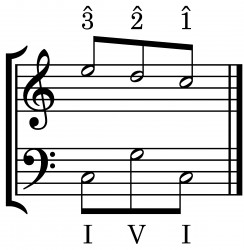
Carl Schachter, Arnold Whittall, and why music analysis matters
9th June 2026
Two recent deaths have robbed the world of music analysis of a pair of its most revered figures. Carl Schachter, who has died at the age of 93, was a pupil of (and subsequently collaborator with) Felix Salzer, himself one of Heinrich Schenker’s foremost students. Schachter continued to enrich and broaden the teaching of Schenkerian analysis, including important work on its application to issues of rhythm (which Schenker, focussing on harmonic and contrapuntal matters, largely bypassed). His influence went well beyond the... read more
read more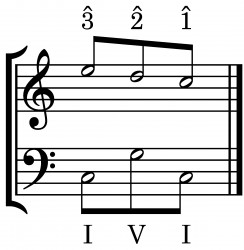
Carl Schachter, Arnold Whittall, and why music analysis matters
9th June 2026
Two recent deaths have robbed the world of music analysis of a pair of its most revered figures. Carl Schachter, who has died at the age of 93, was a pupil of (and subsequently collaborator with) Felix Salzer, himself one of Heinrich Schenker’s foremost students. Schachter continued to enrich and broaden the teaching of Schenkerian analysis, including important work on its application to issues of rhythm (which Schenker, focussing on harmonic and contrapuntal matters, largely bypassed). His influence went well beyond the... read more
read more
Music of the Iberian Peninsula, Part 2: ‘O quam gloriosum’ – The Spanish and Portuguese Golden Age
2nd June 2026
Over the past fortnight, I’ve been bathed in the most glorious, radiant, transformative light. Not the UK’s recent unseasonable heatwave, but the extraordinary vocal polyphony of the Siglo de Oro: the Spanish (and Portuguese) ‘Golden Century’. Extending from the late 15th to the early 17th century, this was a time of remarkable artistic flowering on the Iberian Peninsula, coinciding with the emergence of Spain and Portugal as global imperial powers with extensive colonial territories in the Americas, Africa and Asia. The... read more
read more