 FREE UK SHIPPING OVER £35!
The Spin Doctor Europadisc's Weekly Column
Works in Focus: Smetana’s Má vlast
17th January 2024
17th January 2024
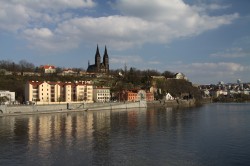 Amid the seemingly constant flow of new Bruckner recordings being issued in anticipation of the composer’s 200th birthday on this September, it’s easy to overlook another important musical bicentenary that falls this year. Bedřich Smetana was born on 2 March 1824, six months and two days before his Austrian counterpart. Although he was raised in a German-speaking household and mastered the Czech language only later in life, Smetana formed the keystone in the musical Czech national revival of the 19th century. He had already composed the three works on which his operatic fame rests – The Bartered Bride, Dalibor and Libuše – when, with the sudden onset of total deafness in the mid-1870s, he set about composing his orchestral masterpiece: the cycle of six symphonic poems entitled Má vlast (‘My Homeland’).
Following a visit to Weimar in 1857, Smetana had already fallen under the spell of Franz Liszt’s ‘New Music’, composing the symphonic poems Richard III, Wallenstein’s Camp and Hakon Jarl on returning to his Swedish base in Gothenburg. By the early 1860s he was back in Prague, and it was an 1869 visit to the source of the river Vltava – the conjunction of the two streams known as the ‘Cold’ and ‘Warm’ Vltava – that sowed the seeds of what was to become Má vlast. The initial conception was rather different, but the mixture of mythological and natural subject matter was there from the beginning, as were the two pieces that became the work’s opening sections: Vyšehrad (named after the ancient hill fort some 3km southeast of Prague Castle, on the east bank of the Vltava river) and Vltava (often referred to by the river’s German name, Die Moldau).
These two opening sections were composed in quick succession in the autumn and early winter of 1874 – Vltava taking just 19 days, as noted by the composer in his manuscript full score – as Smetana came to grips with the reality of the situation regarding his loss of hearing. Yet you’d never guess this bleak background from the glorious flow of ideas in these works: the bardic harps and evocations of legendary times in Vyšehrad, and the minutely picturesque details of Vltava, from the opening mingling of the river’s sources (a pair of limpid flutes), via a charming peasant wedding scene, nymphs dancing by moonlight, a dramatic traversal of St John’s Rapids, and the broad flow of the river at Prague itself. Premiered separately, these two sections set up a recurring paired theme, the first rooted in Czech history, the second in the present.
With the third work, Smetana visits the world of Czech myth and the tale of the bloodthirsty warrior maiden Šárka (the subject of operas by Fibich and Janáček), sworn to avenge herself on all men as she entraps the luckless prince Ctirad. In the context of the cycle as a whole, Šárka injects an atmosphere of gripping drama. Today, the figure of Šárka is memorialised by a rocky wild nature reserve northwest of Prague, ‘Divoká Šárka’ (‘Wild Šárka’). It is a very different picture of the Czech countryside that is painted in the cycle’s fourth movement, Z českých luhů a hájů (‘From Bohemia’s Fields and Groves’), which encompasses rolling landscapes, woodland horn calls, and even (most bafflingly for commentators) a complex fugal section for the strings. Like the previous two sections, both Šárka and From Bohemia’s Fields and Groves are rich in textural and motivic contrasts, so that they stand well on their own. At the time of their completion (in February and October 1875 respectively), these pieces were intended as completing a four-movement cycle.
Yet all was not quite finished: in 1878 Smetana returned to the work with another pair of movements, more intimately bound together than the others. Tábor is again rooted in Czech history, in this case in the 15th-century Hussite wars, during which the settlement of Tábor formed the Hussites’ main base. Its brooding, monothematic subject being the Hussite battle hymn ‘Ktož jsú Boží bojovníci’ (‘Ye who are God’s warriors’), whose repeated monotone intonation builds to some thrilling orchestral tuttis. The final tutti then ‘spills over’ into the opening of the final work, Blaník, named after the imposing mountain in Central Bohemia, said to contain a vast sleeping army led by St Wenceslaus, who will rise again at the Czech nation’s hour of greatest need. This wonderfully-paced movement culminates in the overwhelming return of the ‘Vyšehrad’ theme from the cycle’s first two sections, and a joyous closing tutti that never fails to raise the roof. It looks to a glorious future for the Czech lands, rooted in but shaking off the troubles of its past.
Although the various sections were premiered in turn as they appeared (with Tábor and Blaník performed together), the first complete performance of Má vlast was on 5 November 1882 at Prague’s Žofín Palace, conducted by Smetana’s trusted collaborator Adolf Čech. There is something very special about hearing all six works in sequence in a single concert, and Má vlast has formed the opening concert of the post-war Prague Spring Music Festival, since 1952 held on the anniversary of Smetana’s death (12 May 1884), with several of the finest performances recorded for posterity.
A few recommended recordings:
Czech PO / Talich (1939) SU40652
Czech PO / Ančerl (1963) SU36612
Czech PO / Ančerl (1968) SU70159 (DVD)
Czech PO / Kubelík (1990) 1112082
Czech PO / Mackerras (1999) SU34652
Janáček PO Ostrava / Kuchar (2007) 94853
Prague Philharmonia / Hrůša (2010) SU40322
Collegium 1704 / Luks (2021) ACC24378
Latest Posts
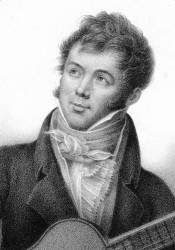
Music of the Iberian Peninsula, Part 5: Beyond Vienna – The Classical Era in Spain and Portugal
14th July 2026
The Classical period has long been mapped as though Europe’s musical imagination narrowed to a triangle drawn between Vienna, Mannheim and northern Italy. Spain and Portugal appear, if at all, as picturesque margins: lands of guitars, fandangos and imported opera, waiting for the 19th century to discover their national voices. Listen attentively to the Iberian repertory of roughly 1750 to 1830, however, and a more intricate picture emerges. Madrid and Lisbon were cosmopolitan courts, receptive to Italian opera, French... read more
read more
Hans Werner Henze at 100: An Outsider at the Heart of Modern Music
6th July 2026
Among the major composers of the post-war era, Hans Werner Henze occupies a singular position. Neither a doctrinaire modernist nor a nostalgic traditionalist, he fashioned a musical language of remarkable elasticity, capable of embracing serial procedures and sumptuous lyricism, classical forms and theatrical fantasy, political engagement and deeply personal expression. If his music has never enjoyed the ubiquity of Britten, Shostakovich or Ligeti, it has steadily acquired the stature of a body of work whose richness rewards... read more
read more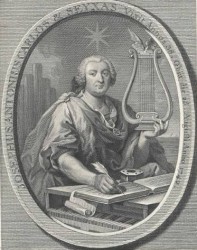
Music of the Iberian Peninsula Part 4: The Spanish and Portuguese Baroque
30th June 2026
For many music lovers, the Baroque era immediately conjures images of Bach's intricate counterpoint, Handel's majestic choruses, Vivaldi’s dazzling violin concertos or Charpentier’s sumptuous vocal music. Yet on the southwestern edge of Europe another remarkable musical tradition flourished during the seventeenth and early eighteenth centuries. The Iberian Peninsula developed a distinctive Baroque voice that combined religious intensity, courtly sophistication and popular vitality. Drawing upon centuries of cultural exchange... read more
read more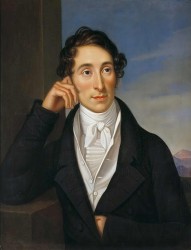
Carl Maria von Weber: Visionary of German Romanticism
23rd June 2026
When audiences think of early nineteenth-century German music, the towering figures of Beethoven, Schubert, and later Wagner often dominate the conversation. Yet between the Classical world of Mozart and the mature Romanticism of Wagner stands a composer whose influence was both profound and transformative: Carl Maria von Weber (1786–1826). Composer, conductor, pianist, critic, and visionary dramatist, Weber played a pivotal role in shaping the future of German opera and helping define the musical language of... read more
read more
Music of the Iberian Peninsula, Part 3: More observations on the Golden Age
16th June 2026
Our last visit to the Iberian peninsula, a fortnight ago, was an insanely ambitious, necessarily broad-brush survey of the Spanish and Portuguese Golden Age, covering vocal and instrumental music, the sacred and the secular. This week, we take a more concise and (I hope) focussed look at a few of the sacred vocal masterpieces which exemplify the particular fervour and intensity of this remarkable period of musical history. They reflect the special place the peninsula had as a bulwark against the Reformation that had taken... read more
read more