 FREE UK SHIPPING OVER £35!
The Spin Doctor Europadisc's Weekly Column
A Prolific Recording Artist: Jenő Jandó (1952–2023)
12th July 2023
12th July 2023
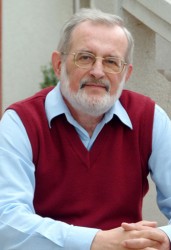 Over the past century, many musicians have made their reputations via the medium of recording, yet few have been known so exclusively from their discs – nor so extraordinarily prolific in the studio – as the Hungarian pianist Jenő Jandó, who died last week at the age of 71. Signed in 1988 to the Naxos label shortly after its establishment, Jandó went on to make hundreds of recordings for the company, his last (of late piano works by Liszt) being in 2020. As Naxos’s ‘house pianist’, he was a crucial part of its mission to combine quality, breadth, completeness and affordability. Among his most notable projects were the complete piano sonatas of Haydn, Mozart, Beethoven and Schubert, the complete Mozart piano concertos, and the complete piano works (including the concertos) of his compatriot Bartók.
When Naxos launched their internet subscription service (the Naxos Music Library) in 2003, Jandó’s already considerable discography was available to listeners such as music students in university and college libraries who might never have bought any of his physical discs. And, for those on tight budgets, Naxos’s discs (in those days in the ‘super-budget’ range) were well within reach at a time when more celebrated artists still came at a premium price. Both these factors ensured that Jandó’s performances reached a far wider audience than his low public concert profile might suggest.
Jenő Jandó was born in the city of Pécs in southwestern Hungary on 1 February 1952. His first piano teacher was his mother, but he went on to study with Katalin Nemes and Pál Kadosa at the Liszt Academy in Budapest, where he in turn was later to be appointed professor. His first successes were in the Georges Cziffra and Ciani piano competitions, but Jandó himself reckoned his breakthrough to be the third prize at the Beethoven Piano Competition at the age of 18. Further success came with first prize at the 1973 Hungarian Piano Concours and in the 1977 Sydney International Piano Competition.
As well as the composers mentioned above, Jandó’s vast discography encompassed Bach (including both books of The Well-Tempered Clavier), Brahms, Dvořák, Mussorgsky, Kodály, Schumann and Weber, as well as relative rarities like Dohnányi, Hofmann, Kuhlau. Inevitably across such a large spread there is some unevenness, and some critics were sniffy about anything coming from the budget end of the market. Yet Jandó’s insistence on putting the composer first – which led in some quarters to accusation of a lack of character – now seems refreshing in a time where everyone seems to be falling over to make their own interpretative ‘points’. In retrospect, the number of his recordings recommended (many with three-star ratings) in the now defunct Penguin Guide to Compact Discs speaks for itself.
Jandó’s straightforward but idiomatic feel for the music of his homeland is evident in his Bartók performances. Other recordings that show him at his considerable best are his bold, unaffected, direct late Beethoven sonatas (including a punchy ‘Hammerklavier’), and the incisive wit of his early Beethoven, all characterised by a commendably discreet use of the pedal. The clarity of his Bach, Haydn and Mozart is also exemplary. If his Schubert is at times short on poetry, he finds plenty in Schumann and Liszt, even if (in the opinion of the New Grove dictionary) he was ‘not primarily a subtle colourist’.
His chamber music collaborations, above all in Mozart and Beethoven with the Japanese violinist Takako Nishizaki, are models of musical partnership at the service of the music, and – like much of his solo work – are likely to attain greater durability than many starrier rivals. As the Naxos website puts it, Jenő Jandó’s art represented ‘the supremacy of the work over the ego of the performer’, and in his home country he was feted with honours, including the Liszt Prize and the Knight’s Cross of the Hungarian Order of Merit. At a more human level, he suppressed a Gould-like tendency to sing along while playing by placing an unlit cigarette in his mouth while recording. The last word, however, should go to his sometime collaborator Nishizaki: ‘The world has lost a wonderful musician. … He was highly intelligent and extremely musical with technique to spare and the ability to create tone colour always appropriate to the music. I will miss him.’
As a tribute to Jenő Jandó’s unique place in the classical record catalogues, Europadisc now has special offers on over 100 of his currently available Naxos titles (see link below). And we hope that Naxos might at some point issue box sets of his Beethoven and Mozart sonatas, as well as his Bartók, to stand as tribute alongside that of his Haydn sonatas!
https://www.europadisc.co.uk/offer/3158/In_Memory_of_Jeno_Jando.htm
Latest Posts
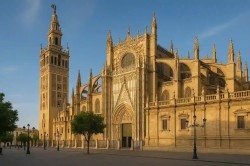
Music of the Iberian Peninsula, Part 2: ‘O quam gloriosum’ – The Spanish and Portuguese Golden Age
2nd June 2026
Over the past fortnight, I’ve been bathed in the most glorious, radiant, transformative light. Not the UK’s recent unseasonable heatwave, but the extraordinary vocal polyphony of the Siglo de Oro: the Spanish (and Portuguese) ‘Golden Century’. Extending from the late 15th to the early 17th century, this was a time of remarkable artistic flowering on the Iberian Peninsula, coinciding with the emergence of Spain and Portugal as global imperial powers with extensive colonial territories in the Americas, Africa and Asia. The... read more
read more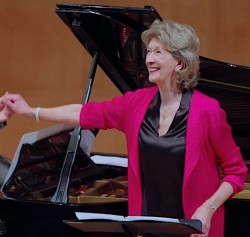
‘Call Me Flott’: A Tribute to Felicity Lott
26th May 2026
The acclaimed lyric soprano Felicity Lott, who has died at the age of 79, was an example of that rare breed among international singers: someone who combined star quality, wit, intelligence and humanity. During her half-century career she stood out for the refinement, clarity and textual responsiveness she brought to the music of Mozart and Richard Strauss, at a time when specialism in the former and sheer vocal power and OTT theatricality in the latter were increasingly the norm. These same strengths characterised her wider... read more
read more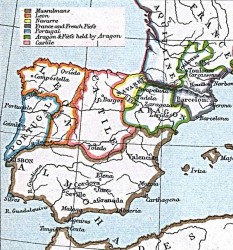
Music of the Iberian Peninsula: Beginnings
19th May 2026
Nestling at the southwestern-most tip of Europe, the Iberian Peninsula has long held charms for the rest of the continent. It is still one of the most popular destination for west-European holidaymakers seeking a mixture of sun and exoticism. In the world of classical music, it has attracted composers from the Neapolitan expat Domenico Scarlatti, and French composers like Bizet, Chabrier and Ravel, to Rimsky-Korsakov in far-away St Petersburg. The allure of Hispania is partly due to its geographic location as a peninsula... read more
read more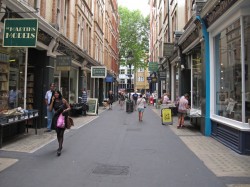
When the Music Vanishes
12th May 2026
Many of you may think that classical music has already vanished from our streets. The days when a modest-sized city like Europadisc’s home patch in Nottingham could boast no fewer than three specialist classical shops are long gone. In central London, where the likes of Caruso & Co, Farringdon Records, Direction Dean Street and Orchesography plied their trade, even the tenacious Harold Moores in Great Marlborough finally shut up shop in early 2017. Mounting rents, business rates and online competition have been... read more
read more
Five Years of the Spin Doctor!
6th May 2026
A couple of weeks ago, I was told by Europadisc’s proprietor that it is now five years since we first launched the Spin Doctor column. Where has the time gone? The original brief was fairly succinct and deliberately left open to a wide range of options: to write a weekly column, roughly the same length as (or a little longer than) our Disc of the Week reviews, on any subject broadly related to recorded classical music. As the first columns appeared while the knock-on effects of the Covid pandemic were still being felt, the... read more
read more