FREE UK SHIPPING OVER £35!

The Spin Doctor Europadisc's Weekly Column

The Fate of the BBC Orchestras

  12th April 2023

12th April 2023

Imagine that you were tasked by your employer with undermining the reputation of the very organisation you work for. You could scarcely come up with a more elegant plan than that deployed by top music executives at the BBC in the past few weeks. Tasked with developing (or so they say) agility, flexibility and creativity among the BBC’s ensembles, they proposed the complete disbandment of the world-renowned BBC Singers, and a 20% reduction in the number of salaried musicians across three BBC orchestras: the London-based BBC Symphony and BBC Concert Orchestras, and the Manchester-based BBC Philharmonic. The fate of the BBC Singers was a particularly cruel one: to be closed down not just a year before their centenary, but just weeks before the beginning of the BBC Proms season, at which they are key participants.
 
What the BBC executives failed to recognise was the strength of feeling and condemnation that their announcement (with its Orwellian turns of phrase) would unleash. A veritable chorus (in many cases quite literal) broke forth, from humble community choirs around Britain and further afield, to the great and good of the music world, and even (improbable as it might seem) from cabinet ministers. Forced into a humiliating climbdown, the BBC gave the Singers a reprieve (while alternative funding models are ‘explored’), which may only be temporary. Amid widespread relief at this news, it should not be forgotten that the plans regarding the BBC orchestras in England (those in Wales and Scotland are as yet unaffected) are still to be followed through. Quite how cutting 20% of their personnel will make them more agile and flexible is difficult to fathom. Surely the fewer musicians they employ, the less flexible they become. And there are mutterings (strenuously denied, of course) that the long-term aim is a merger of the Symphony and Concert Orchestras, which would destroy their manifestly distinct identities, with the BBCSO more geared towards large-scale symphonic and contemporary repertoire, and the BBC Concert Orchestra generally focussing on lighter repertoire.
 
Apparently lost in all the turmoil is any sense that those at the top of the BBC are holding fast to the principles of the BBC’s founding father, John Reith: to ‘inform, educate and entertain’ (notice the order of those priorities). Perhaps the Corporation’s top management hope that, by making their ensembles more ‘flexible’, they can reach wider audiences. A better strategy might be to restore more orchestral and choral music to television schedules which, even during the summer Proms seasons, are for the most part conspicuously absent from the BBC’s main terrestrial channels. For the rest of the year, television appearances are virtually zero. However audiences choose to watch, seeing as well as hearing musicians perform great music is vital both in educating and in inspiring future generations of performers. Radio alone cannot achieve this, however well presented.
 
And presentation is another bugbear for many long-term listeners: increasingly gushing but empty commentary, lacking detail and focus. Transferred to a classroom, such presentation would be dismissed as inadequate: why should listeners and viewers settle for less? The results are rarely entertaining, much less informative or educational, often reducing the great composers and performers to a few tired clichés. Long gone are the days of Hans Keller’s trenchant analyses on Radio 3, and even Michael Oliver’s wide-ranging Music Weekly (1975–90) would probably sit ill with the current set of BBC suits. While there are still some intelligent presenters, on radio at least, the default setting too often seems to be an over-the-top delivery style that threatens to drown out any incidental insights.
 
Of course, the musical world has changed greatly even since the days of Keller and Oliver, let alone Reith. Yet a balance needs to be struck, just as it does in the matter of the fate of orchestras that have taken many decades to establish. Although the BBC ensembles between them cover an enormous range of repertoire, their particular emphasis on both British and contemporary music (of all sorts) has given them a unique place in the forging of a national cultural identity. If the BBC wants to make savings, it might better look at the enormous salaries of a few celebrity presenters, not to mention the higher echelons of management. They would save far more than by cutting (for example) the BBC Singers, whose annual budget of around £1 million would easily be offset by the loss of a few executives with improbable job titles that seem to have come straight out of the mockumentary sitcom W1A. (Note to BBC execs: W1A was meant to be a satire, not a blueprint for the Corporation’s future management!)
 
Before embarking on further ruinous, ill-thought-out and irreversible cuts, perhaps the BBC (which operates under a royal charter) needs to have a royal commission established to decide on its future musical direction. And instead of stuffing it full of suits, how about making sure that a majority of its members are real musicians? Names that spring to mind include composers the two Judiths (Weir as Master of the King’s Music, and Bingham), a conductor with experience of orchestra building of excellence (Simon Rattle or Andrew Davis?), certainly a singer of international renown (John Tomlinson, perhaps?), and an instrumentalist representative of the younger generation (both Sheku Kanneh-Mason and Anna Lapwood would fit the bill). Feel free to send us your suggestions!
 
We’ll return to the subject of music and education soon: classical music is in danger of disappearing for all but the minority who can afford it (so much for progress…). Broadcasting could play a key role in reversing this trend, but a strategy is needed, and coordination with wider efforts in both schools and local communities. And (as we never tire of pointing out), anything that enhances the national and international quality of life is worth the investment of time and money. For now, however, we leave you with suggestions of a few key recordings made by the orchestras still under threat.
 
A few recommended recordings:

BBC Symphony Orchestra
- Birtwistle - The Mask of Orpheus NMCD050
- Bruckner - Symphony no.5 (Wand) ICAD5049 (DVD)
- Carter - Late Works (Knussen) ODE12962
- Ferneyhough - La Terre est un homme NMCD231
- Vaughan Williams - Symphonies 5 & 6 (Boult) ICAC5164
 
BBC Concert Orchestra
- British Light Music Vol.1: Addinsell 8555229
- Elgar - The Hills of Dreamland: Orchestral Songs SOMMCD2712
- Maconchy, Lutyens & Wallen - Works for Piano and Orchestra RES10315
- Poulenc - Les Animaux modeles, Sinfonietta, etc. CHSA5260
 
BBC Philharmonic
- Gipps - Orchestral Works Vol.2 CHAN20161
- Smyth - The Wreckers (Martinez) RO004
- Maxwell Davies - The Lighthouse 8660354
- Novák - Orchestral Works (Pešek) CHAN9821

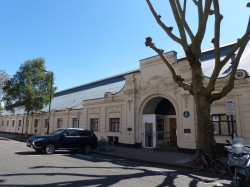
Photo: BBC Maida Vale Studios (source: Wikimedia Commons)

Latest Posts


Music of the Iberian Peninsula, Part 3: More observations on the Golden Age

16th June 2026

Our last visit to the Iberian peninsula, a fortnight ago, was an insanely ambitious, necessarily broad-brush survey of the Spanish and Portuguese Golden Age, covering vocal and instrumental music, the sacred and the secular. This week, we take a more concise and (I hope) focussed look at a few of the sacred vocal masterpieces which exemplify the particular fervour and intensity of this remarkable period of musical history. They reflect the special place the peninsula had as a bulwark against the Reformation that had taken... read more

read more
Music of the Iberian Peninsula, Part 3: More observations on the Golden Age

16th June 2026

Our last visit to the Iberian peninsula, a fortnight ago, was an insanely ambitious, necessarily broad-brush survey of the Spanish and Portuguese Golden Age, covering vocal and instrumental music, the sacred and the secular. This week, we take a more concise and (I hope) focussed look at a few of the sacred vocal masterpieces which exemplify the particular fervour and intensity of this remarkable period of musical history. They reflect the special place the peninsula had as a bulwark against the Reformation that had taken... read more

read more
Carl Schachter, Arnold Whittall, and why music analysis matters

9th June 2026

Two recent deaths have robbed the world of music analysis of a pair of its most revered figures. Carl Schachter, who has died at the age of 93, was a pupil of (and subsequently collaborator with) Felix Salzer, himself one of Heinrich Schenker’s foremost students. Schachter continued to enrich and broaden the teaching of Schenkerian analysis, including important work on its application to issues of rhythm (which Schenker, focussing on harmonic and contrapuntal matters, largely bypassed). His influence went well beyond the... read more

read more
Carl Schachter, Arnold Whittall, and why music analysis matters

9th June 2026

Two recent deaths have robbed the world of music analysis of a pair of its most revered figures. Carl Schachter, who has died at the age of 93, was a pupil of (and subsequently collaborator with) Felix Salzer, himself one of Heinrich Schenker’s foremost students. Schachter continued to enrich and broaden the teaching of Schenkerian analysis, including important work on its application to issues of rhythm (which Schenker, focussing on harmonic and contrapuntal matters, largely bypassed). His influence went well beyond the... read more

read more
Music of the Iberian Peninsula, Part 2: ‘O quam gloriosum’ – The Spanish and Portuguese Golden Age

2nd June 2026

Over the past fortnight, I’ve been bathed in the most glorious, radiant, transformative light. Not the UK’s recent unseasonable heatwave, but the extraordinary vocal polyphony of the Siglo de Oro: the Spanish (and Portuguese) ‘Golden Century’. Extending from the late 15th to the early 17th century, this was a time of remarkable artistic flowering on the Iberian Peninsula, coinciding with the emergence of Spain and Portugal as global imperial powers with extensive colonial territories in the Americas, Africa and Asia. The... read more

read more
View Full Archive