 FREE UK SHIPPING OVER £35!
The Spin Doctor Europadisc's Weekly Column
The Gripes of Wrath and some Comfort Listening
14th December 2022
14th December 2022
 For many people, the festive season is the perfect time of year for as good old moan. Whether it’s how good Christmases used to be (before modern life mucked everything up), the miserable end-of-year weather, or the state of the nation, nothing seems to brighten up the long winter nights than a licence to complain. In tribute to this alternative Christmas spirit, the Spin Doctor has decided to air a couple of pet gripes, as well as a few suggestions for comfort listening to escape the winter blues.
Gripe no.1: Availability
Scarcely a week goes by that we’re not asked by customers to obtain a classic recording recommended by one of the classical music magazines or Radio 3’s ‘Building a Library’. And nine times out of ten (or so it feels), that particular disc – praised to the rafters by erudite reviewers – will be out of print, available only as a download, or buried away in a vast box set that will cost them more than their monthly disposable income. Although one is tempted to call out the magazines and reviewers for not choosing a performnace that’s more readily obtainable, a survey of best recordings of a particular piece of music would be impoverished indeed if it were limited to what’s available in single-issue format at any given moment.
The fault is rather with the record companies, who let acclaimed performances drift in and out of the current catalogue seemingly at random, often repackaging them in ever more extravagant and costly boxes, with little thought for the customer who might be just one disc short of, say, a particular pianist’s Beethoven cycle, and wants to complete the set without shelling out a small fortune. Of course, there’s always YouTube, the (vanishing number of) second-hand stores, and online marketplace sellers. But this is of little help to the sizeable number of classical music listeners who don’t have easy access either to well-stocked charity shops or a computer.
A couple of recent examples include Rudlof Kempe’s classic Dresden account of Richard Strauss’s Don Juan (available only as part of a – mercifully cheap – complete set of his Strauss recordings on Warner), and Brahms’s Violin Sonatas recorded for Decca by Josef Suk and Julius Katchen, and currently unavailable as either a single disc or part of a larger set. Not for long, we sincerely hope...
Gripe no.2: Conductors – Who do they think they are?
For many years, the Spin Doctor has joked that cover artwork of conductors ought to show them as they appear to audiences during performances, i.e. from the rear. But it’s always their great big mugs that stare out at us from CD and LP covers, most ridiculously Karajan in his jet-set, all-flying, all-sailing, leather-jacket-wearing phase of the 1970s. With tongue slightly less in cheek, we’ve grown rather tired of maestri mounting the podium in what looks like a high-end, silk-lined, boutique, made-to-measure version of the Nehru suit, when the poor souls of the orchestra have to sport uncomfortable-looking evening wear, usually with white-tie get-up for the men.
Of course, one understands the need for a conductor to feel comfortable, especially in a job that relies increasingly on ease of physical gesture rather than the many hours of rehearsal available in days of yore. But don’t the rank-and-file musicians deserve (and need) to play in comfort too? And, if they can make music in outfits straight out of the early 20th century, why on earth shouldn’t conductors? To use a seasonal metaphor, what’s sauce for the goose should be sauce for the gander. Or are conductors so very special that they deserve special exemption? Soloists may present a special case, but a conductor, to paraphrase the great Rafael Kubelík, is essentially an extra member of the orchestra, and should not be beyond dressing as such.
In fairness, this maestro exceptionalism goes back quite some years now, probably at least as far as Toscanini and Bruno Walter. But the problem has now reached epic proportions, and many of the current guilty parties can hold a candle to neither...
Gripe no.3: Poor documentation
Many budget-price labels (yes, there are still a few) get by on negligible documentation for their releases, in an effort to keep costs down. This is understandable: you pay for what you get. But our particular beef is with those premium-priced releases from the larger music companies who seem to think it acceptable to issue new recordings with sub-par booklet notes, often puff pieces or ‘as told to’ interviews with next to no information about the actual music that’s been recorded, little insight, minimal if any sung texts, and tiny print on ill-judged background colours that might look swanky, but are almost impossible to read from. Texts and translations ‘available online’ are useless for those who don’t have access to a computer, and in any case the links often lapse after a year or two.
Please, record companies, think about your customers! Most of them aren’t art directors who wouldn’t be seen dead at a classical concert unless work’s paying: they are dedicated music lovers who save hard to be able to afford your products, and the least they deserve is performances and accompanying bumf of decent quality and a high standard of informativeness.
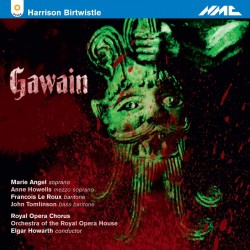
For musical indulgence, we'll probably return to Ravel’s solo piano music as recorded for Erato back in 2015 by Bertrand Chamayou, which still casts an utterly magical spell, whether in the formidable technical and musical challenges of Gaspard de la nuit, the limpid textures of Jeux d’eau or the neoclassical delights of Le Tombeau de Couperin. Of this year’s releases, Héloïse Werner’s astonishing Delphian album ‘Phrases’ has never been far from our CD player. And for the perfect seasonal album? It has to be the late Harrison Birtwistle’s Gawain, set at the Christmas court of King Arthur and his knights, and a perennial festive favourite in the Spin Doctor’s meagre hovel.
Recommended recordings:
- Ravel - Complete Works for Solo Piano (Chamayou) 2564602681
- Héloïse Werner: Phrases DCD34269
- Birtwistle - Gawain (ROH/Howarth) NMCD200
Latest Posts
Music of the Iberian Peninsula, Part 3: More observations on the Golden Age
16th June 2026
Our last visit to the Iberian peninsula, a fortnight ago, was an insanely ambitious, necessarily broad-brush survey of the Spanish and Portuguese Golden Age, covering vocal and instrumental music, the sacred and the secular. This week, we take a more concise and (I hope) focussed look at a few of the sacred vocal masterpieces which exemplify the particular fervour and intensity of this remarkable period of musical history. They reflect the special place the peninsula had as a bulwark against the Reformation that had taken... read more
read more
Music of the Iberian Peninsula, Part 3: More observations on the Golden Age
16th June 2026
Our last visit to the Iberian peninsula, a fortnight ago, was an insanely ambitious, necessarily broad-brush survey of the Spanish and Portuguese Golden Age, covering vocal and instrumental music, the sacred and the secular. This week, we take a more concise and (I hope) focussed look at a few of the sacred vocal masterpieces which exemplify the particular fervour and intensity of this remarkable period of musical history. They reflect the special place the peninsula had as a bulwark against the Reformation that had taken... read more
read more
Carl Schachter, Arnold Whittall, and why music analysis matters
9th June 2026
Two recent deaths have robbed the world of music analysis of a pair of its most revered figures. Carl Schachter, who has died at the age of 93, was a pupil of (and subsequently collaborator with) Felix Salzer, himself one of Heinrich Schenker’s foremost students. Schachter continued to enrich and broaden the teaching of Schenkerian analysis, including important work on its application to issues of rhythm (which Schenker, focussing on harmonic and contrapuntal matters, largely bypassed). His influence went well beyond the... read more
read more
Carl Schachter, Arnold Whittall, and why music analysis matters
9th June 2026
Two recent deaths have robbed the world of music analysis of a pair of its most revered figures. Carl Schachter, who has died at the age of 93, was a pupil of (and subsequently collaborator with) Felix Salzer, himself one of Heinrich Schenker’s foremost students. Schachter continued to enrich and broaden the teaching of Schenkerian analysis, including important work on its application to issues of rhythm (which Schenker, focussing on harmonic and contrapuntal matters, largely bypassed). His influence went well beyond the... read more
read more
Music of the Iberian Peninsula, Part 2: ‘O quam gloriosum’ – The Spanish and Portuguese Golden Age
2nd June 2026
Over the past fortnight, I’ve been bathed in the most glorious, radiant, transformative light. Not the UK’s recent unseasonable heatwave, but the extraordinary vocal polyphony of the Siglo de Oro: the Spanish (and Portuguese) ‘Golden Century’. Extending from the late 15th to the early 17th century, this was a time of remarkable artistic flowering on the Iberian Peninsula, coinciding with the emergence of Spain and Portugal as global imperial powers with extensive colonial territories in the Americas, Africa and Asia. The... read more
read more