 FREE UK SHIPPING OVER £35!
The Spin Doctor Europadisc's Weekly Column
In memoriam: Libor Pešek (1933–2022)
26th October 2022
26th October 2022
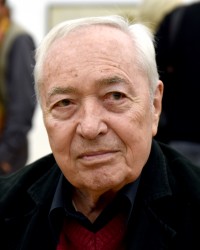 The death this week at the age of 89 of the Czech conductor Libor Pešek has been mourned both in his homeland and abroad, particularly in Liverpool, where he was music director of the Royal Liverpool Philharmonic from 1987 to 1998. Those years spanned the Fall of the Berlin Wall and collapse of the ‘Iron Curtain’, as well as the Czechoslovak ‘Velvet Revolution’. Although the Czech Philharmonic already had a history of touring under its long-term chief conductor Václav Neumann, changing political circumstances meant that Czech maestros were at last freer to take up engagements abroad. Pešek was a prime example, alongside his younger colleague Jiří Bělohlávek, paving the way for the current crop of Czech conductors (Jakub Hrůša, Tomáš Netopil and Tomáš Hanus). He was a notable champion of early-20th-century Czech repertoire, particularly of Josef Suk and the even less well-known Vítězslav Novák.
Pešek was born in Prague on 22 June 1933, and had vivid recollections of the period of Nazi occupation. At the Prague Academy of Musical Arts he studied conducting with Karel Ančerl, Václav Neumann and Václav Smetáček, and subsequently took up posts as repetiteur at Plzeň Opera and then at the Prague National Theatre. As a young conductor he founded two groups: the Prague Chamber Harmony (a wind ensemble) and the Sebastian Orchestra of Prague. In the 1970s he was chief conductor of the Czech Chamber Orchestra, and in the early 1980s headed the Slovak Philharmonic Orchestra. It was his appointment in 1982 as conductor-in-residence of the Czech Philharmonic, however, that drew him to wider attention.
His 1987 appointment as musical director of the RLPO was an inspired choice. Following the departure of Sir Charles Groves, the orchestra had got through three music directors in the space of ten years: Walter Weller, David Atherton and Marek Janowski. Pešek’s appointment brought not only stability but a marked raising of standards, nurtured by his combination of musical intelligence, collegiality and complete lack of ego. Pešek was already well-established in the catalogues with a series of recordings with the Czech Philharmonic on Supraphon. Now the RLPO joined him for a series of recordings on the newly-established Virgin Classics label. A Dvořák cycle shared between the RLPO and Czech PO under Pešek (now available as a box set on Erato) was hailed as ‘fresh [and] idiomatic’ by the New Grove Dictionary of Music and Musicians, and included particularly impressive Liverpool performances of the First, Third, Seventh and Eighth symphonies.
In 1992, Pešek led the RLPO on a USA tour, during which his determined championing – in the face of less than enthusiastic concert agents – of Suk’s Asrael Symphony (already recorded with them for Virgin in 1990) won the work new admirers. The following year, the RLPO was invited to become the first non-Czech orchestra to open the Prague Spring Festival with the traditional performance of Smetana’s Mà vlast (likewise already recorded by Virgin): a singular honour, and an indication of just how far Pešek had raised the orchestra’s profile. His repertoire in Liverpool was wide-ranging, covering British repertoire (Britten being a particular favourite) and such new works as Anthony Powers’s Horn Concerto.
However, it was to the music of the early twentieth century that Pešek’s patient, penetrating style was best attuned, especially Mahler and his Czech contemporaries. His 1996 Liverpool accounts of Novák’s In the Tatras, Eternal Longing and Slovácko Suite were particularly welcome at a time when good modern recordings of these works were unheard of, as was his 1999 BBC Philharmonic recording of the composer’s Lady Godiva overture, De profundis and Toman and the Wood Nymph. The culmination of his Liverpool years was the completion for Virgin Classics of his cycle of Josef Suk’s great symphonic tetralogy – Asrael, A Summer’s Tale, Ripening and Epilogue: to date, he is still the only conductor to have recorded the complete series of works, and Epilogue made a fitting conclusion to the end of his tenure.
As well as becoming the RLPO’s Conductor Laureate, Pešek enjoyed close ties with the Prague Symphony Orchestra and, in later years, the Czech National Symphony Orchestra, with whom he toured frequently, eventually retiring in his mid-80s at the end of the 2018-19 season. Although his performances of Dvořák and Janáček were often less elementally thrilling than some of his colleagues’, at his best he was enormously persuasive in the music of his homeland, as well as an enthusiastic convert to British music. His deeply thought-through, probing interpretations were ideally suited to Smetana, Suk, Novák and Martinů (including a fine Supraphon recording of the latter’s Greek Passion). Nor did he neglect earlier Czech repertoire, championing the Baroque music of Vejvanovský as far back as the 1970s, while his mid-1980s recording of Mysliveček’s complete violin concertos with soloist Shizuka Ishikawa (recently reissued by Supraphon) are much admired by critics.
Universally loved by musicians and audiences, Libor Pešek was a refreshingly unpretentious maestro whose love of life and nature infected all his performances. Only a fraction of his impressive discography is currently available, although a 2013 Supraphon box set encompassing Bruckner, Debussy, Elgar, Ravel and Scriabin as well as Suk gives some idea of the breadth of his tastes. Warner would be doing us all a favour if they collected together his Suk and Novák recordings for Virgin Classics – or, better still, his complete Virgin recordings, which would make an essential introduction to the Czech repertoire for any newcomers.
Recommended recordings:
Dvořák - Symphonies 1-9, Orchestral Works (RLPO, Czech Philharmonic) 9029597506
Martinů - The Greek Passion (Prague Radio Symphony Orchestra) SU39842
Mysliveček - Complete Violin Concertos (Ishikawa, Dvořák Chamber Orchestra) SU42982
Novák - Orchestral Works (BBC Philharmonic) CHAN9821
Smetana - Má vlast (Czech Philharmonic) ALC1099
Libor Pesek: The Ultimate Collection (Brno Philharmonic, Czech Philharmonic) SU41322
Latest Posts
Carl Schachter, Arnold Whittall, and why music analysis matters
9th June 2026
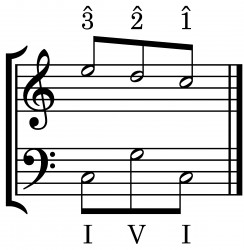
Two recent deaths have robbed the world of music analysis of a pair of its most revered figures. Carl Schachter, who has died at the age of 93, was a pupil of (and subsequently collaborator with) Felix Salzer, himself one of Heinrich Schenker’s foremost students. Schachter continued to enrich and broaden the teaching of Schenkerian analysis, including important work on its application to issues of rhythm (which Schenker, focussing on harmonic and contrapuntal matters, largely bypassed). His influence went well beyond the... read more
read more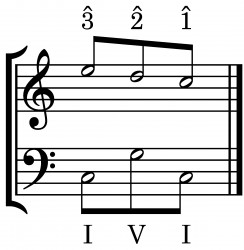
Carl Schachter, Arnold Whittall, and why music analysis matters
9th June 2026
Two recent deaths have robbed the world of music analysis of a pair of its most revered figures. Carl Schachter, who has died at the age of 93, was a pupil of (and subsequently collaborator with) Felix Salzer, himself one of Heinrich Schenker’s foremost students. Schachter continued to enrich and broaden the teaching of Schenkerian analysis, including important work on its application to issues of rhythm (which Schenker, focussing on harmonic and contrapuntal matters, largely bypassed). His influence went well beyond the... read more
read more
Music of the Iberian Peninsula, Part 2: ‘O quam gloriosum’ – The Spanish and Portuguese Golden Age
2nd June 2026
Over the past fortnight, I’ve been bathed in the most glorious, radiant, transformative light. Not the UK’s recent unseasonable heatwave, but the extraordinary vocal polyphony of the Siglo de Oro: the Spanish (and Portuguese) ‘Golden Century’. Extending from the late 15th to the early 17th century, this was a time of remarkable artistic flowering on the Iberian Peninsula, coinciding with the emergence of Spain and Portugal as global imperial powers with extensive colonial territories in the Americas, Africa and Asia. The... read more
read more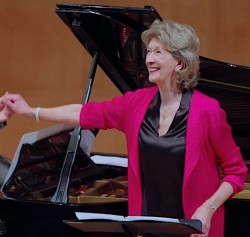
‘Call Me Flott’: A Tribute to Felicity Lott
26th May 2026
The acclaimed lyric soprano Felicity Lott, who has died at the age of 79, was an example of that rare breed among international singers: someone who combined star quality, wit, intelligence and humanity. During her half-century career she stood out for the refinement, clarity and textual responsiveness she brought to the music of Mozart and Richard Strauss, at a time when specialism in the former and sheer vocal power and OTT theatricality in the latter were increasingly the norm. These same strengths characterised her wider... read more
read more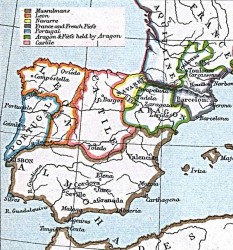
Music of the Iberian Peninsula: Beginnings
19th May 2026
Nestling at the southwestern-most tip of Europe, the Iberian Peninsula has long held charms for the rest of the continent. It is still one of the most popular destination for west-European holidaymakers seeking a mixture of sun and exoticism. In the world of classical music, it has attracted composers from the Neapolitan expat Domenico Scarlatti, and French composers like Bizet, Chabrier and Ravel, to Rimsky-Korsakov in far-away St Petersburg. The allure of Hispania is partly due to its geographic location as a peninsula... read more
read more