 FREE UK SHIPPING OVER £35!
The Spin Doctor Europadisc's Weekly Column
International Women’s Day: Some Recent Recordings
8th March 2022
8th March 2022
 With origins over a century ago, and first held on its current calendar date of 8 March in 1914, International Women’s Day was adopted by the United Nations in the mid-1970s, having previously been a largely socialist and communist day of activism. Now it is celebrated worldwide to mark the achievements and aspirations of women everywhere, with some countries recognising it as an official holiday. And it thus seems as good a day as any to highlight some recent notable releases focusing on music by women composers. Since we previously touched on the subject last September, there have been several important additions to the catalogue, and it is good to see that many women composers are now enjoying far greater exposure, whether in the concert hall and opera house, on the airwaves, or in the recording studio. Of course, there is much still to be done, but– after decades and in many cases centuries of neglect or marginalisation – women composers are at last beginning to receive their due.
Among the chief beneficiaries of recent shifts in musical consciousness are two American composers, Amy Beach (1867–1944) and Florence Price (1887–1953), the latter the first African-American woman to have a composition (her First Symphony) played by a major American orchestra. That orchestra was the Chicago Symphony under Frederick Stock; now, almost nine decades later, another great American orchestra, the Philadelphia Orchestra under Yannick Nézet-Séguin, has recorded Price’s First and Third Symphonies for Deutsche Grammophon, no less. The disc, which appeared in January, became an instant best-seller, and Gramophone magazine, while conceding that at a purely technical level Price was no trailblazer, declared that ‘The simple and the homespun can grow mighty in her music. There is a quiet pride and majesty about it but equally an infectious joy in the unquenchable spirit of her brothers and sisters.’ Treated to superb performances and marvellous production by the DG team, this is a disc that thoroughly deserved its ‘Editor’s Choice’ accolade.
Both Price and Beach are included on an absorbing disc of Anglo-American repertoire from violinist Elena Urioste and pianist Tom Poster on Chandos with the intriguing title ‘From Brighton to Brooklyn’. Price’s recently rediscovered Elfentanz and Beach’s Three Compositions for violin and piano rub shoulders with works by Bridge, Britten, Coleridge-Taylor, Copland and Paul Schoenfeld, more than holding their own in the process. Beach’s complete works for piano 4-hands and two pianos have been gathered together on a single CPO disc by Aglika Genova and Liuben Dimitrov, including her engaging Three Pieces for piano 4-hands, a Suite upon Old Irish Melodies for two pianos, and the six character pieces that make up Summer Dreams for piano duet. It’s an eminently enjoyable disc, full of grace and charm.
On this side of the Atlantic, it is Ethel Smyth (1858–1944) and Ruth Gipps (1921–1999) who lead the field among British women composers, certainly if frequency of recordings is anything to judge by. The latest volume in Douglas Bostock’s widely admired series of British Music for Strings (also from CPO) is devoted to women composers – not something you’ll find on any comparable collection – including Gipps’s Cringlemire Garden and Smyth’s Suite for Strings, plus a Suite and Lament by Susan Spain-Dunk (1880–1962) and Heather Hill by Constance Warren (1905–1984), all beautifully crafted for the string orchestra idiom and given radiant performances by the Südwestdeutsches Kammerorchester Pforzheim.
It's not just in anglophone countries that women composers were active, however. A recent BIS release from soprano Laetitia Grimaldi and pianist Ammiel Bushakevitz provides a useful collection of songs by figures active during the so-called Belle Époque in France. Among the better known are Mel Bonis, Cécile Chaminade, Pauline Viardot and Augusta Holmès, but there are also compelling rarities by such names as Gabrielle Ferrari (1851–1921, a student of Gounod with three operas to her credit), Juliette Folville (1870–1946), Hélène-Frédérique de Faye-Jozin (1871–1942), Armande de Polignac (1876–1962, daughter of the celebrated music patron, the Princesse de Polignac), and Marguerite Béclard d'Harcourt (1884–1964, who studied with d’Indy and had interests in the folk music of South America). The disc is entitled ‘Ombres’, and it’s good to have so many of these talented names emerging at last from the shadows.
Casting its net more widely still, an imminent release from pianist Marie-Catherine Girod on the Mirare label entitled ‘Regards des femmes’ includes such neglected figures as the Bologna-born Anna Bon (1738–after 1769), British composer, pianist and singer Maria Hester Park (1760–1813), the Stuttgart-born Emilie Zumsteeg (1796–1857), and Clara Gottschalk Peterson (1837–1910, sister of Louis Moreau Gottschalk). Alongside these names, Bonis, Bosmans, Lili Boulanger, Chaminade, Farrenc, Fanny Mendelssohn and Clara Schumann, all of whom also feature, seem positively mainstream. The Norwegian Agathe Ursula Backer Grøndahl (1847–1907) is there too, while a new album on the Grand Piano label from Sara Aimée Smiseth is devoted to her solo piano works, encompassing salon and concert works, many of them based on Norwegian folk music, including more than a hint of Scandinavian-tinged impressionism.
For more up-to-date fare, the NMC stable has a particularly good track record of promoting women composers, and among recent releases are a wide-ranging disc devoted to young British composer Cevanne Horrocks-Hopayian, an important retrospective of operatic and vocal music (‘Singing in Tongues’) by Australian Liza Lim on the Huddersfield Contemporary imprint, and Cabin Fever by London-based composer and sound artist Esmeralda Conde Ruiz, created via Zoom during the height of the global Covid pandemic. ‘aggregate forms’ by American composer Catherine Lamb, performed by the JACK Quartet on the Kairos label is another album that looks well worth investigating.
We’ve barely scratched the surface, and a few more releases are included in the list below (click on the catalogue numbers to go directly to more information on each release). Yet it should be obvious that, even though such discs still form a tiny minority in the current catalogue, things are slowly but (we hope) surely moving in the right direction: towards greater recognition of the many talents that make up the full range of ‘classical’ music, of the past, present and future.
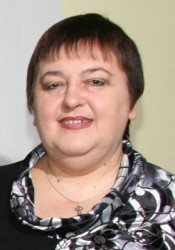
To close on a sad note, we learnt in the past week of the recent death of Hanna Havrylets (11 April 1958–27 February 2022, pictured above), celebrated for some years now as Ukraine’s leading female composer. A student of Volodymyr Flys and Miroslav Skoryk, she left a wide-ranging legacy, much of it influenced by the folk music of her homeland, some redolent of Baltic-style ‘spiritual minimalism’, all of it brilliantly crafted, and some of her compositions are available on YouTube. She died at the moment of greatest darkness for her country. None of her music is yet available commercially to an international audience: we hope that this omission will change soon.
A few recommendations:
Among Whirlwinds: Compositions by Women for Voices (Singer Pur) OC1723
Bacewicz - Piano Works (Jablonski) ODE13992
Backer-Grøndahl - Piano Works (Sara Aimée Smiseth, piano) GP902
Beach - Complete Works for Piano Duo (Genova/Dimitrov) 5554532
British Music for Strings Vol.3: Smyth, Spain-Dunk, Warren & Gipps (Bostock) 5554572
Celebrating Women: Works for String Trio (Hague String Trio) COBRA0083
From Brighton to Brooklyn (Urioste/Poster) CHAN20248
The Future is Female Vol.1: In Nature (Sarah Cahill, piano) FHR131
Gipps - Opalescence: Piano and Chamber Music (Spooner/Hayes/Honeybourne) PFCD171
Gryka – Interialcell (Müller/Klangforum Wien/Kalitzke) KAI0015110
Horrocks-Hopayian - Welcome Party NMCD268
Lamb - aggregate forms (JACK Quartet) KAI0018010
Lim - Singing in Tongues: Operas and Vocal Works 1993-2008 HCR25CD
Ombres: Women Composers of La Belle Epoque (Grimaldi/Bushakevitz/Erdal) BIS2546
Pejačević - Piano Music (Ekaterina Litvintseva, piano) PCL10226
Price - Symphonies 1 & 3 (Philadelphia Orchestra/Nézet-Séguin) 4862029
Regards de femmes (Marie-Catherine Girod, piano) MIR574
Ruiz - Cabin Fever BRC014
Latest Posts
Music of the Iberian Peninsula, Part 3: More observations on the Golden Age
16th June 2026
Our last visit to the Iberian peninsula, a fortnight ago, was an insanely ambitious, necessarily broad-brush survey of the Spanish and Portuguese Golden Age, covering vocal and instrumental music, the sacred and the secular. This week, we take a more concise and (I hope) focussed look at a few of the sacred vocal masterpieces which exemplify the particular fervour and intensity of this remarkable period of musical history. They reflect the special place the peninsula had as a bulwark against the Reformation that had taken... read more
read more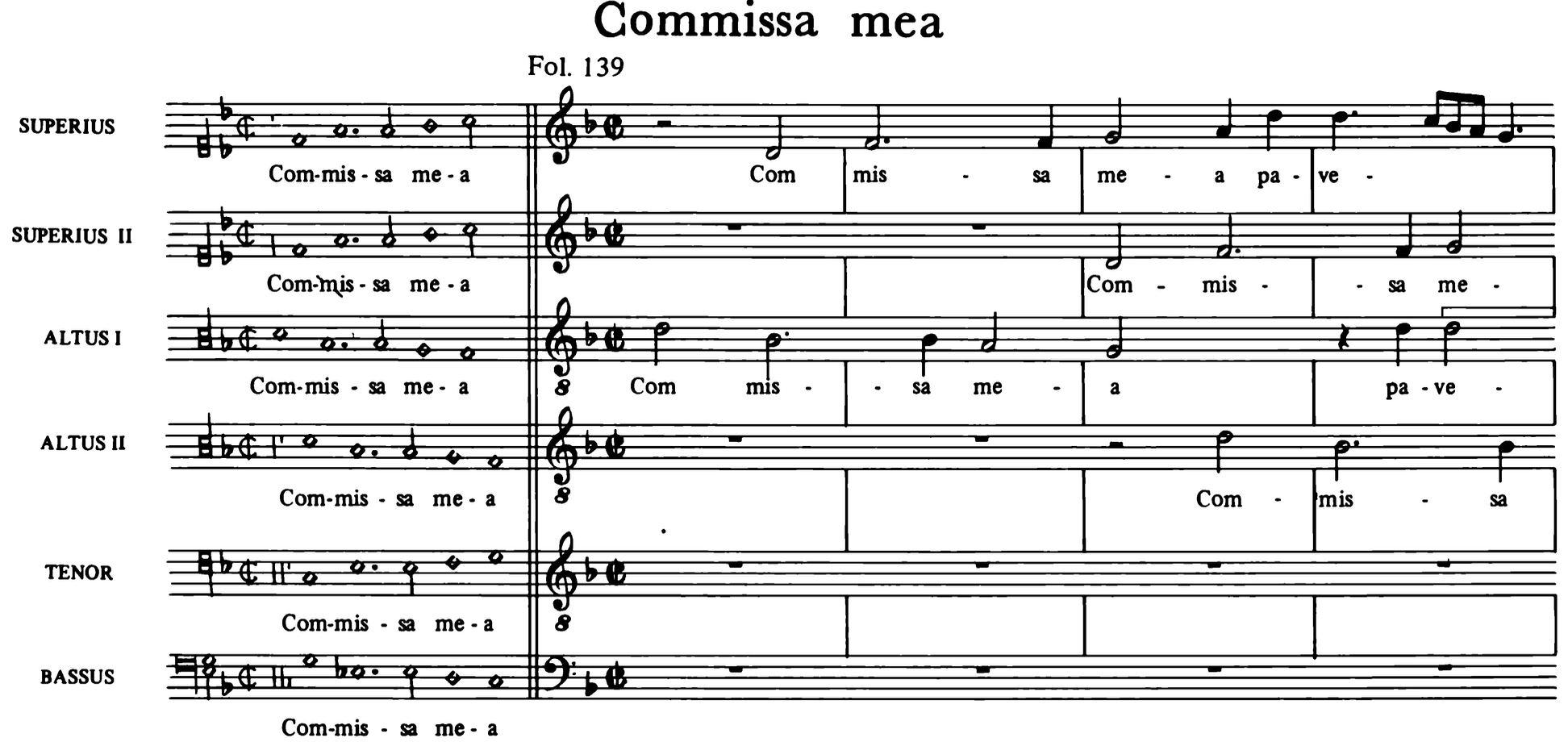
Music of the Iberian Peninsula, Part 3: More observations on the Golden Age
16th June 2026
Our last visit to the Iberian peninsula, a fortnight ago, was an insanely ambitious, necessarily broad-brush survey of the Spanish and Portuguese Golden Age, covering vocal and instrumental music, the sacred and the secular. This week, we take a more concise and (I hope) focussed look at a few of the sacred vocal masterpieces which exemplify the particular fervour and intensity of this remarkable period of musical history. They reflect the special place the peninsula had as a bulwark against the Reformation that had taken... read more
read more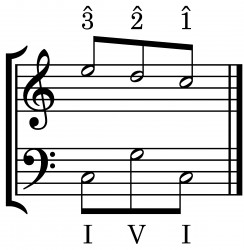
Carl Schachter, Arnold Whittall, and why music analysis matters
9th June 2026
Two recent deaths have robbed the world of music analysis of a pair of its most revered figures. Carl Schachter, who has died at the age of 93, was a pupil of (and subsequently collaborator with) Felix Salzer, himself one of Heinrich Schenker’s foremost students. Schachter continued to enrich and broaden the teaching of Schenkerian analysis, including important work on its application to issues of rhythm (which Schenker, focussing on harmonic and contrapuntal matters, largely bypassed). His influence went well beyond the... read more
read more
Carl Schachter, Arnold Whittall, and why music analysis matters
9th June 2026
Two recent deaths have robbed the world of music analysis of a pair of its most revered figures. Carl Schachter, who has died at the age of 93, was a pupil of (and subsequently collaborator with) Felix Salzer, himself one of Heinrich Schenker’s foremost students. Schachter continued to enrich and broaden the teaching of Schenkerian analysis, including important work on its application to issues of rhythm (which Schenker, focussing on harmonic and contrapuntal matters, largely bypassed). His influence went well beyond the... read more
read more
Music of the Iberian Peninsula, Part 2: ‘O quam gloriosum’ – The Spanish and Portuguese Golden Age
2nd June 2026
Over the past fortnight, I’ve been bathed in the most glorious, radiant, transformative light. Not the UK’s recent unseasonable heatwave, but the extraordinary vocal polyphony of the Siglo de Oro: the Spanish (and Portuguese) ‘Golden Century’. Extending from the late 15th to the early 17th century, this was a time of remarkable artistic flowering on the Iberian Peninsula, coinciding with the emergence of Spain and Portugal as global imperial powers with extensive colonial territories in the Americas, Africa and Asia. The... read more
read more