 FREE UK SHIPPING OVER £35!
The Spin Doctor Europadisc's Weekly Column
How to Love the Viol Consort
22nd February 2022
22nd February 2022
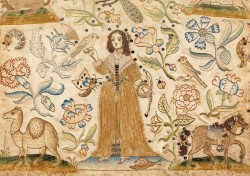 What does the term ‘English Music’ bring to mind? Elgar, Vaughan Williams and Britten, perhaps Holst and Walton as well? Or maybe, for those with a mischievous sense of humour, the sort of music that the uncompromisingly modernist composer Elisabeth Lutyens (1906–1983) waspishly dismissed as ‘the cowpat school’? Then again, for those with a taste for vocal music, the ‘Golden Age’ of Tudor and Elizabethan choral music will readily come to mind: Taverner, Tallis, Byrd, Tomkins and Gibbons, to name but a few – and, stretching into the Restoration era, Henry Purcell with his string of royal odes, sacred works, semi-operas and, of course, Dido and Aeneas.
But beside these obvious candidates there are others just as worthy of attention. From the late Medieval and early Renaissance period, composers such as Leonel Power, John Dunstaple, John Plummer and Walter Frye (not to mention the even earlier Byttering and Pycard) constitute the first real Golden Age of English vocal polyphony. In the instrumental realm, however, we need to look a little later, to the rise of the viol consort during the reign of Henry VIII. From early on in his reign, Henry had employed viol players from Europe at his court, and by 1540 there is evidence of a complete consort of players, the ‘new vialles’ from Venice (although they were actually Sephardic Jews from northern Italy). Within a few years of Henry VIII’s death in 1547, English players were being admitted to the body.
The increasing popularity of the viol at court also led to the introduction of viol playing into the curriculum of choir schools at the Chapel Royal, St Paul’s Cathedral and Westminster Abbey, with the ‘syngyng chyldren of [St] Paules’ earning a particularly prominent reputation for their viol performances during ceremonial and theatrical events. And the result was generations of musicians trained from an early age in the skills of viol playing. The wider popularity of viol consort playing in domestic settings has been the subject of much debate, and has probably been overstated by some commentators. But the 17th century was undoubtedly the heyday of the viol consort in England, with composers (many themselves players of great skill) well attuned to idiomatic writing for the instruments.
A typical ‘chest’ of viols comprised two treble viols, two tenors and two basses, and repertoires of consort music soon developed for both ‘whole’ consorts – instruments all of the same family, for example viols, recorders or violins – and ‘broken’ consorts of a variety of instruments (such as recorder, treble viol, bass viol, lute, cittern and bandora). Quite apart from the hugely popular consort songs (and, later on, masque ayres), viol consort music typically included ‘fancies’ (fantasies), dance ‘sets’ (i.e. suites), grounds, variations and the ubiquitous In nomine – a cantus firmus-based composition derived from a section of the Benedictus in John Taverner’s Missa Gloria tibi Trinitas which, whether for lute, keyboard or instrumental consort, was regarded as a supreme test of the composer’s skill.
The earliest composers for viol consort included Christopher Tye, Thomas Tallis and William Byrd, while important later figures include Thomas Lupo, Thomas Tomkins, Alfonso Ferrabosco the younger, John Jenkins, William Lawes, Christopher Simpson and Matthew Locke. Their combined legacy is still being discovered, much of it unpublished and preserved only in manuscripts.
The last of the great viol players was actually a German: Carl Friedrich Abel (1723–1787), who from the late 1750s was based in London, although compositions for viol had steadily dwindled with the increasing popularity throughout the Baroque era of the violin and its family. Interest in viol playing and music was revived in the early twentieth century through the remarkable efforts of Arnold Dolmetsch and his family, recovering a repertoire that was known only to a tiny number of academic specialists. It was in the post-war years, however, with the advent of the long playing record and then stereo, that this interest really blossomed. These technological advances went hand-in-hand with an increase in musical proficiency and refinement on the part of players, allowing listeners to savour the unique beauties of well-played viol consorts. Ensembles such as London Baroque, Phantasm and Fretwork have overt the past few decades uncovered music which, while paradoxically written within a very distinct set of parameters, seems to offer an infinite range of nuances and moods, from melancholy and introspective to rustic and toe-tapping, all of an unparalleled beauty and mastery.
Three very recent releases serve as eloquent illustration of the heady times in which lovers of viol consort music now live, and each of them in their own way might well lead you to cast aside (at least for a while) the symphonies, concertos, sonatas, oratorios and operas of more recent history in favour of immersion in a unique period of British musical history.
From Fretwork (founded in 1986 and led by the inimitable Richard Boothby) comes a welcome complete recording of the 24 dances that make up the Flatt Consort by Matthew Locke (c.1621–1677), organised into five suites and coupled with two similarly engaging duos for bass viols. Fantazias are the dominant movement type, but galliards, courants, sarabands and jiggs also feature. They contain virtuosic writing and varied instrumentation, with archlute, theorbo and harpsichord providing continuo support. The dry recording and generally acerbic tone seem to suit Locke’s own forceful and reportedly cantankerous personality, as well as the wide range of moods, while Fretwork’s command of period ornamentation is second to none.
A younger ensemble, the Chelys Consort of Viols, serves up what for many is the crowning glory of the viol consort repertoire: Henry Purcell’s complete Fantazias and In nomines in three to seven parts. Even in a relatively crowded and extremely formidable catalogue their infectious engagement with the music, sweeter-toned than Fretwork’s Locke disc, does full justice to Purcell’s extraordinary achievement in what is collectively a polyphonic masterpiece and simultaneously an end-of-era tribute to a dying genre. Their inclusion of instrumental numbers from The Fairy Queen and Dioclesian plus the well-known Chacony in G minor is a considerable and attractive bonus.
Finally, from Phantasm (founded in 1994 by Laurence Dreyfus) there is a disc containing all the four-part consorts by John Jenkins (1592–1678): 17 Fantasies and two Pavans covering an astonishing expressive range and supported in just over half the numbers by Daniel Hyde’s organ playing in a manner that only enhances their extraordinary sweetness and sensitivity. It represents a completion of their project to record all of Jenkins’s consort music (the five-part consorts have been reissued on BKD557, the six-part ones on BKD556), a remarkable achievement which shines welcome light on the remarkably flowing polyphony of this most agreeable of all the English viol composers.
Any one of these splendid new discs will give hours of endless pleasure, but our bet is that most people will want all three! They have certainly lifted our spirits over the past few weeks.
Purcell - Fantazias (Chelys Consort of Viols) BIS2583
John Jenkins - Four-Part Consorts (Phantasm) CKD677
Latest Posts
Carl Maria von Weber: Visionary of German Romanticism
23rd June 2026
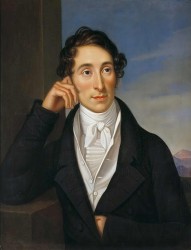
When audiences think of early nineteenth-century German music, the towering figures of Beethoven, Schubert, and later Wagner often dominate the conversation. Yet between the Classical world of Mozart and the mature Romanticism of Wagner stands a composer whose influence was both profound and transformative: Carl Maria von Weber (1786–1826). Composer, conductor, pianist, critic, and visionary dramatist, Weber played a pivotal role in shaping the future of German opera and helping define the musical language of... read more
read more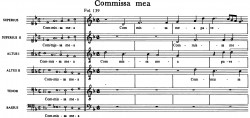
Music of the Iberian Peninsula, Part 3: More observations on the Golden Age
16th June 2026
Our last visit to the Iberian peninsula, a fortnight ago, was an insanely ambitious, necessarily broad-brush survey of the Spanish and Portuguese Golden Age, covering vocal and instrumental music, the sacred and the secular. This week, we take a more concise and (I hope) focussed look at a few of the sacred vocal masterpieces which exemplify the particular fervour and intensity of this remarkable period of musical history. They reflect the special place the peninsula had as a bulwark against the Reformation that had taken... read more
read more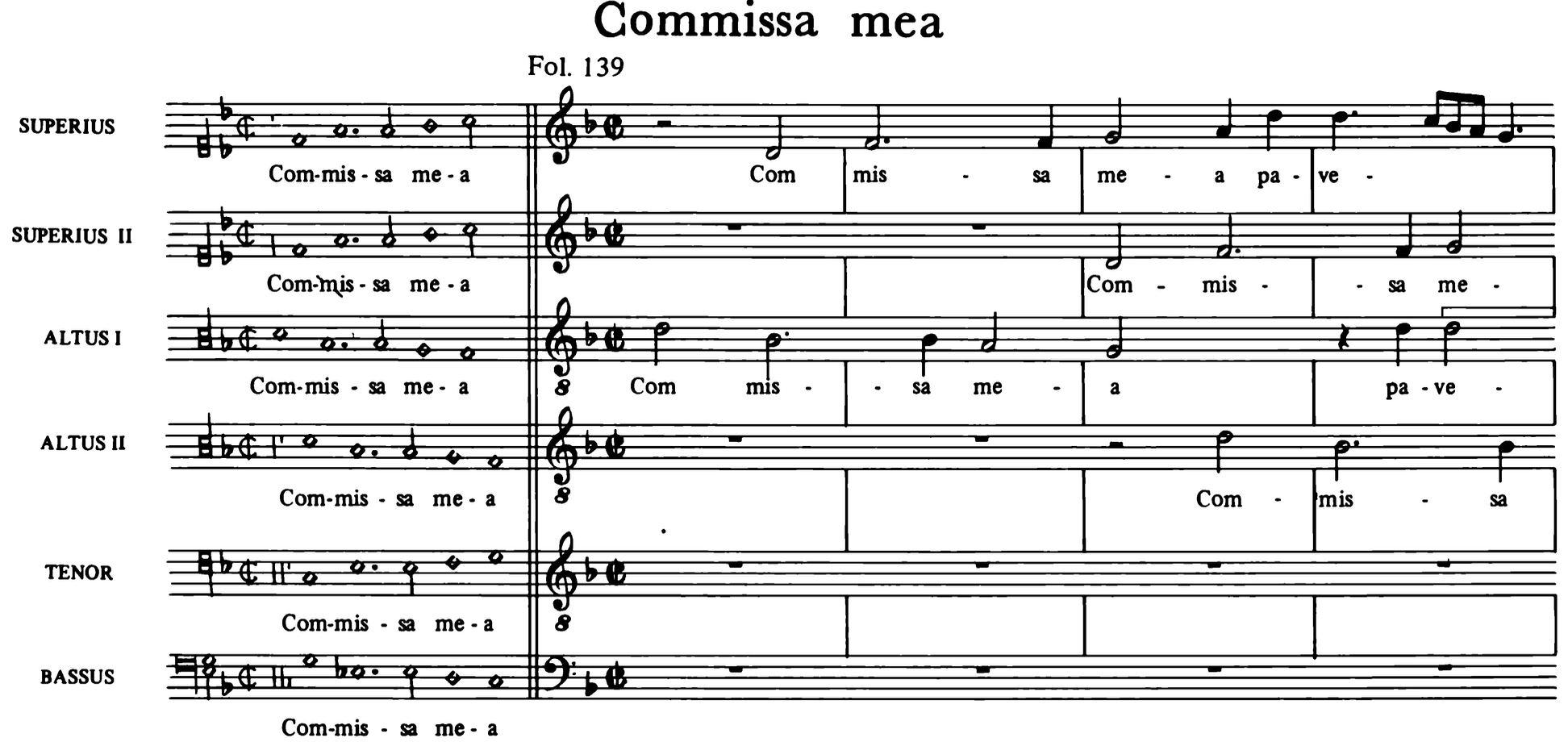
Music of the Iberian Peninsula, Part 3: More observations on the Golden Age
16th June 2026
Our last visit to the Iberian peninsula, a fortnight ago, was an insanely ambitious, necessarily broad-brush survey of the Spanish and Portuguese Golden Age, covering vocal and instrumental music, the sacred and the secular. This week, we take a more concise and (I hope) focussed look at a few of the sacred vocal masterpieces which exemplify the particular fervour and intensity of this remarkable period of musical history. They reflect the special place the peninsula had as a bulwark against the Reformation that had taken... read more
read more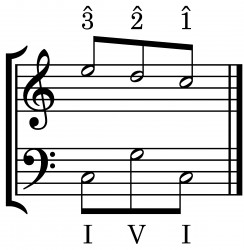
Carl Schachter, Arnold Whittall, and why music analysis matters
9th June 2026
Two recent deaths have robbed the world of music analysis of a pair of its most revered figures. Carl Schachter, who has died at the age of 93, was a pupil of (and subsequently collaborator with) Felix Salzer, himself one of Heinrich Schenker’s foremost students. Schachter continued to enrich and broaden the teaching of Schenkerian analysis, including important work on its application to issues of rhythm (which Schenker, focussing on harmonic and contrapuntal matters, largely bypassed). His influence went well beyond the... read more
read more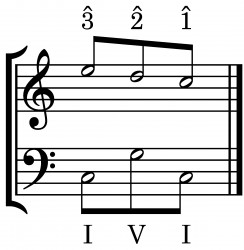
Carl Schachter, Arnold Whittall, and why music analysis matters
9th June 2026
Two recent deaths have robbed the world of music analysis of a pair of its most revered figures. Carl Schachter, who has died at the age of 93, was a pupil of (and subsequently collaborator with) Felix Salzer, himself one of Heinrich Schenker’s foremost students. Schachter continued to enrich and broaden the teaching of Schenkerian analysis, including important work on its application to issues of rhythm (which Schenker, focussing on harmonic and contrapuntal matters, largely bypassed). His influence went well beyond the... read more
read more