 FREE UK SHIPPING OVER £35!
The Spin Doctor Europadisc's Weekly Column
A Host of Gerontiuses
14th April 2026
14th April 2026
 Having last week written about viewing the new Covent Garden production of Wagner’s Siegfried, this week I finally got round to seeing Nicholas Hytner’s recent film The Choral, which places Edward Elgar’s The Dream of Gerontius at the centre of Alan Bennett’s Yorkshire-set World War I story of a small-town choral society. It is not, perhaps, a movie that will appeal to musical purists, and I’m not totally convinced by some of the details of the plot, though it does nicely reflect some of the anti-German and anti-Catholic biases of the times. But anything that features the combined talents of such actors as Ralph Fiennes, Roger Allam and Alun Armstrong (not to mention Simon Russell Beale as a rather pompous and rotund Elgar) has to be worth checking out, and I’m glad to have watched it.
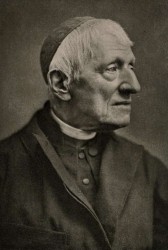
The Dream of Gerontius does seem to have experienced a resurgence in popularity recently, with four well-received new recordings having appeared in just the last two years. Having been something of an Elgar sceptic in the past, I’ve consciously made an effort to engage more with a work that many Elgarians regard as the composer’s greatest, notwithstanding the wider popularity of the Cello Concerto, ‘Enigma’ Variations and two symphonies. The literary merits of John Henry Newman’s original 1865 poem continue to be debated, but it is as an act of faith that both it and Elgar’s setting make their mark. Nor is it necessary to share Newman and Elgar’s Catholicism (or indeed any kind of conventional Christian faith) to respond to either the music or the words. Whatever one’s belief on the existence or otherwise of an afterlife, none of us – not even those who have had near-death or out-of-body experiences – can truly know what happens once the soul (or, if you prefer, the spark of life) departs the human body.
The lucky among us will have the opportunity and faculties to reflect on our lives when our time eventually comes, and my own recent experience at the bedsides of both my late parents has certainly made me more receptive to the subject matter of the elderly Gerontius as he enters his final hours and then embarks on the first stage of his onward journey. Newman’s poetry is set to music of powerful post-Wagnerian late Romanticism that baffled listeners at the work’s near disastrous Birmingham premiere in October 1900, but a German performance in December the following year revealed Gerontius to be a work of remarkable power and genius, earning the praise of Richard Strauss, at the time the leading progressive force in German music. It combines some of Elgar’s most tender, searing, magnificent and intense utterances.
Since then, Gerontius – which Elgar pointedly never labelled an oratorio, and which combines elements of oratorio and opera, contemplation and drama – has been a staple of the repertoire for more ambitious choral societies, even as Elgar’s own reputation has fallen or risen with prevailing critical opinion. Many older collectors still talk with reverence about Malcolm Sargent’s recordings with the Huddersfield Choral Society and the Liverpool Philharmonic, although subsequent stereo recordings by John Barbirolli and Adrian Boult (the former more dramatic and with Janet Baker’s unsurpassed Angel, the latter more spiritual) have since become the yardsticks and are in superior sound. Both are currently available only as part of larger sets.
Now, however, we seem to be spoilt for choice with so many recent recordings, all in fine modern sound. Mark Elder’s 2008 Hallé recording is generally judged a worthy successor to Barbirolli, and has the best of all Angels of the Agony in Bryn Terfel, while Andrew Davis’s 2014 Chandos recording boasts one of perhaps the most thrilling impersonation of the title role in tenor Stuart Skelton. Both find a way of combining the reflective and dramatic elements, with Davis and his BBC forces just clinching things in terms of sheer sound. Among the newcomers, I have a soft spot for Paul McCreesh’s 2024 performance with the enlarged Gabrieli Consort and Players: informed by period performance (which pays dividends in terms of transparency and audibility of the woodwind writing), it boasts another excellent Gerontius in Nicky Spence. Like the Andrew Davis and Elder recordings before it, this was a deserved Gramophone Award winner.
Deciding between the subsequent issues by Nicholas Collon and the Finnish Radio Symphony Orchestra, Edward Gardner and the London Philharmonic at the 2022 Proms, and Martyn Brabbins with the Huddersfield Choral and Orchestra of Opera North will come down to personal preferences, for all have their strengths. Collon’s baritone, Roderick Williams, is lighter-toned than some yet unerringly thoughtful, and his tenor, John Findon, is an excellent Gerontius. Perhaps the truth is that, as with any great work of music, The Dream of Gerontius is greater than any one performance can be or can encapsulate. Struass himself wrote, ‘I raise my glass to the welfare and success of the first English progressivist, Meister Elgar’, and this sometime Elgarian sceptic is more and more inclined to do likewise!
Recommended recordings:
The Dream of Gerontius (Coote, P Groves, Terfel, Hallé / Elder) CDHLD7520
The Dream of Gerontius, Sea Pictures (Connolly, Skelton, Soar, BBCSO / A Davis) CHSA51402
The Dream of Gerontius (Stéphany, N Spence, Foster-Williams, Gabrieli Players / McCreesh) SIGCD785
The Dream of Gerontius (Rice, Findon, R Williams, Finnish RSO / Collon) ODE14512D
The Dream of Gerontius (Barton, Clayton, Platt, LPO / Gardner) LPO-0138
The Dream of Gerontius (Cargill, Butt Philip, R Wood, Huddersfield Ch Soc / Brabbins) CDA684612
Latest Posts
Carl Maria von Weber: Visionary of German Romanticism
23rd June 2026
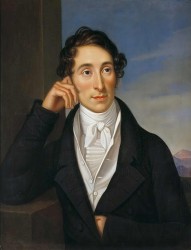
When audiences think of early nineteenth-century German music, the towering figures of Beethoven, Schubert, and later Wagner often dominate the conversation. Yet between the Classical world of Mozart and the mature Romanticism of Wagner stands a composer whose influence was both profound and transformative: Carl Maria von Weber (1786–1826). Composer, conductor, pianist, critic, and visionary dramatist, Weber played a pivotal role in shaping the future of German opera and helping define the musical language of... read more
read more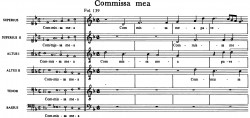
Music of the Iberian Peninsula, Part 3: More observations on the Golden Age
16th June 2026
Our last visit to the Iberian peninsula, a fortnight ago, was an insanely ambitious, necessarily broad-brush survey of the Spanish and Portuguese Golden Age, covering vocal and instrumental music, the sacred and the secular. This week, we take a more concise and (I hope) focussed look at a few of the sacred vocal masterpieces which exemplify the particular fervour and intensity of this remarkable period of musical history. They reflect the special place the peninsula had as a bulwark against the Reformation that had taken... read more
read more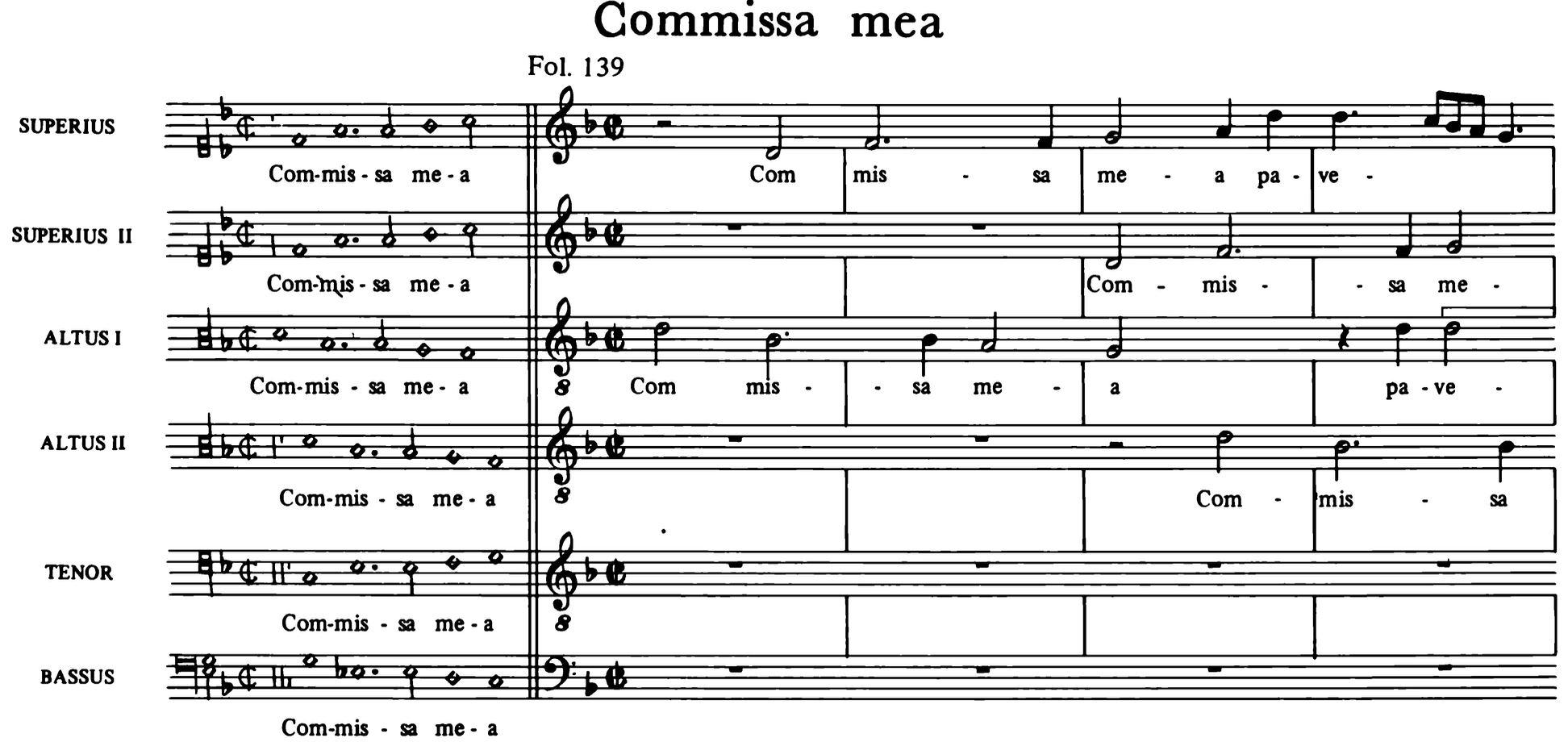
Music of the Iberian Peninsula, Part 3: More observations on the Golden Age
16th June 2026
Our last visit to the Iberian peninsula, a fortnight ago, was an insanely ambitious, necessarily broad-brush survey of the Spanish and Portuguese Golden Age, covering vocal and instrumental music, the sacred and the secular. This week, we take a more concise and (I hope) focussed look at a few of the sacred vocal masterpieces which exemplify the particular fervour and intensity of this remarkable period of musical history. They reflect the special place the peninsula had as a bulwark against the Reformation that had taken... read more
read more
Carl Schachter, Arnold Whittall, and why music analysis matters
9th June 2026
Two recent deaths have robbed the world of music analysis of a pair of its most revered figures. Carl Schachter, who has died at the age of 93, was a pupil of (and subsequently collaborator with) Felix Salzer, himself one of Heinrich Schenker’s foremost students. Schachter continued to enrich and broaden the teaching of Schenkerian analysis, including important work on its application to issues of rhythm (which Schenker, focussing on harmonic and contrapuntal matters, largely bypassed). His influence went well beyond the... read more
read more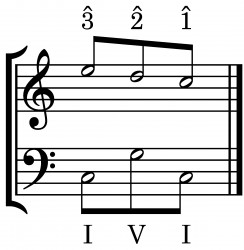
Carl Schachter, Arnold Whittall, and why music analysis matters
9th June 2026
Two recent deaths have robbed the world of music analysis of a pair of its most revered figures. Carl Schachter, who has died at the age of 93, was a pupil of (and subsequently collaborator with) Felix Salzer, himself one of Heinrich Schenker’s foremost students. Schachter continued to enrich and broaden the teaching of Schenkerian analysis, including important work on its application to issues of rhythm (which Schenker, focussing on harmonic and contrapuntal matters, largely bypassed). His influence went well beyond the... read more
read more