 FREE UK SHIPPING OVER £35!
The Spin Doctor Europadisc's Weekly Column
The Decision Makers + Easter with Wagner
8th April 2026
8th April 2026
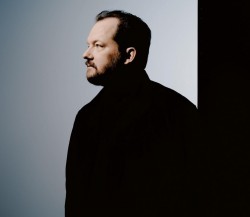 The classical music world has been shocked by two recent decisions regarding artistic leadership at its very top. The announcement by the board of the Boston Symphony Orchestra (a not-for-profit organisation with a large financial endowment) that the contract of its music director, Andris Nelsons (pictured), is to be terminated at the end of summer 2027 has shocked both the orchestra’s musicians and its audience (including subscribers). The summary dismissal of the widely respected pianist Markus Hinterhäuser (champion of Cage and Feldman among others) as director of the prestigious Salzburg Festival has caused similar levels of consternation. Both these cases have been made worse by a lack of transparency regarding the reasons for the terminations, which appear in both cases to be the triumph of managerial interferrence and vague talk of ‘artistic vision’.
In their respective positions, both Nelsons and Hinterhäuser have been credited with reviving the fortunes of the institutions they lead. The purported financial struggles in Boston have more to do with post-Covid recovery common to all performing bodies, and the succession of critical accolades heaped on Nelsons and the Boston orchestra in recent years make the situation there even more baffling. Hinterhäuser, while sometimes forthright in his opinions, has earned acclaim for his adventurous leadership and energising of a festival often associated in the past with elitism and excessive cultural conservatism. In neither case has there been any suggestion of wrongdoing or shortcomings.
Both these cases, high-profile though they are, are merely the latest in a string of wrong-footed decisions taken by often faceless bodies against successful artistic leaders. Whether in the organisational, artistic and structural changes imposed on such companies as English and Welsh National Operas or the seemingly limitless capacity for cathedrals to treat their music directors and choirs as expendable (Wakefield being among the most prominent of recent examples), things always seem to end badly when managers behave in a high-handed manner against artists. Both Boston and Salzburg now face huge challenges. In the former case, it is difficult to imagine any prominent conductor wanting to take up the reins when Nelsons has been treated so poorly; letters of support for both him and his orchestra have flooded in from all quarters. Meanwhile, Salzburg’s attempts to appoint a successor to Hinterhäuser have reportedly been rebuffed by such prominent figues as Cecilia Bartoli and Franz Welser-Möst. The tarnish from these affairs will take years to shake off. Long-term subscribers in Boston talk of an irreparable breakdown of trust between audience and the board of directors.
One could make the argument that in ecclesiastical contexts there are higher considerations than the custodianship of artistic traditions, however long and distinguished they might be. Yet in an organisation (the Church of England) that seems to prioritise managerial skills over pastoral vision, one often wonders where the priorities really lie. In more artistically focused bodies (orchestras, opera companies, concert halls and festivals), the dominance of managerialism over artistic vision is a perennial problem. No-one should underestimate the organisational hurdles facing arts bodies in the modern world; yet when those bodies lose sight of their core mission, and also lose the trust of their audiences (both existing and potential), it is time to worry. It may seem like the days of strong artistic leadership are long gone, yet in Edinburgh the directorship of Nicola Benedetti has already produced tangible results and earned wide praise.
These are time in which we need to trust the foresight and insight of our leading performers, not dismiss them with vague, evasive talk of ‘alignment on future vision’, often from people with little to no artistic expertise and experience. At the very least, much greater transparency is needed when boards take controversial decisions, and bad calls need to be acknowledged and speedily rectified, or the consequences may be lasting damage to an already fragile sector of the arts. Let’s honour our most successful artists, not belittle or dismiss them for no good reason.
* * * * *
Holy Week and Easter are most readily associated with the music of Bach and Handel, Victoria and Gesualdo, and (historically) Stainer and Maunder. Wagner is a less obvious Easter composer, but the Good Friday Music in his final masterpiece, Parsifal, is an exception. ‘How lovely the meadow seems to me today!’, sings the eponymous hero in the work’s final Act. That meadow is transplanted to Act 3 of Siegfried in the latest installment of the Royal Ballet and Opera’s ongoing Ring cycle, directed by Barrie Kosky. I spent a good five hours in a local Nottingham cinema on Easter Day watching this visually and musically stunning performance. From the Heath Robinson forge of Act 1 to the unlikely winterscape of Act 2 (Fafner the giant decked out in shimmering bling rather than a dragon costume) and the carpet of flowers that replace the customary sea of fire surrounding the Valkyrie’s rock in the final scene, it served up repeated surprises that were a feast for the eyes.
Strongest among the cast were Andreas Schager’s ringing, tireless hero, a veritable bundle of vocal and physical energy, and Christopher Maltman’s authoritative, calculating yet subtle Wanderer. Peter Hoare’s maliciously scheming Mime looked like a cross between two Bristish sitcom favourites: Albert Steptoe and Compo Simmonite. Elisabet Strid was radiant as Brünnhilde when she was eventually awakened. However brilliant the individual performances were, what’s most striking about this production is the astonishingly high level of acting from all the cast, which withstood even the most close-up camerawork. That, coupled with the designs of Rufus Didwiszus (sets) and Victoria Behr (costumes), and the probing yet urgent conducting of Antonio Pappano (coaxing outstanding playing from the Covent Garden orchestra), made this a Siegfried that is already being hailed as the finest in living memory. When the cycle is eventually completed, it could be the most compelling since the centenary Bayreuth Ring directed by Patrice Chéreau, first seen fifty years ago this summer. An unlikely but winning Easter treat!
Latest Posts
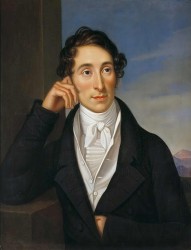
Carl Maria von Weber: Visionary of German Romanticism
23rd June 2026
When audiences think of early nineteenth-century German music, the towering figures of Beethoven, Schubert, and later Wagner often dominate the conversation. Yet between the Classical world of Mozart and the mature Romanticism of Wagner stands a composer whose influence was both profound and transformative: Carl Maria von Weber (1786–1826). Composer, conductor, pianist, critic, and visionary dramatist, Weber played a pivotal role in shaping the future of German opera and helping define the musical language of... read more
read more
Music of the Iberian Peninsula, Part 3: More observations on the Golden Age
16th June 2026
Our last visit to the Iberian peninsula, a fortnight ago, was an insanely ambitious, necessarily broad-brush survey of the Spanish and Portuguese Golden Age, covering vocal and instrumental music, the sacred and the secular. This week, we take a more concise and (I hope) focussed look at a few of the sacred vocal masterpieces which exemplify the particular fervour and intensity of this remarkable period of musical history. They reflect the special place the peninsula had as a bulwark against the Reformation that had taken... read more
read more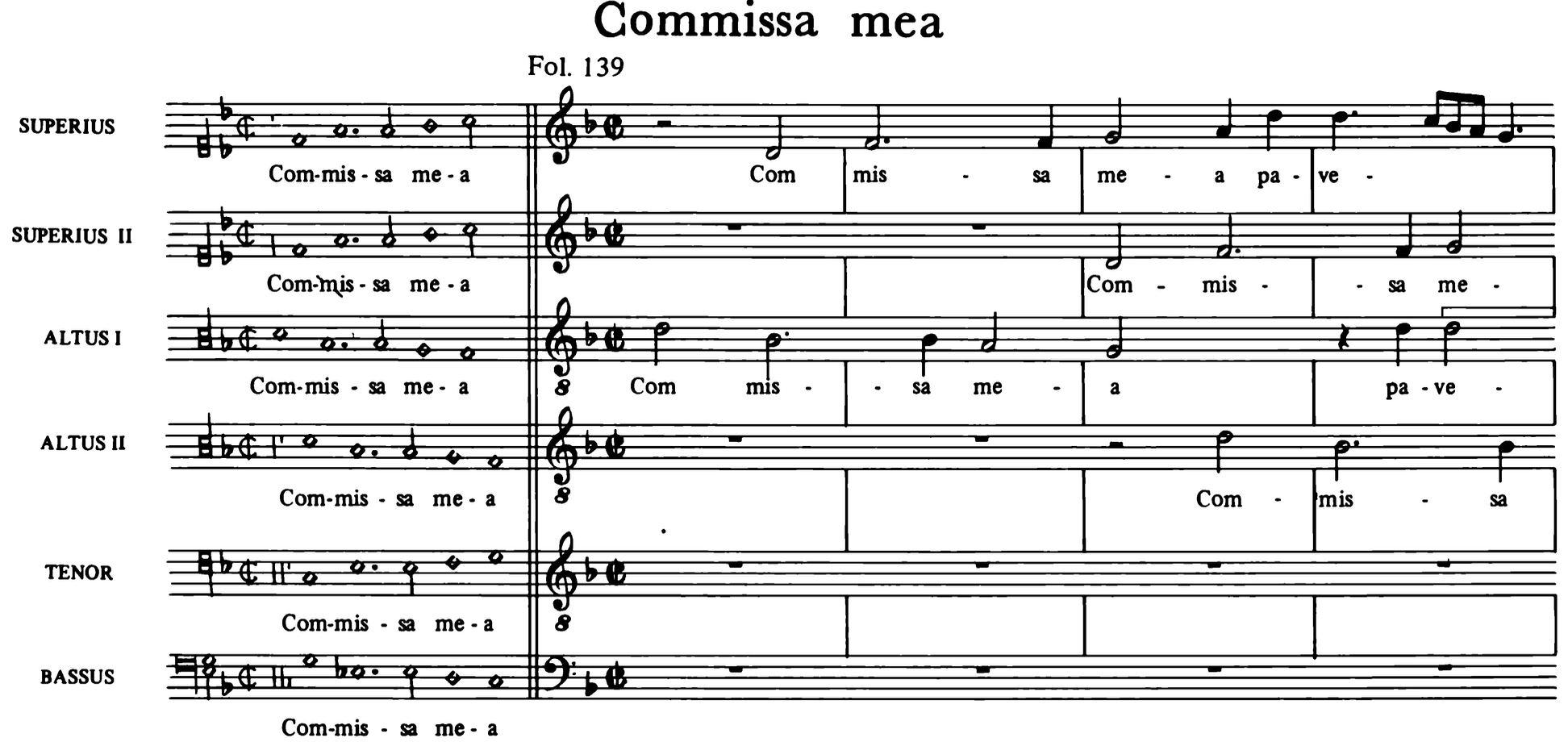
Music of the Iberian Peninsula, Part 3: More observations on the Golden Age
16th June 2026
Our last visit to the Iberian peninsula, a fortnight ago, was an insanely ambitious, necessarily broad-brush survey of the Spanish and Portuguese Golden Age, covering vocal and instrumental music, the sacred and the secular. This week, we take a more concise and (I hope) focussed look at a few of the sacred vocal masterpieces which exemplify the particular fervour and intensity of this remarkable period of musical history. They reflect the special place the peninsula had as a bulwark against the Reformation that had taken... read more
read more
Carl Schachter, Arnold Whittall, and why music analysis matters
9th June 2026
Two recent deaths have robbed the world of music analysis of a pair of its most revered figures. Carl Schachter, who has died at the age of 93, was a pupil of (and subsequently collaborator with) Felix Salzer, himself one of Heinrich Schenker’s foremost students. Schachter continued to enrich and broaden the teaching of Schenkerian analysis, including important work on its application to issues of rhythm (which Schenker, focussing on harmonic and contrapuntal matters, largely bypassed). His influence went well beyond the... read more
read more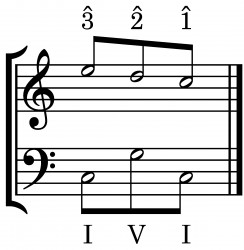
Carl Schachter, Arnold Whittall, and why music analysis matters
9th June 2026
Two recent deaths have robbed the world of music analysis of a pair of its most revered figures. Carl Schachter, who has died at the age of 93, was a pupil of (and subsequently collaborator with) Felix Salzer, himself one of Heinrich Schenker’s foremost students. Schachter continued to enrich and broaden the teaching of Schenkerian analysis, including important work on its application to issues of rhythm (which Schenker, focussing on harmonic and contrapuntal matters, largely bypassed). His influence went well beyond the... read more
read more