FREE UK SHIPPING OVER £35!

The Spin Doctor Europadisc's Weekly Column

Finnissy at 80

  17th March 2026

17th March 2026
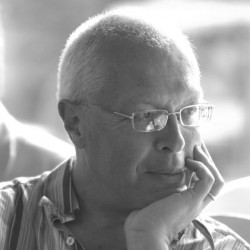

Following the demise of the last members of the New Music Manchester school (Alexander Goehr died in 2024, Elgar Howarth last year), Michael Finnissy – born on 17 March 1946 – can lay some claim to being the éminence grise of British contemporary music. It’s a description he’d no doubt hate, for although he has a razor-sharp awareness and knowledge of tradition – which informs all of his music to some extent or other – he combines this with a fiercely critical, often polemical stance when addressing cultural, political and social issues. His prolific output of well over 400 works ranges from music theatre and orchestral works to phenomenally exacting pieces and cycles for his own instrument, the piano.

Born in Tulse Hill, South London, at school in Bromley and Beckenham Finnissy showed early talent for graphic art and mathematics as well as music. Anyone who has seen his beautifully calligraphic, fabulously detailed manuscripts (often containing seemingly impossible juxtapositions of tuplets of different values, demanding outstanding dexterity) will testify to how his musical creativity has potent combined these three elements. His gifts as a performer (he studied piano as well as composition at the Royal College of Music) saw him master the virtuoso repertoire from Liszt to Xenakis, and his first job was as a répétiteur, including work at the London Contemporary Dance School where he founded its music department. Dance became one of several strands that fed into his musical development. Another was a spell in Australia as composer-in-residence at Melbourne’s Victorian College of Arts: its most obvious manifestation is in the vast 20-minute orchestral work Red Earth, which channels Aboriginal music and includes parts for two didjeridus.

Finnissy’s interest in folk music of all sorts includes a deep love of the music of Percy Grainger (and of another singular composer of the same generation, Charles Ives). But anyone expecting Graingeresque music or pastoralism from his breakthrough work, the nine-movement English Country-Tunes (1977) will be in for a shock. Instead, he creates his own form of lyricism (notably in the second movement, ‘Midsummer Morn’), only to dismantle it; by the final movement, ‘Come beat the drums and sound the fifes’, both extremes of the keyboard – icy shards at the top and thunderous rumbles in the depths – are being attacked. The work as a whole is a fierce critique of mid-1970s Britain, written at a time when many were hanging up the bunting for Elizabeth II’s Silver Jubilee.

Another landmark cycle is the massive The History of Photography in Sound (2000), a five-and-a-half-hour epic which incorporates elements of African and African-American music as well as a wide range of classical and popular music, capitalism and a movement entitled ‘Seventeen Immortal Homosexual Poets’. Even when Finnissy deploys tonal references, his music is as uncompromising as the themes it tackles. This has not prevented him from composing for more conventional settings; his time as composer-in-residence at St John’s College, Cambridge, bore fruit in the album ‘Pious Anthems & Voluntaries’ on the Choir’s own label. This cycle of four anthems based on ‘found objects’, coupled with organ responses (or ‘doubles’) draws on Tallis, Bach and Tippett, all refracted through Finnissy’s imaginative and wide-ranging soundworld.

Finnissy has always been committed to education, whether in his university teaching (at Sussex and then Southampton) or in the wide variety of community projects he has been involved with. Inhabiting a world distinct from that of the Pious Anthems is This Church (2001–2003), composed to mark the 900th anniversary of St Mary de Haura in New Shoreham, which has a much more elemental feel to it, as it charts (partly through sung texts, partly in spoken word) the history of Christianity from Norman times to the present.

While Finnissy’s chamber music (including works for string quartet) is eminently worth exploring, it is his piano music, and particularly his consistently surprising and often provocative arrangements of music from Bach through Beethoven and Johann Strauss to Gershwin, that arguably best captures the essence of his art. With his deep knowledge of composer-pianists including Liszt, Alkan, Godowsky, and above all Busoni, he has a way of interrogating the source material as if at times the entire history of music were layered simultaneously in one piece. Coinciding with this year’s 80th birthday celebrations, one of Finnissy’s foremost champions, the pianist and writer Ian Pace has recorded a new, complete account of the four-part, 36-movement Verdi Transcriptions. This extended cycle (completed in 2005, but begun over 30 years earlier) is a unique survey of Verdi’s operatic output in chronological order, highly structured but also fantastically diverse and unpredictable. Although the underlying models are only occasionally to the fore, the vast range of expression, from delicate fragility to jaw-dropping quasi-orchestral sonic panoply, is hugely compelling.

The ‘fillers’ on this important release from the Métier label (which has been responsible for so many recordings of Finnissy's music) include an immersive new account of English Country-Tunes. The final disc of the set includes the early Romeo and Juliet are Drowning and Strauss Waltzes (both originally from 1967), and the more recent Brahms-Lieder and Beethoven’s Robin Adair (both 2015). It’s a good place to start for those new to Finnissy’s music, before venturing back to the Verdi Transcriptions and the gripping world of English Country-Tunes. And, of course, it’s a fabulous way to say: Happy Birthday, Michael!

Recommended recordings

Latest Posts


Music of the Iberian Peninsula, Part 3: More observations on the Golden Age

16th June 2026

Our last visit to the Iberian peninsula, a fortnight ago, was an insanely ambitious, necessarily broad-brush survey of the Spanish and Portuguese Golden Age, covering vocal and instrumental music, the sacred and the secular. This week, we take a more concise and (I hope) focussed look at a few of the sacred vocal masterpieces which exemplify the particular fervour and intensity of this remarkable period of musical history. They reflect the special place the peninsula had as a bulwark against the Reformation that had taken... read more

read more
Music of the Iberian Peninsula, Part 3: More observations on the Golden Age

16th June 2026

Our last visit to the Iberian peninsula, a fortnight ago, was an insanely ambitious, necessarily broad-brush survey of the Spanish and Portuguese Golden Age, covering vocal and instrumental music, the sacred and the secular. This week, we take a more concise and (I hope) focussed look at a few of the sacred vocal masterpieces which exemplify the particular fervour and intensity of this remarkable period of musical history. They reflect the special place the peninsula had as a bulwark against the Reformation that had taken... read more

read more
Carl Schachter, Arnold Whittall, and why music analysis matters

9th June 2026

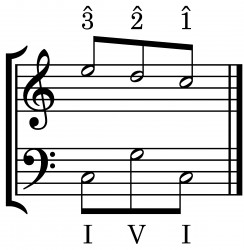
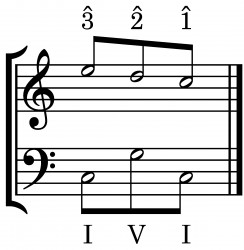
Two recent deaths have robbed the world of music analysis of a pair of its most revered figures. Carl Schachter, who has died at the age of 93, was a pupil of (and subsequently collaborator with) Felix Salzer, himself one of Heinrich Schenker’s foremost students. Schachter continued to enrich and broaden the teaching of Schenkerian analysis, including important work on its application to issues of rhythm (which Schenker, focussing on harmonic and contrapuntal matters, largely bypassed). His influence went well beyond the... read more

read more
Carl Schachter, Arnold Whittall, and why music analysis matters

9th June 2026

Two recent deaths have robbed the world of music analysis of a pair of its most revered figures. Carl Schachter, who has died at the age of 93, was a pupil of (and subsequently collaborator with) Felix Salzer, himself one of Heinrich Schenker’s foremost students. Schachter continued to enrich and broaden the teaching of Schenkerian analysis, including important work on its application to issues of rhythm (which Schenker, focussing on harmonic and contrapuntal matters, largely bypassed). His influence went well beyond the... read more

read more
Music of the Iberian Peninsula, Part 2: ‘O quam gloriosum’ – The Spanish and Portuguese Golden Age

2nd June 2026

Over the past fortnight, I’ve been bathed in the most glorious, radiant, transformative light. Not the UK’s recent unseasonable heatwave, but the extraordinary vocal polyphony of the Siglo de Oro: the Spanish (and Portuguese) ‘Golden Century’. Extending from the late 15th to the early 17th century, this was a time of remarkable artistic flowering on the Iberian Peninsula, coinciding with the emergence of Spain and Portugal as global imperial powers with extensive colonial territories in the Americas, Africa and Asia. The... read more

read more
View Full Archive