 FREE UK SHIPPING OVER £35!
The Spin Doctor Europadisc's Weekly Column
100 Years of Berg’s Wozzeck
10th December 2025
10th December 2025
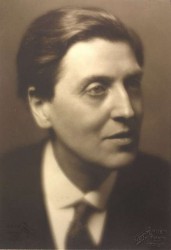 Musicologists and critical theorists would have us acknowledge that there’s no such thing as an ‘uncontested masterpiece’. Nevertheless, I’d argue the case for at least three in early modernist opera: Debussy’s Pelléas et Mélisande (1908), Bartók’s Bluebeard’s Castle (1918), and Alban Berg’s Wozzeck (1925). What’s remarkable about them (as well as being each composer’s first and – in two cases – only opera) is that, alongside the more accessible verism of Puccini and late Romanticism of Richard Strauss, they have each established and maintained a firm place in the international repertoire. Both Pelléas and Bluebeard inhabit the world of early-20th-century symbolism, with an impressionistic soundworld additionally informed, in the latter, by the composer’s fascination with Hungarian folk music. Wozzeck is perhaps the most astonishing of the three, however: its expressionism goes hand-in-hand with uncompromising atonality and formal experimentation to create a highly concentrated drama that is uniquely hard-hitting.
Berg based Wozzeck on the fragmentary, unfinished 1836 drama Woyzeck by Georg Büchner, which had lain unpublished until Karl Emil Franzos’s 1877 edition, and was unperformed until a 1913 production at Munich’s Residenztheater. Berg saw the play the following year in his native Vienna, and immediately recognised its operatic potential. Büchner’s Woyzeck was loosely based on the real-life story of Johann Christian Woyzeck, a wigmaker and former soldier who was accused of murdering his mistress in a fit of jealousy, in a case which attracted particular attention because of debates around his mental state at the time of the crime. Its slice-of-life realism among the lower classes ensured that it was looked on with distaste by the German 19th-century artistic establishment. By the time of its 1913 premiere (some decades after the heyday of French literary Naturalism), it was ripe for uptake by the expressionist movement.
Berg himself edited Büchner’s play down to 15 scenes, comprising three acts each containing five scenes. The acts themselves correspond to the classic overall scheme of: exposition – dramatic development – catastrophe and epilogue. The atonal music (literally: ‘without tonality’) is in retrospect a perfect match for the plight of the central anti-hero: impoverished, exploited, and prone to outbursts of sexual jealousy, increasingly rudderless and unhinged. In place of the customary grounding in the tonic chord of conventional tonality, Berg employs a cornucopia of formal devices to structure both music and drama.
Act 1 introduces the main characters: Franz Wozzeck, his mistress Marie and their young child, the Captain and the Doctor (both of whom employ Wozzeck for menial tasks), Wozzeck’s fellow soldier Andres, and the strutting, preening Drum Major, who soon attracts Marie’s attention. A series of five character studies includes a suite, a rhapsody, a military march and lullaby, a passacaglia (corresponding to the Doctor’s obsession with scientific fame) and an Andante affettuso (the Drum Major’s seduction of Marie).
In Act 2, the drama unfolds against the overarching scheme of a five-movement symphony, its first scene corresponding to a sonata movement, the second to a fantasia and fugue with three subjects, while its central scene is a Largo slow movement in which the large orchestra is reduced to the same scoring as the First Chamber Symphony by Berg’s teacher Schoenberg, and the Scherzo comprises the popular music played and sung in a low tavern. The Third Act is a series of six inventions – on a theme, on a note (B natural, which builds to a deafening climax as Marie is stabbed to death), on a rhythm, on a six-note chord (the death of Wozzeck as he drowns trying to dispose of the knife), on a key (D minor: the intensely expressive and expansive orchestral interlude before the final scene), and on a regular quaver movement (Marie’s child playing with other children).
While the musical organisation often reflects aspects of the drama (the three subjects of the fugue, for example, correspond to the Captain, the Doctor and Wozzeck), it is the minute characterisation of even the minor roles, as well as the skillful use of leitmotifs (most tellingly, the refrain ‘Wir arme Leut!’ [‘We poor folk!’]) and frequently translucent scoring that make this opera and its social message so uniquely powerful. All of which would have counted for nothing had the work’s premiere 100 years ago this month (some three years after its completion) been in lesser hands than those of Erich Kleiber at the Berlin Staatsoper. Kleiber’s demanding schedule of rehearsals ensured that the opera was a triumph in the face of determined conservative opposition, and in the following years it steadily conquered operatic stages not just in Germany but internationally. In the post-war period, it has consolidated its place in the repertoire, thanks to the advocacy of such conductors as Mitropoulos, Böhm, Boulez and Abbado.
As is by now sadly familiar, the centenary of Wozzeck’s first performances this coming weekend coincides with the absence from the catalogues of several of the work’s most celebrated recordings. The 1987 Abbado performance on Deutsche Grammophon, headed by the late Franz Grundheber in the title, with Hildegard Behrens as Marie and Heinz Zeidnik as a memorable Captain, with a vintage Vienna Philharmonic in the pit, has long led the recommendations. Fortunately, it is still to be found (just!) on DVD and Blu-ray, as a particularly attractive option for those drawn to a traditional staging, well filmed. For a more distinctive and recent take on the work, which stresses the commedia dell’arte roots of such figures as the Captain, Doctor and Drum Major (and even, perhaps, the Pierrot figure behind Wozzeck himself), try the thought-provoking 2015 Zurich production starring Christian Gerhaher, and incisively conducted by Fabio Luisi.
Recommended recordings:
Berg - Wozzeck (Iversen, Mahnke, Frankfurt Opera/Weigle) OC974
Berg - Wozzeck (Shore, Barstow, Philharmonia/Daniel) CHAN30942 [sung in English]
Berg - Wozzeck (Grundheber, Behrens, VPO/Abbado) 109155 (DVD), 109156 (Blu-ray)
Berg - Wozzeck (Gerhaher, Barkmin, Zurich Opera/Luisi) ACC20363 (DVD), ACC10363 (Blu-ray)
Further reading:
Nicholas John (ed.), Berg: Wozzeck [ENO Opera Guide no.42] (London: John Caulder, 1990)
Douglas Jarman, Alban Berg: Wozzeck [Cambridge Opera Handbooks] (Cambridge: CUP, 1989)
George Perle, The Operas of Alban Berg, vol.1: Wozzeck (Berkeley: University of California Press, 1980)
Latest Posts
Music of the Iberian Peninsula, Part 3: More observations on the Golden Age
16th June 2026
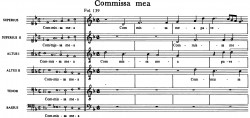
Our last visit to the Iberian peninsula, a fortnight ago, was an insanely ambitious, necessarily broad-brush survey of the Spanish and Portuguese Golden Age, covering vocal and instrumental music, the sacred and the secular. This week, we take a more concise and (I hope) focussed look at a few of the sacred vocal masterpieces which exemplify the particular fervour and intensity of this remarkable period of musical history. They reflect the special place the peninsula had as a bulwark against the Reformation that had taken... read more
read more
Music of the Iberian Peninsula, Part 3: More observations on the Golden Age
16th June 2026
Our last visit to the Iberian peninsula, a fortnight ago, was an insanely ambitious, necessarily broad-brush survey of the Spanish and Portuguese Golden Age, covering vocal and instrumental music, the sacred and the secular. This week, we take a more concise and (I hope) focussed look at a few of the sacred vocal masterpieces which exemplify the particular fervour and intensity of this remarkable period of musical history. They reflect the special place the peninsula had as a bulwark against the Reformation that had taken... read more
read more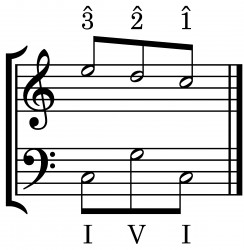
Carl Schachter, Arnold Whittall, and why music analysis matters
9th June 2026
Two recent deaths have robbed the world of music analysis of a pair of its most revered figures. Carl Schachter, who has died at the age of 93, was a pupil of (and subsequently collaborator with) Felix Salzer, himself one of Heinrich Schenker’s foremost students. Schachter continued to enrich and broaden the teaching of Schenkerian analysis, including important work on its application to issues of rhythm (which Schenker, focussing on harmonic and contrapuntal matters, largely bypassed). His influence went well beyond the... read more
read more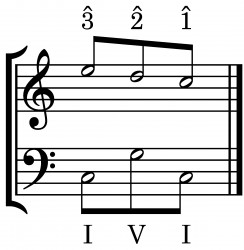
Carl Schachter, Arnold Whittall, and why music analysis matters
9th June 2026
Two recent deaths have robbed the world of music analysis of a pair of its most revered figures. Carl Schachter, who has died at the age of 93, was a pupil of (and subsequently collaborator with) Felix Salzer, himself one of Heinrich Schenker’s foremost students. Schachter continued to enrich and broaden the teaching of Schenkerian analysis, including important work on its application to issues of rhythm (which Schenker, focussing on harmonic and contrapuntal matters, largely bypassed). His influence went well beyond the... read more
read more
Music of the Iberian Peninsula, Part 2: ‘O quam gloriosum’ – The Spanish and Portuguese Golden Age
2nd June 2026
Over the past fortnight, I’ve been bathed in the most glorious, radiant, transformative light. Not the UK’s recent unseasonable heatwave, but the extraordinary vocal polyphony of the Siglo de Oro: the Spanish (and Portuguese) ‘Golden Century’. Extending from the late 15th to the early 17th century, this was a time of remarkable artistic flowering on the Iberian Peninsula, coinciding with the emergence of Spain and Portugal as global imperial powers with extensive colonial territories in the Americas, Africa and Asia. The... read more
read more