 FREE UK SHIPPING OVER £35!
The Spin Doctor Europadisc's Weekly Column
The Marmite Instrument: In Praise of the Harpsichord
8th October 2025
8th October 2025
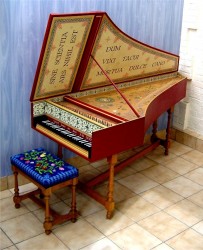 More and more pianists are exploring the early keyboard repertoire beyond the usual fare of J.S. Bach and Domenico Scarlatti, to take in the French clavecinistes and the English virginalists. In a world where historically-informed practices are becoming more mainstream, this is a brave thing to do, even braver if those pianists attempt to transfer such stylistic lessons into their performances on a modern concert grand. I myself, however, have always preferred the beguiling sound of a well-built and imaginatively played harpsichord, yet I realise that harpsichords are not to everyone’s taste. Indeed, probably only the bagpipes are capable of similarly strong opinions among music lovers. Most of us already know the famous quip (widely attributed to Beecham, but more likely made by George Szell), likening the sound of a harpsichord to ‘two skeletons copulating on a tin roof in a thunderstorm’.* But the art of harpsichord making, restoration and playing has come a long way since that particular witticism. For the nay-sayers, perhaps it’s time to give the harpsichord another chance.
The revival of the harpsichord’s fortunes dates back more than a hundred years to the dawn of the 20th century. Pioneers like Arnold Dolmetsch and Wanda Landowska were key figures in the revival, the latter playing a specially-made Pleyel instrument with a huge metal frame and earth-shattering 16’ stops: very different from the instruments known to Bach, Couperin and Scarlatti. Her own bon mot – ‘You play Bach your way and I’ll play it his way’ – turned out to be rather wide of the mark. Nevertheless, with commissions for new harpsichord compositions from Poulenc and Falla to her credit, Landowska played a hugely significant role in the instrument’s modern acceptance.
By the mid-20th century instrument makers like Robert Goble, William Dowd and Martin Skowroneck were far better informed concerning the construction of historically faithful harpsichords, based on originals from a variety of periods and national schools. In Britain, George Malcolm, Thurston Dart and Christopher Hogwood played a crucial part in bringing early keyboards to wider attention, as did Ralph Kirkpatrick in the United States. Bridging the mid- and late-20th century was Gustav Leonhardt, whose thoughtful, sober but wonderfully probing playing influenced new generations of players (he was also a prolific teacher). If the clean-cut, historically-informed but non-interventionist ‘Leonhardt style’ shaped such players as Bob van Asperen and Davitt Moroney, others were more flamboyant and imaginative (Ton Koopman, Andreas Staier and Richard Egarr spring to mind).
The increased refinement of instruments, coupled with the growing sophistication of playing and recording techniques, has resulted in performances with a dazzling array of colours that Beecham (or Szell) would never have dreamt of. It’s easy to fall back on the hackneyed old opposition of the plucked but poorly-sustaining and dynamically limited harpsichord against the percussive but rounded, singing tone and seemingly infinite shading of the modern concert grand. Yet, using a range of instruments appropriate to various periods, the best harpsichordists can really make their instruments sing, and with anything from exquisite lute stops to octave couplings, the variety of timbres can be veritably kaleidoscopic.
One could liken the harpsichord and piano respectively to a line drawing (or etching) and an oil painting. The latter appears to offer greater richness and (of course) colour, yet the range of shading possible with lines and cross-hatching can be just as evocative in the right hands, as anyone familiar with the works of Leonardo da Vinci or Albrecht Dürer will know. The Mona Lisa might be more famous, but some of Leonardo’s late ‘deluge’ and vortex drawings have a power all their own. So it is with the harpsichord: set aside one’s resistance for a while, and listen to the surprising richness and suppleness of François Couperin’s gnarly-textured Les Barricades mystérieuses from his second book of Pièces de Clavecin, or the mesmerically repetitive chiming of Byrd’s The Bells. No piano can quite capture that quality of finely-etched languor, the clarity of attack combined with a tone that seems to pierce the heart of the music.
No doubt some will raise the tired old objection that Bach would have loved the sound of a modern Steinway or Fazioli if he’d had one. To which the response is twofold: (a) he didn’t, and (b) if he had, he’d have written quite different music for it. In any case, the thorny issue of a ‘composer’s intentions’ is slightly beside the point: the issue is rather which instrument brings out the facets of the music to best effect, and for that there is no correct or definitive answer.
In the end, it all comes down to personal taste. If recommending listening to a potential convert, I’d hesitate asking them to forsake their Glenn Gould or Víkingur Ólafsson Goldbergs just yet. Instead, start with the character pieces to be found in the keyboard Couperin or Rameau, the Pavans and Galliards of William Byrd, or the suites of Froberger. Then, if that soundworld draws you in, gradually transition to better-known works by Bach and Scarlatti. And, as always, happy listening!
A few recommendations:
Byrd - Harpsichord Music (Leonhardt) ALPHA348
Sweelinck - Fantasias, Toccatas & Variations (Egarr) CKD589
Meditation: JS Bach, L Couperin, Fischer, Froberger, Fux (Staier) ALPHA1012
And look out for...
Latest Posts
Music of the Iberian Peninsula, Part 3: More observations on the Golden Age
16th June 2026
Our last visit to the Iberian peninsula, a fortnight ago, was an insanely ambitious, necessarily broad-brush survey of the Spanish and Portuguese Golden Age, covering vocal and instrumental music, the sacred and the secular. This week, we take a more concise and (I hope) focussed look at a few of the sacred vocal masterpieces which exemplify the particular fervour and intensity of this remarkable period of musical history. They reflect the special place the peninsula had as a bulwark against the Reformation that had taken... read more
read more
Music of the Iberian Peninsula, Part 3: More observations on the Golden Age
16th June 2026
Our last visit to the Iberian peninsula, a fortnight ago, was an insanely ambitious, necessarily broad-brush survey of the Spanish and Portuguese Golden Age, covering vocal and instrumental music, the sacred and the secular. This week, we take a more concise and (I hope) focussed look at a few of the sacred vocal masterpieces which exemplify the particular fervour and intensity of this remarkable period of musical history. They reflect the special place the peninsula had as a bulwark against the Reformation that had taken... read more
read more
Carl Schachter, Arnold Whittall, and why music analysis matters
9th June 2026
Two recent deaths have robbed the world of music analysis of a pair of its most revered figures. Carl Schachter, who has died at the age of 93, was a pupil of (and subsequently collaborator with) Felix Salzer, himself one of Heinrich Schenker’s foremost students. Schachter continued to enrich and broaden the teaching of Schenkerian analysis, including important work on its application to issues of rhythm (which Schenker, focussing on harmonic and contrapuntal matters, largely bypassed). His influence went well beyond the... read more
read more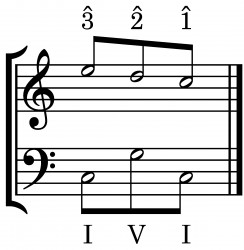
Carl Schachter, Arnold Whittall, and why music analysis matters
9th June 2026
Two recent deaths have robbed the world of music analysis of a pair of its most revered figures. Carl Schachter, who has died at the age of 93, was a pupil of (and subsequently collaborator with) Felix Salzer, himself one of Heinrich Schenker’s foremost students. Schachter continued to enrich and broaden the teaching of Schenkerian analysis, including important work on its application to issues of rhythm (which Schenker, focussing on harmonic and contrapuntal matters, largely bypassed). His influence went well beyond the... read more
read more
Music of the Iberian Peninsula, Part 2: ‘O quam gloriosum’ – The Spanish and Portuguese Golden Age
2nd June 2026
Over the past fortnight, I’ve been bathed in the most glorious, radiant, transformative light. Not the UK’s recent unseasonable heatwave, but the extraordinary vocal polyphony of the Siglo de Oro: the Spanish (and Portuguese) ‘Golden Century’. Extending from the late 15th to the early 17th century, this was a time of remarkable artistic flowering on the Iberian Peninsula, coinciding with the emergence of Spain and Portugal as global imperial powers with extensive colonial territories in the Americas, Africa and Asia. The... read more
read more