 FREE UK SHIPPING OVER £35!
The Spin Doctor Europadisc's Weekly Column
My Shostakovich Problem
5th August 2025
5th August 2025
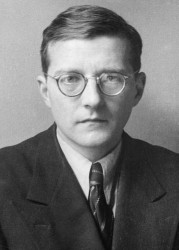 This week, many in the world of classical music will be marking the 50th anniversary of the death of Dmitri Shostakovich. Widely regarded as the leading composer of symphonies and string quartets of the mid-20th century, Shostakovich’s international reputation has only grown in the years since his death. With the backlash against musical modernism in the West, his music has appealed to younger audience in a way that previously only Mahler had (in the wake of Luchino Visconti’s influential 1971 film Death in Venice). For student orchestras, Shostakovich’s symphonies are often an even bigger draw than Rachmaninov; in both cases the attraction is no doubt increased by the fact that the two composers were until recently scorned by academic musicology, giving them the aura of forbidden fruit.
Yet there are those for whom Shostakovich is a closed book, and I freely confess to being among them. It wasn’t always so: in my early 20s, at a time when Solomon Volkov’s controversial book Testimony (purporting to represent Shostakovich’s memoirs) had just hit the stands, I discovered some of his more celebrated works such as the First Cello Concerto and Fifth Symphony, and even conducted a read-through rehearsal of the Tenth Symphony, in which I immersed myself deeply. Even then, however, I felt that something was ‘missing’ (‘etwas fehlt’, as they say in German). That something is certainly not a lack of historic context, for it seemed that it was impossible to come to any appreciation of the music without a considerable knowledge of the various waves of artistic repression and officially approved styles under the Soviet system. The extent to which Shostakovich – twice in his career the object of devastating slap-downs by the Soviet regime – was able to express dissent via his music even while occupying official posts is still the subject of debate, a debate only further fuelled by the Volkov book.
No, the missing element for me is something more fundamentally musical. Whether the jokey humour of the early self-standing scherzos and some of the lighter works, the more sardonic humour of the middle and later periods, the moments of extreme bombast (ironic or not), or the gaunt, fragile introspection of the slow movements, most of Shostakovich’s music simply leaves me cold. This isn’t down to the deprivations that Shostakovich, like so many of his compatriots, had to endure during the 1930s, 40s and 50s, nor to the oft-rehearsed emotional, creative and psychological complexities of the man himself. Rather, it’s what seems to be the under-nourished textures, the very lack of richness and complexity that makes much other Russian music – including the very different sound-worlds of Mussorgsky, Rimsky-Korsakov and Stravinsky – so compelling.
The one period of Shostakovich’s output that I have a sneaking admiration for is his brief dalliance with more avant-garde tendencies in the mid-1920s, just as he himself turned 20: works like the First Piano Sonata, the even more concentrated extremes of the Aphorisms for solo piano, and the first part (before the emergence of the ruinous, oratorio-like chorus) of the Second Symphony. In these pieces, for a fleeting moment, Shostakovich’s musical language seems to have achieved something approaching genius following a brief apprenticeship that included the widely-acclaimed First Symphony (behind which stands the palpable influence of Stravinsky’s Petrushka). Even these works are (I find) hard to love but, together with some of the more adventurous textures in the collection of song settings that form the much later Fourteenth Symphony, they are among the few works to which I more readily return.
No doubt I’m missing out on something, and the stylistic changes that occurred across the course of the composer’s career of over half a century probably mean that there’s a Shostakovich for (almost) everyone. However, the very things that seem to attract many audiences to his wider output – the resolute clinging to tonality that was demanded by the regime, combined with the textural etiolation that, for many, expresses the pain of the times, the (often not-so-subtle) ironies, the self-quotation and musical self-representation – are exactly the things that put me off closer acquaintance with most of Shostakovich’s music.
And yet, and yet... it also seems to me that the problem often lies with the performances themselves almost as much as the music. In the orchestral works, for example, I’m paradoxically far more responsive to the gaunter lines created by such past masters as Mravinsky, Kondrashin and Ančerl than to the lusher sonorities of Karajan, Bernstein (both of them admired by Shostakovich himself) and more recent pretenders. In the quartets, I’ve been much taken with the clean lines of the ongoing cycle from the Cuarteto Casals, which I find preferable to the more full-blooded style of the Beethoven and Borodin Quartets who enjoyed the composer’s approval.
Knowing that many of you will have more positive views of Shostakovich as his 50th Todestag approaches, I’ve tried to be as honest as I can on the subject of my deaf-spots. But I’d still love to hear your views on your favourite works (and performances) of the composer’s output, and the qualities you think make them worthy of attention. Equally, if you too have problems with the music, I’d be most interested to hear why. And to all those committed Shostakovich fans out there, my sincere apologies! The intention is not to offend, but to foster debate.
Latest Posts
Carl Schachter, Arnold Whittall, and why music analysis matters
9th June 2026
Two recent deaths have robbed the world of music analysis of a pair of its most revered figures. Carl Schachter, who has died at the age of 93, was a pupil of (and subsequently collaborator with) Felix Salzer, himself one of Heinrich Schenker’s foremost students. Schachter continued to enrich and broaden the teaching of Schenkerian analysis, including important work on its application to issues of rhythm (which Schenker, focussing on harmonic and contrapuntal matters, largely bypassed). His influence went well beyond the... read more
read more
Carl Schachter, Arnold Whittall, and why music analysis matters
9th June 2026
Two recent deaths have robbed the world of music analysis of a pair of its most revered figures. Carl Schachter, who has died at the age of 93, was a pupil of (and subsequently collaborator with) Felix Salzer, himself one of Heinrich Schenker’s foremost students. Schachter continued to enrich and broaden the teaching of Schenkerian analysis, including important work on its application to issues of rhythm (which Schenker, focussing on harmonic and contrapuntal matters, largely bypassed). His influence went well beyond the... read more
read more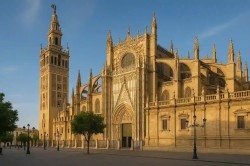
Music of the Iberian Peninsula, Part 2: ‘O quam gloriosum’ – The Spanish and Portuguese Golden Age
2nd June 2026
Over the past fortnight, I’ve been bathed in the most glorious, radiant, transformative light. Not the UK’s recent unseasonable heatwave, but the extraordinary vocal polyphony of the Siglo de Oro: the Spanish (and Portuguese) ‘Golden Century’. Extending from the late 15th to the early 17th century, this was a time of remarkable artistic flowering on the Iberian Peninsula, coinciding with the emergence of Spain and Portugal as global imperial powers with extensive colonial territories in the Americas, Africa and Asia. The... read more
read more
‘Call Me Flott’: A Tribute to Felicity Lott
26th May 2026
The acclaimed lyric soprano Felicity Lott, who has died at the age of 79, was an example of that rare breed among international singers: someone who combined star quality, wit, intelligence and humanity. During her half-century career she stood out for the refinement, clarity and textual responsiveness she brought to the music of Mozart and Richard Strauss, at a time when specialism in the former and sheer vocal power and OTT theatricality in the latter were increasingly the norm. These same strengths characterised her wider... read more
read more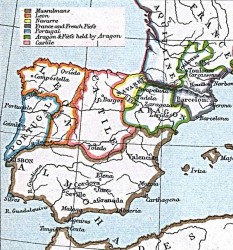
Music of the Iberian Peninsula: Beginnings
19th May 2026
Nestling at the southwestern-most tip of Europe, the Iberian Peninsula has long held charms for the rest of the continent. It is still one of the most popular destination for west-European holidaymakers seeking a mixture of sun and exoticism. In the world of classical music, it has attracted composers from the Neapolitan expat Domenico Scarlatti, and French composers like Bizet, Chabrier and Ravel, to Rimsky-Korsakov in far-away St Petersburg. The allure of Hispania is partly due to its geographic location as a peninsula... read more
read more