 FREE UK SHIPPING OVER £35!
The Spin Doctor Europadisc's Weekly Column
Vox feminarum: Women’s Voices – The Composers
2nd September 2021
2nd September 2021
 Newly released on the ever-enterprising Edinburgh-based Delphian label, a generous selection of songs by Ina Boyle shines fresh light on the output of one of Ireland's most neglected composers. Privately educated in composition by the likes of Percy Buck, Charles Kitson, Charles Wood and Ralph Vaughan Williams (the latter a key influence and important supporter), Boyle (1889-1967) was denied wider recognition during her lifetime by a combination of rural seclusion, a self-effacing nature, and societal prejudices against the notion of women composers. Her music, redolent of middle-period Vaughan Williams with a nostalgic, often modal flavour, has a distinctive inward quality that marks her out as worthy of more than passing consideration. Yet it is only in the past few years, half a century after her death, that it has begun to win the attention it deserves.
Her songs, mainly syllabic settings of texts ranging from folk poetry, George Herbert and Robert Herrick to Whitman, Yeats, Robert Bridges, Edith Sitwell and Walter de la Mare, display an uncommon (if occasionally idiosyncratic) sensitivity to the words and their layers of nuance. The subtle variety and development of Boyle's style, its gentle wit, and a distinctive use of harmonic inflections and spare textures, are highlighted in wonderfully idiomatic performances by mezzo-soprano Paula Murrihy, tenor Robin Tritschler and baritone Ben McAteer, overseen with customary responsiveness by pianist Iain Burnside.
Delphian's generously filled disc contains somewhat less than half of Boyle's output of songs, but her wider output is ripe for investigation too. 2018 saw the release on the Dutton Epoch label of her Symphony no.1 'Glencree', Violin Concerto and A Sea Poem, performed by the BBC Concert Orchestra under Ronald Corp, proved particularly popular with collectors, and this new addition to the catalogue deserves a similar success.
Yet the paucity of Boyle's works on disc until recent years highlights the similar fate of many women composers whose works have been neglected for far too long. Ethel Smyth, Florence Price and Ruth Gipps are among the names whose music has belatedly been making welcome appearance in recordings, and Smyth features together with Elfrida Andrée and Mel Bonis on Toccata Classics’ recent disc of Romantic violin sonatas ‘First Ladies’, another addition to the catalogue well worth investing in, with assured marvellously assured and persuasive performances from violinist Annette-Barbara Vogel and pianist Durval Cesetti. Such names as Fanny Mendelssohn and Clara Schumann will be more familiar to many listeners, even if only by association with their respective brother and husband, but their own output (like that of Alma Mahler) has happily enjoyed much greater attention of late. France’s Louise Farrenc and Lili Boulanger, Poland’s Grażyna Bacewicz, and even Czechoslovakia’s Vítězslava Kaprálová are among other names increasingly familiar to classical collectors, thanks in part to greater exposure on the airwaves as well as the greater availability of performances on record; while the many living women composers currently active are happily disproving the idea that contemporary music (whether of a modernist bent or of a more sympathetically tonal kind) is an exclusively male preserve.
The number of female composers with adequate representation on disc is still, however, tiny compared with that of their male counterparts, even though their names are liberally peppered throughout music history. Entrenched prejudices are hard to shift, especially ones as ingrained and ‘natural’ seeming as artistic sexism. The old argument that there simply aren’t any women composers of stature just won’t wash any more (especially when the historic measures of artistic greatness have been set by an almost exclusively male academy of experts). Consider the useful timeline of women composers usefully provided by the Oxford Music Online website (part of Grove Music Online, see link below), which lists hundreds of composers with scarcely any recordings to their credit, ranging from the eighth-century Armenians Sahakdukht and Khosrovidukht, via the medieval, Renaissance and Baroque periods right up to the present day. It’s a chronology that is as sobering as it is potentially uplifting.
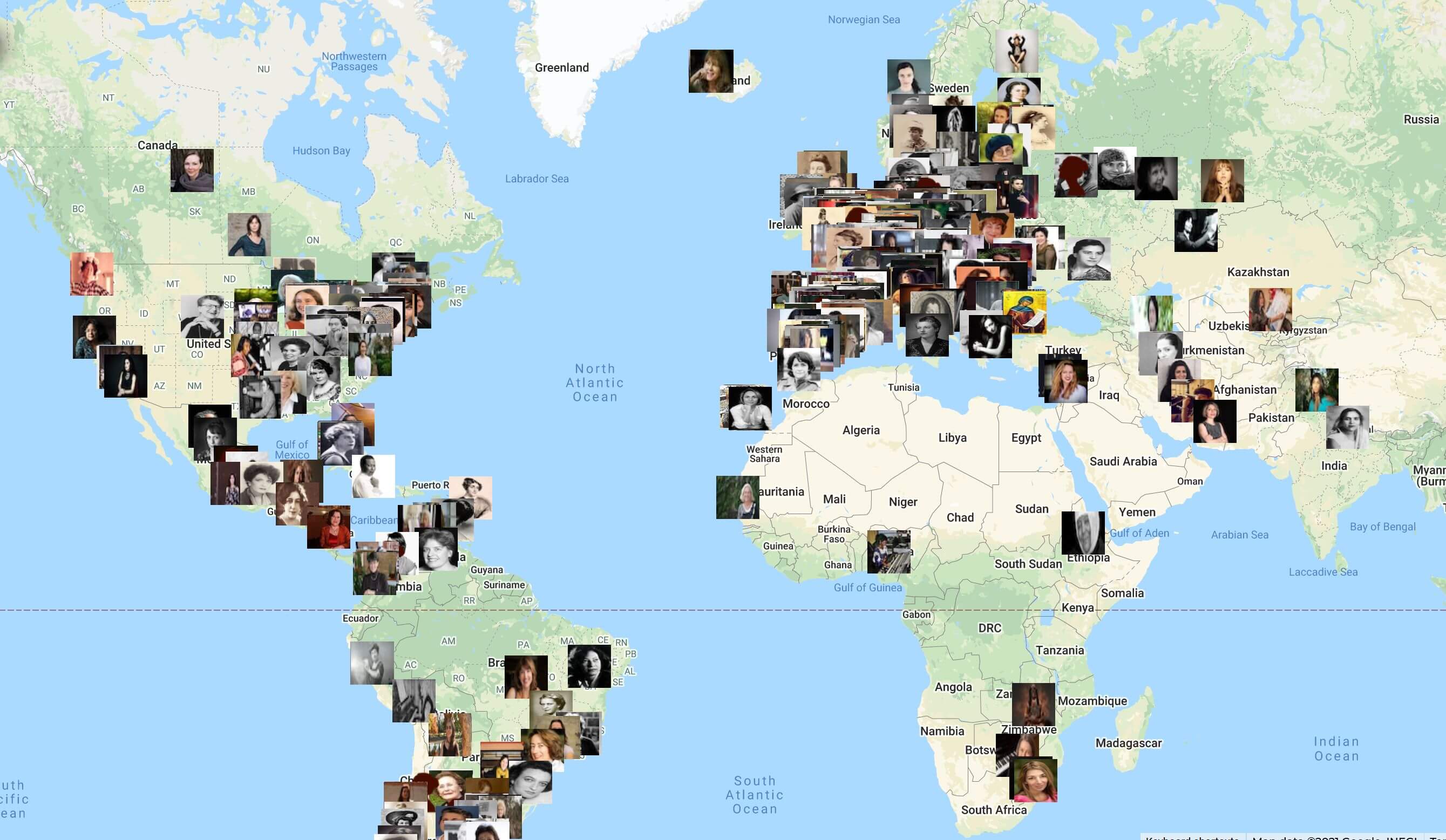
Of even greater interest is the online interactive world map of female composers recently prepared with evident devotion and huge attention to detail by 28-year-old Valencian music teacher Sakira Ventura. This is a real labour of love, the result of an almost missionary zeal to bring to public consciousness women whose voices (and music) have been side-lined for far too long. Designed primarily with fellow teachers and students in mind, it has clickable profiles of hundreds of composers right across the globe, from Queen Liliuokalani of Hawaii (1838-1917) in the west to New Zealand’s Gillian Whitehead (b. 1941) in the east, from Iceland’s Karolina Eiriksdottir (b. 1951) in the north to Luisina Kippes (b. 1989) from the southern tip of Argentina. For anyone with the slightest hint of musical inquisitiveness, Ventura’s atlas, with its zoom feature, clickable profiles and Index sidebar (click on the ‘Index’ sign next to her ‘SV’ logo) is a real godsend. For the English language version, make sure you click on the ‘EN’ option at the map’s top left.
In the meantime, we look forward to ever increasing numbers of discs featuring women composers, performers and conductors in the coming years, as the historical and cultural imbalance is slowly corrected. For those eager to escape the cultural hegemony, the 19th-century confederation of beards that has for too long served as the arbiter of taste in classical music, the time has never been better. Happy browsing!
The recordings:
- Boyle: Songs DCD34264
- Boyle: A Sea Poem, Symphony no.1, Violin Concerto, etc. CDLX7352
- First Ladies: Romantic Violin Sonatas by Andree, Bonis & Smyth TOCN0013
The web links:
- www.oxfordmusiconline.com/page/women-composers-by-time-period
- Sakira Ventura’s Map of Women Composers svmusicology.com/mapa?lang=en
Latest Posts
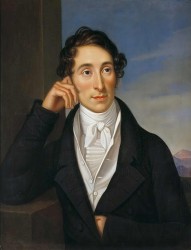
Carl Maria von Weber: Visionary of German Romanticism
23rd June 2026
When audiences think of early nineteenth-century German music, the towering figures of Beethoven, Schubert, and later Wagner often dominate the conversation. Yet between the Classical world of Mozart and the mature Romanticism of Wagner stands a composer whose influence was both profound and transformative: Carl Maria von Weber (1786–1826). Composer, conductor, pianist, critic, and visionary dramatist, Weber played a pivotal role in shaping the future of German opera and helping define the musical language of... read more
read more
Music of the Iberian Peninsula, Part 3: More observations on the Golden Age
16th June 2026
Our last visit to the Iberian peninsula, a fortnight ago, was an insanely ambitious, necessarily broad-brush survey of the Spanish and Portuguese Golden Age, covering vocal and instrumental music, the sacred and the secular. This week, we take a more concise and (I hope) focussed look at a few of the sacred vocal masterpieces which exemplify the particular fervour and intensity of this remarkable period of musical history. They reflect the special place the peninsula had as a bulwark against the Reformation that had taken... read more
read more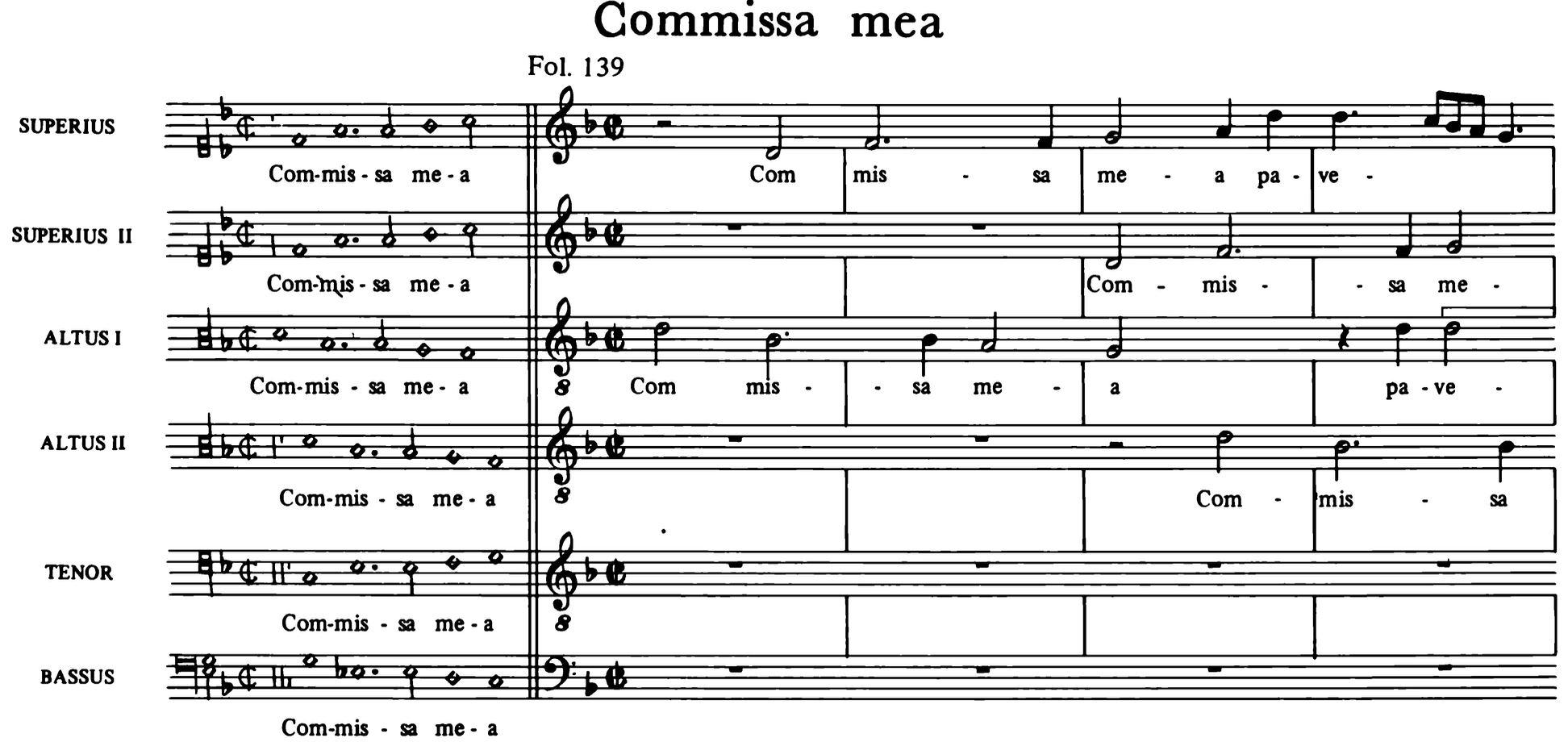
Music of the Iberian Peninsula, Part 3: More observations on the Golden Age
16th June 2026
Our last visit to the Iberian peninsula, a fortnight ago, was an insanely ambitious, necessarily broad-brush survey of the Spanish and Portuguese Golden Age, covering vocal and instrumental music, the sacred and the secular. This week, we take a more concise and (I hope) focussed look at a few of the sacred vocal masterpieces which exemplify the particular fervour and intensity of this remarkable period of musical history. They reflect the special place the peninsula had as a bulwark against the Reformation that had taken... read more
read more
Carl Schachter, Arnold Whittall, and why music analysis matters
9th June 2026
Two recent deaths have robbed the world of music analysis of a pair of its most revered figures. Carl Schachter, who has died at the age of 93, was a pupil of (and subsequently collaborator with) Felix Salzer, himself one of Heinrich Schenker’s foremost students. Schachter continued to enrich and broaden the teaching of Schenkerian analysis, including important work on its application to issues of rhythm (which Schenker, focussing on harmonic and contrapuntal matters, largely bypassed). His influence went well beyond the... read more
read more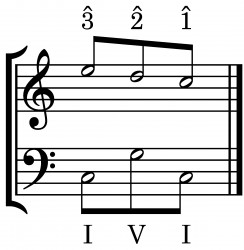
Carl Schachter, Arnold Whittall, and why music analysis matters
9th June 2026
Two recent deaths have robbed the world of music analysis of a pair of its most revered figures. Carl Schachter, who has died at the age of 93, was a pupil of (and subsequently collaborator with) Felix Salzer, himself one of Heinrich Schenker’s foremost students. Schachter continued to enrich and broaden the teaching of Schenkerian analysis, including important work on its application to issues of rhythm (which Schenker, focussing on harmonic and contrapuntal matters, largely bypassed). His influence went well beyond the... read more
read more