 FREE UK SHIPPING OVER £35!
The Spin Doctor Europadisc's Weekly Column
The Bizet Sesquicentenary
4th June 2025
4th June 2025
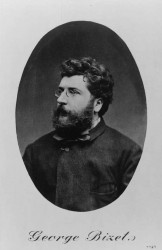 The death 150 years ago of the composer of Carmen – surely the best-known work in the operatic canon – is one of the great what-ifs of classical music. At that stage, the extent of its dazzling success was yet to become apparent. Teeming with attractive melodies harnessed to a powerful (and, at the time, scandalous) drama, might Carmen have unlocked the floodgates of creativity for an artist frequently plagued by periods of intense self-doubt? Or would the established pattern of brief periods of success alternating with longer spans of indecision and abandoned projects merely have continued? What is certain is that Georges Bizet’s death at the age of 36 on 3 June 1875, following a sudden severe attack of rheumatism and two heart attacks, robbed French music of one of its most brilliant composers.
Born in Paris on 25 October 1838, Bizet grew up in a musical family. His father was a singing teacher and a composer of modest standing, while his mother (who was probably his first piano teacher) came from a family with excellent musical connections. Her brother, François Delsarte (another singing teacher), was an enthusiast for the music of Gluck, and his unorthodox tastes and enthusiasms had a profound influence on the young Georges. Moreover, François’s wife was a professor of solfège at the Paris Conservatoire. Nevertheless, it is likely that merit alone gained Bizet entry into the Conservatoire at the age of just nine, and his nine years at that revered institution, where his teachers included Marmontel and Halévy (whose daughter he would later marry), led from one academic success to another, crowned – seemingly inexorably – by his winning the Prix de Rome in 1857.
This opened up the opportunity of staying in Italy, where Bizet was able to enjoy mixing with artists from other disciplines, as well as experiencing sights and culture very different from Paris which, for most of his life, provided the limits of his horizon. The music of Rossini was an important early influence, as were Berlioz and Meyerbeer, but his musical godfather was undoubtedly Charles Gounod, to whom he later declared that ‘You were the beginning of my life as an artist.’ Even before winning the Prix de Rome, Bizet had penned the precociously brilliant Symphony in C (modelled on Gounod’s Symphony no.1) with Mendelssohnian ease. His manifest talents as a pianist (he was praised by Liszt) resulted in relatively few solo works for the instrument, if one doesn’t count the numerous transcriptions he made of other composers’ music as a way of earning a precarious living. His song settings are also relatively few, though they are now receiving belated attention thanks to a new three-disc set of his complete mélodies and song cycles on the Harmonia Mundi.
Never a religious man, Bizet composed little sacred music, but the secular cantatas he wrote for his Prix de Rome commitments show a natural attraction to the possibilities of the human voice (even if idiomatic word-setting was not always a strongpoint), as well as a flair for vivid orchestral colours and a keen sense of dramatic pacing. The handful of works that comprise Bizet’s surviving operatic output scarcely reflect the number of projects taken up, abandoned and often recycled in other pieces. In typically pessimistic fashion, he regarded the respectable initial theatrical run of 18 performances for Les Pêcheurs de perles (The Pearl Fishers, 1863) as a failure, although Berlioz was full of praise for the music. The opera’s exotic location on the island of Ceylon attracted widespread criticism, but the Act 1 duet for tenor and baritone is only the most famous excerpt from a work of great attractiveness which has seen several notable recordings over the years. From four years later, La Jolie Fille de Perth (based on Sir Walter Scott’s novel The Fair Maid of Perth) is hampered by a poor libretto, but is written in a lighter style, typical of the opéra comique genre, and contains (particularly in Act 2) music of great beauty and suppleness, let down only by the damp squib of the final act.
In Djamileh (1872), Bizet found another exotic operatic subject which he treated with greater subtlety than The Pearl Fishers, with a strong, multi-dimensional central character for whom he composed some of his most evocatively intense music up to that point. Although cast in just a single act, this opéra comique contains several tantalising pointers to his final masterpiece, and the recent recording issued by Bru Zane records (coupled with the ‘ode-symphony’ Vasco de Gama, the Prix de Rome cantatas and a selection of shorter works) presents listeners with a timely opportunity to reassess Bizet’s more neglected output.
Below, we give our top ten recommendations for those wanting to explore not just Carmen but Bizet’s wider output, including the marvellous Jeux d’enfants suite for piano duet and the complete 1872 incidental music for Alphonse Daudel’s drama L'Arlésienne. Happy listening!
Recommended recordings:
Georges Bizet Edition (various artists) 2173242272
L’Arlésienne: Complete Stage Music (Plasson) SOMMCD0682
Carmen (Johnny, Barbeyrac, Opera de Rouen/Glassberg) BZ3001 (DVD + Blu-ray)
Carmen (Michel, Jobin, Opera-Comique/Cluytens) 811023839
Carmen (Visconti, Thill, Orch Symphonique de Paris/Cohen) DDH27809
Carmen Suite no.1, Symphony no.1 (SCO/Leleux) CKD624
Djamileh, Vasco de Gama, Cantatas, etc. BZ1059
Passage secret (incl. Jeux d’enfants) ALPHA1024
Les Pêcheurs de perles (Fuchs, Dubois, Sempey, Orchestre National de Lille/Bloch) PTC5186685
The Complete Songs & Cycles (Croux, Dutilleul, Dubois, Worms) HMM90538890
Latest Posts
Music of the Iberian Peninsula, Part 3: More observations on the Golden Age
16th June 2026
Our last visit to the Iberian peninsula, a fortnight ago, was an insanely ambitious, necessarily broad-brush survey of the Spanish and Portuguese Golden Age, covering vocal and instrumental music, the sacred and the secular. This week, we take a more concise and (I hope) focussed look at a few of the sacred vocal masterpieces which exemplify the particular fervour and intensity of this remarkable period of musical history. They reflect the special place the peninsula had as a bulwark against the Reformation that had taken... read more
read more
Music of the Iberian Peninsula, Part 3: More observations on the Golden Age
16th June 2026
Our last visit to the Iberian peninsula, a fortnight ago, was an insanely ambitious, necessarily broad-brush survey of the Spanish and Portuguese Golden Age, covering vocal and instrumental music, the sacred and the secular. This week, we take a more concise and (I hope) focussed look at a few of the sacred vocal masterpieces which exemplify the particular fervour and intensity of this remarkable period of musical history. They reflect the special place the peninsula had as a bulwark against the Reformation that had taken... read more
read more
Carl Schachter, Arnold Whittall, and why music analysis matters
9th June 2026
Two recent deaths have robbed the world of music analysis of a pair of its most revered figures. Carl Schachter, who has died at the age of 93, was a pupil of (and subsequently collaborator with) Felix Salzer, himself one of Heinrich Schenker’s foremost students. Schachter continued to enrich and broaden the teaching of Schenkerian analysis, including important work on its application to issues of rhythm (which Schenker, focussing on harmonic and contrapuntal matters, largely bypassed). His influence went well beyond the... read more
read more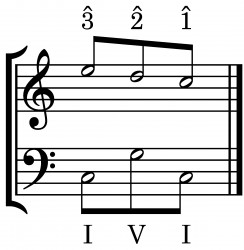
Carl Schachter, Arnold Whittall, and why music analysis matters
9th June 2026
Two recent deaths have robbed the world of music analysis of a pair of its most revered figures. Carl Schachter, who has died at the age of 93, was a pupil of (and subsequently collaborator with) Felix Salzer, himself one of Heinrich Schenker’s foremost students. Schachter continued to enrich and broaden the teaching of Schenkerian analysis, including important work on its application to issues of rhythm (which Schenker, focussing on harmonic and contrapuntal matters, largely bypassed). His influence went well beyond the... read more
read more
Music of the Iberian Peninsula, Part 2: ‘O quam gloriosum’ – The Spanish and Portuguese Golden Age
2nd June 2026
Over the past fortnight, I’ve been bathed in the most glorious, radiant, transformative light. Not the UK’s recent unseasonable heatwave, but the extraordinary vocal polyphony of the Siglo de Oro: the Spanish (and Portuguese) ‘Golden Century’. Extending from the late 15th to the early 17th century, this was a time of remarkable artistic flowering on the Iberian Peninsula, coinciding with the emergence of Spain and Portugal as global imperial powers with extensive colonial territories in the Americas, Africa and Asia. The... read more
read more