 FREE UK SHIPPING OVER £35!
The Spin Doctor Europadisc's Weekly Column
Treasures from the Czech Radio and Supraphon archives
18th February 2025
18th February 2025
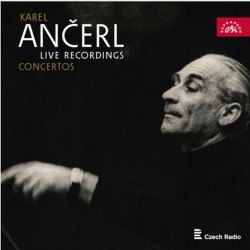 Although its new releases are not as numerous as, say, the Polish label Dux, the Supraphon label – for generations the illustrious standard-bearer of Czech and Czechoslovak musical identity – continues to have a committed following among record collectors, not least for its unearthing of treasures from the past. Its most recent releases are a case in point. As well as a first CD issue of one of its earliest complete stereo opera recordings (of which, more anon), it has just issued a fascinating 7-disc set of live radio recordings of the great conductor Karel Ančerl in accompanist mode, partnering some of the starriest names of the 1950s and 60s in a wide range of concertos. This compliments both the 2022 15-disc set of live broadcasts of orchestral music from the same conductor, mostly at the helm of the Czech Philharmonic (of which he was chief conductor from 1950 to 1968), as well as the even more extensive series of Supraphon studio recordings in the ‘Ančerl Gold’, several volumes of which are still happily in the catalogue.
In the detailed booklet notes to the new Concertos set, the Hungarian-born pianist Eva Bernáthová (1922–2019), whose 1959 performance of Ravel’s G major Piano Concerto is included on disc 6, is quoted as saying that ‘I think [Ančerl] didn’t like accompanying.’ If that’s so, then here – as in his ‘official’ studio recordings – he kept his aversion extremely well hidden! In fact, his trademark rhythmic acuity, coupled with the lean, transparent textures that paid such dividends in his interpretations of 20th-century music, also made him an ideal concerto partner. This is evident in the two Beethoven Piano Concertos (the First and the Third) with Sviatoslav Richter that make up the first disc of the collection (recorded in 1956 and 1962 respectively). They combine intellectual and formal rigour with an unforced energy in ideal measure.
Ančerl’s reliability and consistency as a musical partner is evident in two nevertheless contrasting accounts of Beethoven’s Violin Concerto, from 1966 with Henryk Szeryng, and 1957 with a young Ida Haendel. The former (from a television broadcast already available on DVD) is the more aristocratic reading, and (as you’d expect) in better sound (all the recordings are in very acceptable mono); the latter strikes me as the more ‘unbuttoned’ account, the cadenzas in particular positively buzzing. Furthermore, the Haendel performance is coupled with the other item from a remarkable concert, Sibelius’s Violin Concerto, in which – despite the sonic limitations – you can hear why Sibelius himself so admired Haendel’s mastery of this demanding work.
Another bumper concert is given on CD 4: Richter again, this time on 3 June 1954, playing the First Concertos of both Liszt and Tchaikovsky. There’s nothing of the tug-of-war of egos that marred Richter’s notorious studio account of the Tchaikovsky with Karajan; instead, blazing performances of both works that demonstrate the soloist’s fabled combination of musical intelligence and sparkling virtuosity. From October 1953, another performance of the Tchaikovsky – this time with Emil Gilels – kicks off with a thunderous performance of the opening pages, living up to Gilels’s reputation as one of the mightiest of keyboard titans, but the finale absolutely fizzes and dances.
Refined accounts of Schumann’s Piano Concerto with Czech pianist Jan Panenka (1955) and Chopin’s Second Piano Concerto with Wilhelm Kempff (1959) are evidence of just how cultivated a sound Ančerl could create with his players. But they’re really in their element with the two Dvořák concertos on CD 5: from June 1952 comes the earliest and in many ways the most idiomatic of Rostropovich’s recorded accounts of the Cello Concerto, in which youthful fire is coupled with exquisite sounds from the orchestra: the woody pungency of the horns, the seductive vibrato of the horn and clarinet solos, and the sweetness of the strings. Just as fascinating is the chance to eavesdrop on David Oistrakh in the Violin Concerto, a magical performance from May 1950 and the only one in the set with the Prague Radio Symphony Orchestra rather than the Czech Philharmonic. It was on Oistrakh’s enthusiastic recommendation that Ančerl was appointed to head the Czech Philharmonic that same year.
The other highlight of the set is the sequence of 20th-century works (starting with the aforementioned Ravel Concerto from 1959) that completes the set. Juliane Lerche and Ingeborg Herkomer are the soloists in a 1960 performance of Poulenc’s Concerto for Two Pianos, there’s Haendel’s marvelously incisive 1962 account of Stravinsky’s Violin Concerto, and the set is brought to a rousing conclusion with Ivan Moravec’s athletic traversal of Prokofiev’s Piano Concerto no.1. All are distinguished by Ančerl’s tight rhythmic discipline and vibrant animation, and the only pity is that there aren’t any examples of the contemporary Czech works that were conductor’s speciality. Nevertheless, this set will delight Ančerl’s many admirers, and with performances of many other works referenced in the accompanying booklet, we must hope that more such jewels from Czech Radio will emerge in due course.
For many years (before the post-war ‘discovery’ of Janáček), Czech opera was known to international audiences almost exclusively through Smetana’s comic opera The Bartered Bride. To native Czechs, however, one work came close to rivalling The Bartered Bride in popularity: the one-act comedy In the Well (V studni) by Vilém Blodek (1834–1874). A Prague native, Blodek started studying at the city’s Conservatory even before he reached his teens: piano, and later flute and composition. His early career was as a music teacher in Galicia, before returning to Prague as a choir director. The only preparation he had for opera (apart from In the Well, his only other work in the genre was the historical comedy Zítek, left incomplete at his early death) was as a composer of incidental music for Prague’s Czech and German theatres.
The libretti for both Blodek’s operas were written by Karel Sabina, who was also responsible for The Bartered Bride. But In the Well is a rather different kettle of fish from Smetana’s famous work. Based on a Slovene folk legend also common to neighbouring Slav lands, its compact dimensions are coupled with a musical style that has more in common with 19th-century German opera than any folk-influenced Czech style. Its small cast and modest forces made it ideal for amateur performance in provincial theatres, which was a significant readon for its huge popularity.
A 1981 Supraphon recording conducted by Jan Štych, with veteran bass Karel Berman in the comic role of the elderly farmer, will be familiar to many collectors. But the newly reissued 1959 recording by Prague National Theatre forces under František Škvor, only the second complete opera to be recorded by the state-owned record manufacturer Gramofonové závody using pioneering stereo technology, has only ever been issued previously in mono on vinyl. (It was preceded by Jaroslav Krombholc’s recording of Janáček’s Káťa Kabanová, and followed by Zdeněk Chalabala’s still critically acclaimed account of The Bartered Bride.) Now at last this neglected gem gets the chance to shine in stereo, and Jan Lžičař has done a marvellous job of remastering from the original tapes.
The cast of just four soloists is headed by the lovely soprano of Milada Šubrtová as the young maiden Lidunka, with contralto Štěpánka Štěpánová as the wise Veruna, the ringing, honeyed and distinctly Czech tenor of Ivo Žídek as Lidunka’s sweetheart Vojtěch, and bass Zdeněk Kroupa as the hapless elderly widower Janek. This was the first Czech opera to be ‘through-composed’ (i.e. without any punctuating dialogue, though still retaining traditional ‘numbers’), and although there is little genuinely Czech flavour to the music itself, the entertaining score contains many delights, not least a scene-setting intermezzo depicting moonrise on Midsummer Eve, and some jolly choruses. Škvor conducts a sparkling account of this compact opera, which will be a welcome treat for lovers of Czech opera.
The Recordings:
Karel Ancerl: Live Recordings - Concertos SU43492
Blodek - V studni (In the Well) SU43412
Latest Posts
Carl Schachter, Arnold Whittall, and why music analysis matters
9th June 2026
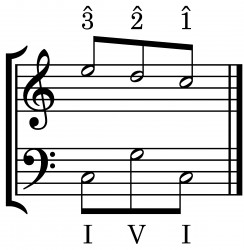
Two recent deaths have robbed the world of music analysis of a pair of its most revered figures. Carl Schachter, who has died at the age of 93, was a pupil of (and subsequently collaborator with) Felix Salzer, himself one of Heinrich Schenker’s foremost students. Schachter continued to enrich and broaden the teaching of Schenkerian analysis, including important work on its application to issues of rhythm (which Schenker, focussing on harmonic and contrapuntal matters, largely bypassed). His influence went well beyond the... read more
read more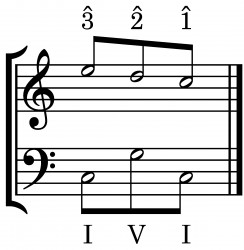
Carl Schachter, Arnold Whittall, and why music analysis matters
9th June 2026
Two recent deaths have robbed the world of music analysis of a pair of its most revered figures. Carl Schachter, who has died at the age of 93, was a pupil of (and subsequently collaborator with) Felix Salzer, himself one of Heinrich Schenker’s foremost students. Schachter continued to enrich and broaden the teaching of Schenkerian analysis, including important work on its application to issues of rhythm (which Schenker, focussing on harmonic and contrapuntal matters, largely bypassed). His influence went well beyond the... read more
read more
Music of the Iberian Peninsula, Part 2: ‘O quam gloriosum’ – The Spanish and Portuguese Golden Age
2nd June 2026
Over the past fortnight, I’ve been bathed in the most glorious, radiant, transformative light. Not the UK’s recent unseasonable heatwave, but the extraordinary vocal polyphony of the Siglo de Oro: the Spanish (and Portuguese) ‘Golden Century’. Extending from the late 15th to the early 17th century, this was a time of remarkable artistic flowering on the Iberian Peninsula, coinciding with the emergence of Spain and Portugal as global imperial powers with extensive colonial territories in the Americas, Africa and Asia. The... read more
read more
‘Call Me Flott’: A Tribute to Felicity Lott
26th May 2026
The acclaimed lyric soprano Felicity Lott, who has died at the age of 79, was an example of that rare breed among international singers: someone who combined star quality, wit, intelligence and humanity. During her half-century career she stood out for the refinement, clarity and textual responsiveness she brought to the music of Mozart and Richard Strauss, at a time when specialism in the former and sheer vocal power and OTT theatricality in the latter were increasingly the norm. These same strengths characterised her wider... read more
read more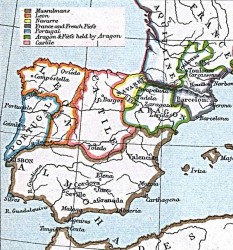
Music of the Iberian Peninsula: Beginnings
19th May 2026
Nestling at the southwestern-most tip of Europe, the Iberian Peninsula has long held charms for the rest of the continent. It is still one of the most popular destination for west-European holidaymakers seeking a mixture of sun and exoticism. In the world of classical music, it has attracted composers from the Neapolitan expat Domenico Scarlatti, and French composers like Bizet, Chabrier and Ravel, to Rimsky-Korsakov in far-away St Petersburg. The allure of Hispania is partly due to its geographic location as a peninsula... read more
read more