 FREE UK SHIPPING OVER £35!
The Spin Doctor Europadisc's Weekly Column
Plucking Brilliant: New Lute and Theorbo Recordings
29th October 2024
29th October 2024
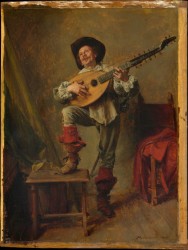 Most music lovers will only encounter plucked early music instruments like the lute and its deeper cousin, the theorbo, in larger venues as part of an ensemble, either accompanying a singer or in opera houses as part of a large contingent of continuo instruments in works by the like of Monteverdi, Lully or Charpentier. But to hear these remarkable instruments in more intimate surroundings – or on disc – in solo music is always a special pleasure. The artistry of lutenists and theorbists combines the ability to make the instrument ‘sing’ (by plucking the string with appropriate touch, deployment of rubato and shading, and through judicious use of prolonging effects like vibrato) with the ability to apply appropriate ornaments and even filling out the harmonic texture.
The art of the lutenist has revived considerably since the beginnings of the post-war early music revival. Musicians such as Anthony Rooley, Nigel North and Jakob Lindberg have earned renown for their recordings, and younger generations are now swelling the ranks of solo-standard players. The repertoire, too, is ever more diverse. In the early days composers like Dowland and J.S. Bach (the latter not himself a lute player) were best represented. Now, in addition to lutenist composers like Robert de Visée and Silvius Leopold Weiss, a host of more obscure figures can be found on record, enriching our knowledge of important Renaissance and Baroque repertoires that were previously regarded as rather esoteric and peripheral.
For this particular listener, few other musical pleasures – perhaps a fine viol consort or string quartet, or an exceptional consort of a cappella voices – match that of a well-played lute or theorbo. To be drawn in by the resonance of the instrument can be a truly beguiling experience. So the appearance of a high-quality trio of recent and forthcoming recordings has been especially welcome. They are headed by a double-album of ‘Selected Works for Lute’ by Weiss (1687–1750), played by Argentinian lutenist Evangelina Mascardi on the Arcana label. Weiss was the leading player-composer for this instrument in the late Baroque. A native of Silesia, he travelled widely through central and southern Europe, with a four-year stay in Rome and eventual settling in Dresden (where he was part of the large musical entourage of Frederick the Great) shaped his musical style, which combined French elegance, Italianate flair and the vigorous German ‘Geschmack’.
While J.S. Bach’s works for lute/lute-harpsichord fit comfortably onto a double-album (as Mascardi has previously recorded), two discs can only contain a fraction of Weiss’s vast output (well over 400 works) for the instrument. Alongside the celebrated – and remarkably affecting – Tombeau sur la mort de M: Comte d’Logÿ and the Fantasia (Sonata) in C minor, Mascardi includes another moving tombeau (for Baron d’Hartig), a Prelude, Allegro and Chaconne in E flat, and four multi-movement sonatas (effectively suites, containing many of the by-then standard dance forms). The variety of keys exploits their different expressive tonal possibilities, and the suppleness of Mascardi’s playing further enhances the experience, using 13- and 14-course instruments built by Cezar Mateus. (Weiss himself was responsible for expanding the instrument from the customary 11 to 13 courses, adding significantly to its tonal richness and depth.)
Earlier repertoire is explored by Albane Imbs on a recent disc from the Alpha label. Playing a mixture of theorbo, tiorbino and Baroque guitar, she introduces two collections by Italian composers, Bellerofonte Castaldi (1580–1649) and Domenico Pellegrini (c. 1617–after 1682). In Castaldi’s Capricci a due stromenti cioe tiorba e tiorbino (1622) she is joined by experienced lutenist Rolf Lislevand on theorbo, and the added depth and textural variety afforded by two players is wonderfully absorbing. Contrastingly, Pellegrini’s Armoniosi concerti sopra la chitarra spagnola (1650) have a brightness of timbre and lightness of touch that conveys the sunny climes of southern Europe. Imbs animates both sets of works with an ideal combination of style and panache: hers is clearly a name to watch out for.
More variety still is provided on a forthcoming release from the Château de Versailles Spectacles label, with a disc centred on works for theorbo by de Visée (1652–1730) played by Thibaut Roussel. As well as providing valuable new biographical information on this master of the French theorbists, the disc places de Visée’s music in dialogue with works by such contemporaries as Michel Lambert, Nicolas Hotman and Jean-Baptiste Drouart de Bousset. For these, Roussel is joined by soprano Perrine Devillers and bass viol players Mathilde Vialle and Myriam Rignol. The programme thus achieves a structure and timbral variety which is consistently engaging, and de Visée’s own music – not least the touching Plainte pour Mesdemoiselles de Visée in memory of the composer’s young daughters – positions him as one of the most expressively involving and musically gifted composers in the plucked genre since Dowland.
All three of these releases are recorded with just the sort of focus that’s needed to capture the magic of the instruments, and all come with informative, well-presented booklets. Pressed to choose between them – I really can’t. All are a real treat.
The Recordings:
Weiss - Selected Works for Lute (Evangelina Mascardi) A569
Capricci: Castaldi & Pellegrini (Imbs, Lislevand) ALPHA1066
Visée - Suites à la mémoire d’un poète (Thibaut Roussel et al.) CVS127
Latest Posts
Carl Schachter, Arnold Whittall, and why music analysis matters
9th June 2026
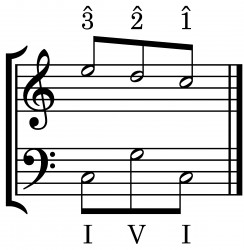
Two recent deaths have robbed the world of music analysis of a pair of its most revered figures. Carl Schachter, who has died at the age of 93, was a pupil of (and subsequently collaborator with) Felix Salzer, himself one of Heinrich Schenker’s foremost students. Schachter continued to enrich and broaden the teaching of Schenkerian analysis, including important work on its application to issues of rhythm (which Schenker, focussing on harmonic and contrapuntal matters, largely bypassed). His influence went well beyond the... read more
read more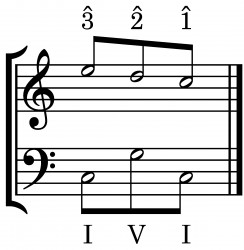
Carl Schachter, Arnold Whittall, and why music analysis matters
9th June 2026
Two recent deaths have robbed the world of music analysis of a pair of its most revered figures. Carl Schachter, who has died at the age of 93, was a pupil of (and subsequently collaborator with) Felix Salzer, himself one of Heinrich Schenker’s foremost students. Schachter continued to enrich and broaden the teaching of Schenkerian analysis, including important work on its application to issues of rhythm (which Schenker, focussing on harmonic and contrapuntal matters, largely bypassed). His influence went well beyond the... read more
read more
Music of the Iberian Peninsula, Part 2: ‘O quam gloriosum’ – The Spanish and Portuguese Golden Age
2nd June 2026
Over the past fortnight, I’ve been bathed in the most glorious, radiant, transformative light. Not the UK’s recent unseasonable heatwave, but the extraordinary vocal polyphony of the Siglo de Oro: the Spanish (and Portuguese) ‘Golden Century’. Extending from the late 15th to the early 17th century, this was a time of remarkable artistic flowering on the Iberian Peninsula, coinciding with the emergence of Spain and Portugal as global imperial powers with extensive colonial territories in the Americas, Africa and Asia. The... read more
read more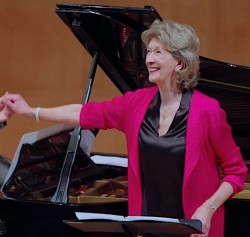
‘Call Me Flott’: A Tribute to Felicity Lott
26th May 2026
The acclaimed lyric soprano Felicity Lott, who has died at the age of 79, was an example of that rare breed among international singers: someone who combined star quality, wit, intelligence and humanity. During her half-century career she stood out for the refinement, clarity and textual responsiveness she brought to the music of Mozart and Richard Strauss, at a time when specialism in the former and sheer vocal power and OTT theatricality in the latter were increasingly the norm. These same strengths characterised her wider... read more
read more
Music of the Iberian Peninsula: Beginnings
19th May 2026
Nestling at the southwestern-most tip of Europe, the Iberian Peninsula has long held charms for the rest of the continent. It is still one of the most popular destination for west-European holidaymakers seeking a mixture of sun and exoticism. In the world of classical music, it has attracted composers from the Neapolitan expat Domenico Scarlatti, and French composers like Bizet, Chabrier and Ravel, to Rimsky-Korsakov in far-away St Petersburg. The allure of Hispania is partly due to its geographic location as a peninsula... read more
read more