 FREE UK SHIPPING OVER £35!
The Spin Doctor Europadisc's Weekly Column
A Welcome and a Farewell...
27th August 2024
27th August 2024
 The death yesterday at the age of 92 of Alexander (‘Sandy’) Goehr marks the loss of the last of the triumvirate of composers (the others were Peter Maxwell Davies and Harrison Birtwistle) who, together with pianist John Ogdon and trumpeter-conductor Elgar Howarth, formed the backbone of the New Music Manchester Group in the 1950s. Born in Berlin in 10 August 1932, Goehr was the son of the conductor and Schoenberg pupil Walter Goehr. While just a few months old, Goehr moved with his family to Britain, where the vibrant musical activity of the family home and his father’s subsequent pioneering efforts to introduce British audiences to the music of Schoenberg, Hindemith and Messiaen had a lasting effect. Initially taking up a Classics scholarship at Oxford, Sandy soon decamped to Manchester to study composition with Richard Hall.
Of the three ‘Manchester’ composers, Max was the brilliant maverick, Harry the ponderous slow developer who would become the most uncompromisingly individual of the trio, while Sandy was the ‘intellectual’ as well as the most cosmopolitan – a fact underlined by his attendance in 1955–56 at Messiaen’s masterclass at the Paris Conservatoire, as well as his encounter with the young Pierre Boulez. While Max and Harry were still grappling with such fundamentals as medieval isorhythm, Sandy was already steeped in postwar serialism, and he soon became an exponent of his own brand of serial modality. A string of successes in the 1960s, including his first opera Arden muss sterben in Hamburg, and teaching posts in Boston, Mass., and at Yale, led to a glittering academic career, first at Southampton, then professor at Leeds, and ultimately professor at Cambridge (1976–99, thereafter professor emeritus).
1976 was also the year of his ‘white-note’ modal setting of Psalm 4, which for many of Goehr’s more modernistically inclined admirers was something of a backwards step, and a clear dividing line in his compositional output. In retrospect, however, it can be seen as a pioneering attempt to reconcile modernism with deep-rooted musical tradition, a departure from the ‘progress-at-all-costs’ idealism which had been the watchword for composers of the immediate postwar years, and an anticipation of 21st-century eclecticism. At the same time, Goehr’s fundamental musical lyricism remained a constant, distinct from PMD’s trademark brilliance and Birtwistle’s slow-burning yet edgy melancholy.
Goehr’s many composition students included such luminaries as Robin Holloway, Roger Smalley, George Benjamin and Thomas Adès, and his music was championed by the likes of Boulez, Knussen, Rattle, Du Pré, Barenboim and, more recently, Colin Currie and the Pavel Haas Quartet. His daughter Lydia (b.1960) made waves with her probingly critical book The Imaginary Museum of Musical Works (1992).
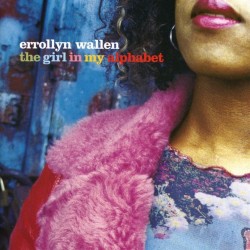
As one chapter closes, another begins. The appointment, announced this weekend, of Errollyn Wallen as the new Master of the King’s Music – and Charles III’s first nomination to the post – marks the first time this venerable position has been taken by a black woman, following on from the tenure of Dame Judith Weir, the first woman to hold the title. Yet Wallen’s recognition amounts to much more than an exercise in box-ticking. Since moving to Britain at a young age in the early 1960s, this Belize-born composer has – since early training as a dancer (which took her to New York’s Dance Theatre of Harlem) – steadily been building a reputation as one of the most engaging and vibrant composers of her generation, as much at home writing for television or film as for Elizabeth II’s golden and diamond jubilees or her own Ensemble X.
The spirit of the dance – from the popular to the more arty – pervades much of Wallen’s music, but it’s founded on a secure compositional technique (she studied with LeFanu and Lumsdaine at King’s College, London) and a healthy but not overshadowing respect for tradition. When she appeared recently on BBC Radio 4’s Desert Island Discs, Bach, Beethoven, Stravinsky and Britten rubbed shoulders with Ella Fitzgerald, Stevie Wonder and Alvin Lucier, while for her luxury item she chose… the Wigmore Hall! Now based in a lighthouse on the north coast of Scotland, Wallen is visiting professor of composition at the Royal Conservatoire of Scotland in Glasgow.
Equally assured in jazz-infused idioms like her violin and piano piece Woogie Boogie (sic), the minimalist-neoclassical mash-up of Concerto Grosso, and the demanding solo writing of her 20-minute single-movement Cello Concerto, Wallen’s music reflects the stylistic diversity and genre-straddling idioms of the 21st century, accessibly sonorous even at its most experimental. In a post which, before the ten-year term limits set with the appointment of Peter Maxwell Davies in 2004, too often proved an establishment-approved terminal sentence for composers fast approaching the end of their careers, Wallen will provide a breath of fresh air. And it will also present her with the opportunity – indeed, the expectation – to speak up apolitically for a musical world that often feels under threat like never before. We wish her every success!
Recommended recordings:
Goehr - Since Brass, nor Stone NMCD187
Goehr - Marching to Carcassonne, When Adam Fell, Pastorals 8573052
Goehr - Colossos or Panic, The Deluge, Little Symphony NMCD165
Wallen - Photography: Orchestral Works NMCD221
Wallen - Errollyn AV0049
Wallen - The Girl in my Alphabet AV0006
Latest Posts
Music of the Iberian Peninsula, Part 3: More observations on the Golden Age
16th June 2026
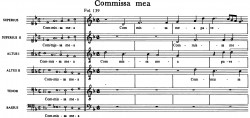
Our last visit to the Iberian peninsula, a fortnight ago, was an insanely ambitious, necessarily broad-brush survey of the Spanish and Portuguese Golden Age, covering vocal and instrumental music, the sacred and the secular. This week, we take a more concise and (I hope) focussed look at a few of the sacred vocal masterpieces which exemplify the particular fervour and intensity of this remarkable period of musical history. They reflect the special place the peninsula had as a bulwark against the Reformation that had taken... read more
read more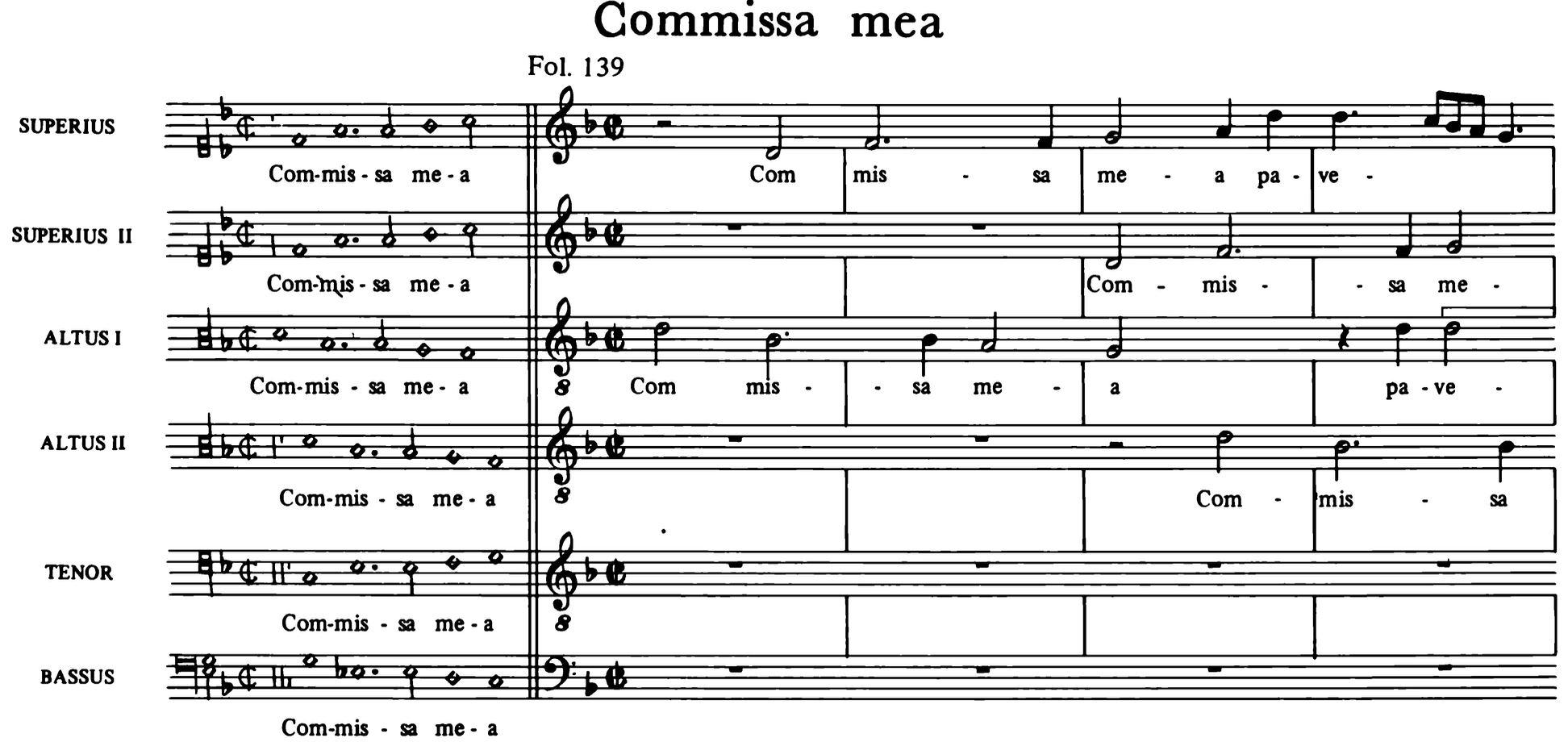
Music of the Iberian Peninsula, Part 3: More observations on the Golden Age
16th June 2026
Our last visit to the Iberian peninsula, a fortnight ago, was an insanely ambitious, necessarily broad-brush survey of the Spanish and Portuguese Golden Age, covering vocal and instrumental music, the sacred and the secular. This week, we take a more concise and (I hope) focussed look at a few of the sacred vocal masterpieces which exemplify the particular fervour and intensity of this remarkable period of musical history. They reflect the special place the peninsula had as a bulwark against the Reformation that had taken... read more
read more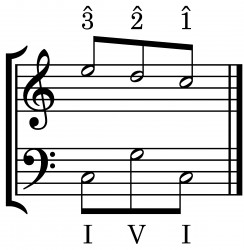
Carl Schachter, Arnold Whittall, and why music analysis matters
9th June 2026
Two recent deaths have robbed the world of music analysis of a pair of its most revered figures. Carl Schachter, who has died at the age of 93, was a pupil of (and subsequently collaborator with) Felix Salzer, himself one of Heinrich Schenker’s foremost students. Schachter continued to enrich and broaden the teaching of Schenkerian analysis, including important work on its application to issues of rhythm (which Schenker, focussing on harmonic and contrapuntal matters, largely bypassed). His influence went well beyond the... read more
read more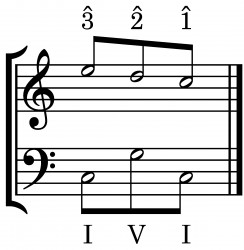
Carl Schachter, Arnold Whittall, and why music analysis matters
9th June 2026
Two recent deaths have robbed the world of music analysis of a pair of its most revered figures. Carl Schachter, who has died at the age of 93, was a pupil of (and subsequently collaborator with) Felix Salzer, himself one of Heinrich Schenker’s foremost students. Schachter continued to enrich and broaden the teaching of Schenkerian analysis, including important work on its application to issues of rhythm (which Schenker, focussing on harmonic and contrapuntal matters, largely bypassed). His influence went well beyond the... read more
read more
Music of the Iberian Peninsula, Part 2: ‘O quam gloriosum’ – The Spanish and Portuguese Golden Age
2nd June 2026
Over the past fortnight, I’ve been bathed in the most glorious, radiant, transformative light. Not the UK’s recent unseasonable heatwave, but the extraordinary vocal polyphony of the Siglo de Oro: the Spanish (and Portuguese) ‘Golden Century’. Extending from the late 15th to the early 17th century, this was a time of remarkable artistic flowering on the Iberian Peninsula, coinciding with the emergence of Spain and Portugal as global imperial powers with extensive colonial territories in the Americas, Africa and Asia. The... read more
read more