 FREE UK SHIPPING OVER £35!
The Spin Doctor Europadisc's Weekly Column
Honouring a Czech musicologist
3rd January 2024
3rd January 2024
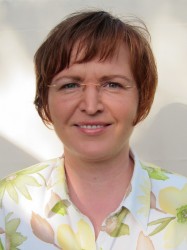 Shortly before Christmas, the Czech musicological world lost one of its leading lights. Lenka Hlávková, head of the Institute of Musicology at Prague’s Charles University, was among the fourteen victims of a lone gunman at the university's Faculty of Arts. Founded in 1347, Charles University is one of the oldest such institutions in Europe. Prague itself is generally regarded as among the safest of European capital cities, and attracts many millions of international tourists every year, making the multiple shooting incident all the more shocking. Lenka Hlávková was on her way to an Advent concert in the faculty building when the horrific events unfolded.
Many of my Czech musical friends knew Lenka well, and the respect and affection in which she was held is evident from the many tributes that have been paid to her by friends, colleagues and students. Her loss will be acutely felt by them, and by her young family. Her area of specialism was music of the 15th century, particularly central European music of the late medieval and Renaissance eras. She was regarded as an expert on cantus fractus (a rhythmicised form of plainchant), and on such important Czech manuscripts as the Strahov and Speciálník codices.
Such expertise may seem the very definition of esoteric, yet Lenka Hlávková was a major figure among those scholars raising awareness of these sources and their cultural significance, both for fellow musicians and wider audiences. For anyone who has visited Prague and fallen under the spell of its rich history and incomparable architecture, the music that Lenka was steeped in forms as essential a part of its historical soundtrack as the more familiar strains of Smetana and Dvořák that seem to monopolise the travelogues. In an attempt to familiarise myself with Lenka's work over the Christmas break, I was drawn particularly to her earlier scholarly articles (several available online in English) on the Codex Speciálník, a 15th-century collection of sacred music compiled for and by the Utraquist Hussites of Prague, and now held in the Hradec Králové Museum.
The Codex is a ‘speciálník’ (i.e. a books of ‘special songs’), initially of Mass movements, motets and songs in both ‘white notation’ and older works in black notation. Later hands continued to add to the collection, which ranges from Czech music (much of it anonymous) of the Ars nova and Ars antiqua to works by major figures of the early Renaissance, including not just such Franco-Flemish masters as Josquin, Obrecht, Compère and Tinctoris, but English composers including Bedingham, Frye and Plummer. Containing more than 200 works in total, the codex paints a vivid picture of musical life at a crucial period of history amid religious ferment at the ‘crossroads of Europe’, and of Prague as a veritable cultural melting-pot.
Although recordings of this repertoire are not as rare as they used to be, only two discs currently focus on the Codex Speciálník in particular. One dating from 2016 is by the Prague-based Cappella Mariana under Vojtěch Semerád, on the Etcetera label. The performances are a mixture of a cappella, instrumental, and voices with instruments, creating a sound-picture as varied as the repertoire itself, including one of several works in the codex by Johannes Touront, a Franco-Flemish composer who evidently spent some time in the Czech lands. The performances themselves are vibrantly communicative, and the timbral variety will appeal to many.
Those in search of greater tonal purity, however, should seek out a 1993 ECM recording by the Hilliard Ensemble. Performed entirely a cappella, this magical disc is organised along broadly chronological lines, ranging from late medieval motets to the sublime Ave Maria... Virgo serena by Josquin Desprez. An anonymous Mass setting based on Ockeghem’s chanson Petite Camusette is among other highlights, as is Buď buohu chvála čest by the elusive Czech composer Gontrášek, while the exquisite ending to Presidiorum erogatrix (one of four works on the disc by the Kraków master Petrus Wilhelmi de Grudencz) is breathtakingly beautiful.
Listening to this music, one is full of admiration for those who – like Lenka Hlávková – devote their lives and careers to bringing it to wider audiences, and to broadening our knowledge of it. It’s a small but important way of honouring her memory, and of those others who lost their lives at the same time. Our sincere condolences to her family, friends and colleagues.
The Recordings:
Codex Speciálník: Polyphony in Prague around 1500 (Cappella Mariana) KTC1571
Codex Speciálník (The Hilliard Ensemble) 4478072
Latest Posts
Music of the Iberian Peninsula, Part 3: More observations on the Golden Age
16th June 2026
Our last visit to the Iberian peninsula, a fortnight ago, was an insanely ambitious, necessarily broad-brush survey of the Spanish and Portuguese Golden Age, covering vocal and instrumental music, the sacred and the secular. This week, we take a more concise and (I hope) focussed look at a few of the sacred vocal masterpieces which exemplify the particular fervour and intensity of this remarkable period of musical history. They reflect the special place the peninsula had as a bulwark against the Reformation that had taken... read more
read more
Music of the Iberian Peninsula, Part 3: More observations on the Golden Age
16th June 2026
Our last visit to the Iberian peninsula, a fortnight ago, was an insanely ambitious, necessarily broad-brush survey of the Spanish and Portuguese Golden Age, covering vocal and instrumental music, the sacred and the secular. This week, we take a more concise and (I hope) focussed look at a few of the sacred vocal masterpieces which exemplify the particular fervour and intensity of this remarkable period of musical history. They reflect the special place the peninsula had as a bulwark against the Reformation that had taken... read more
read more
Carl Schachter, Arnold Whittall, and why music analysis matters
9th June 2026
Two recent deaths have robbed the world of music analysis of a pair of its most revered figures. Carl Schachter, who has died at the age of 93, was a pupil of (and subsequently collaborator with) Felix Salzer, himself one of Heinrich Schenker’s foremost students. Schachter continued to enrich and broaden the teaching of Schenkerian analysis, including important work on its application to issues of rhythm (which Schenker, focussing on harmonic and contrapuntal matters, largely bypassed). His influence went well beyond the... read more
read more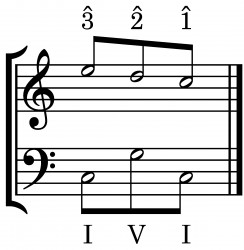
Carl Schachter, Arnold Whittall, and why music analysis matters
9th June 2026
Two recent deaths have robbed the world of music analysis of a pair of its most revered figures. Carl Schachter, who has died at the age of 93, was a pupil of (and subsequently collaborator with) Felix Salzer, himself one of Heinrich Schenker’s foremost students. Schachter continued to enrich and broaden the teaching of Schenkerian analysis, including important work on its application to issues of rhythm (which Schenker, focussing on harmonic and contrapuntal matters, largely bypassed). His influence went well beyond the... read more
read more
Music of the Iberian Peninsula, Part 2: ‘O quam gloriosum’ – The Spanish and Portuguese Golden Age
2nd June 2026
Over the past fortnight, I’ve been bathed in the most glorious, radiant, transformative light. Not the UK’s recent unseasonable heatwave, but the extraordinary vocal polyphony of the Siglo de Oro: the Spanish (and Portuguese) ‘Golden Century’. Extending from the late 15th to the early 17th century, this was a time of remarkable artistic flowering on the Iberian Peninsula, coinciding with the emergence of Spain and Portugal as global imperial powers with extensive colonial territories in the Americas, Africa and Asia. The... read more
read more