 FREE UK SHIPPING OVER £35!
The Spin Doctor Europadisc's Weekly Column
Celebrating Ligeti
31st May 2023
31st May 2023
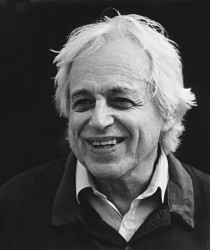 Last weekend marked the centenary of the birth of one of 20th-century music’s most distinctive composers: Györy Ligeti. Born on 28 May 1923 in Dicsőszentmárton, Transylvania, into a Jewish family with an artistic background (the violinist Leopold Auer was a great-uncle), he studied music under Ferenc Farkas before being called up to the wartime labour corps of the Nazis’ Hungarian puppet government in 1944 (most of his family perished in concentration camps and gas chambers). Resuming his studies in September 1945, under Farkas and Veress, Ligeti’s earliest surviving compositions demonstrate the strong influence of Hungarian folk music. At just the time that he was beginning to discover a distinctive compositional voice, however, a new totalitarian regime in the shape of post-war Stalinism forced all but the most approved musical styles into the desk drawer. With the brutal suppression of the 1956 Hungarian uprising, Ligeti fled his homeland, initially to Vienna, and then to Cologne, taking with him those few works that represented his ‘secret’ compositional work at its best.
In the west, Ligeti initially fell in with the avant garde as a kind of ‘mature’ student, teaching at Darmstadt in 1958, and authoring the classic analysis of Boulez’s Structures Ia. But he voiced doubts about the way forward under the new orthodoxies of Boulez and Stockhausen, finding the beginnings of his own solution in the fabulous complexity and unmeasured rhythms of his orchestral Apparitions (1958–9). Another orchestral work, the cloudlike Atmosphères (1961), further bolstered his international reputation. Ligeti coined the term ‘micropolyphony’ for the dense, interwoven canons moving at different speeds in which individual lines were indiscernible. This marked the creation of his own highly distinctive soundworld, as epitomised in further outstanding works of the 1960s: Aventures (1962), Nouvelles aventures (1962–5), the Requiem (1963–5), and the a cappella Lux aeterna (1966) – all with vocal elements of a very different hue from his early, folk-influenced choral works – as well as the orchestral Lontano (1967).
By the late 1960s, Ligeti’s profile was rising – thanks in part to the inclusion of his music (initially without his permission) as a key element in the soundtrack of Stanley Kubrick’s epochal 2001: A Space Odyssey. During this period Ligeti produced a series of works in multi-movement form in which different facets of his music were dealt with in succession, including the paired-movement form (contrasting but similar) that he had inherited from Bartók. In 1972 he was a visiting professor at Stanford University in California, and in 1973 took on a permanent appointment at the Musikhochschule in Hamburg. Two works from this time – Clocks and Clouds (1972–3) and San Francisco Polyphony (1973–4) were by-products of a failed operatic project based on the Oedipus myth. From 1974–7 he worked on what would be his only work in the genre, the ‘anti-anti-opera’ Le Grand Macabre, premiered at Stockholm in 1978 to great acclaim, with its celebrated prelude for 12 car horns. Other productions soon followed, and for a while it became one of Ligeti’s signature works; a revised version was presented at the 1997 Salzburg Festival.
Dealing with the subject of death and survival – something with which Ligeti was all to familiar – Le Grand Macabre also heralded a new compositional period marked by both greater eclecticism (he became fascinated with music of the Caribbean and Central Africa) and increased sophistication. The Horn Trio of 1982 (a kind of skewed, distorted homage to the Brahmsian genre) and the concertos for piano (1985–8) and violin (1992) are among the highlights of this late compositional phase, but Ligeti’s crowning achievement of later years is surely the series of Etudes for solo piano (1985–2001), numbering 18 in total but to which more would surely have been added had Ligeti lived longer.
Now regarded as classics of the genre, the Etudes stretch both player and listener in a multitude of thought-provoking ways. Just as much as the early Musica ricercata (1951–3), the two string quartets (1953–4 and 1968), Atmosphères and Lontano, Lux aeterna and Le Grand Macabre, they are among the composer’s most essential works. So, too, is the late song cycle Síppal, dobbal, nádihegedűvel (‘With Pipes, Drums, Fiddles’) of 2000, for soprano and an array of percussion and wind instruments. Their miniature forms and beguiling mixture of childish simplicity with extreme sophistication, the confrontation and melding of folk and high art, western and non-western timbres, reflect Ligeti in all his magnificent variety.
With all the foresight we have come to expect from the major labels where modern music is concerned, none of the big Ligeti collections of past decades has been made newly available for this anniversary year. Sony’s series of recordings was always periodically elusive, while the Teldec ‘Ligeti Project’ (now part of Warner Classics, featuring such seasoned Ligetians as pianist Pierre-Laurent Aimard and conductor Reinbert de Leeuw) looks to be heading for deletion, and DG’s four-disc ‘Clear or Cloudy’ set is a ‘special import’ title. If you find copies of any of these, grab ’em quick! Paul Griffiths’s György Ligeti in Robson Books’ ‘Contemporary Composers’ series (1983, 2/1998) is still the best general introduction, although an updated version is sorely needed.
Luckily the representation of Ligeti on smaller labels continues to impress, and below we offer a few listening recommendations for a composer who, by the time of his death on 12 June 2006, had achieved a unique profile among modern composers: uncompromising and challenging, yet undogmatic and, for those with open ears, wonderfully approachable yet rewarding of ‘deep listening’. At whichever point you decide to jump in, you will find his legacy a continually fascinating one.
Recommended recordings:
Lux Aeterna: Choral Works 6220676
Complete Works for a cappella Choir SWR19128CD
Requiem, Lux aeterna CAR83283
Metamorphosis: String Quartets (Quatuor Diotima) PTC5187061
The 18 Etudes (Driver) CDA68286
Violin Concerto, Lontano, Atmospheres, San Francisco Polyphony (Finnish RSO / Lintu) ODE12132
Clear or Cloudy (DG) 4776443
Le Grand Macabre (Howarth) WER61702
Requiem, Aventures WER6004550
Ensemble Intercontemporain play Bartok & Ligeti ALPHA217
Suites for Solo Cello (Bloch, Dallapiccola, Ligeti) CDA68155
Latest Posts
Music of the Iberian Peninsula, Part 3: More observations on the Golden Age
16th June 2026
Our last visit to the Iberian peninsula, a fortnight ago, was an insanely ambitious, necessarily broad-brush survey of the Spanish and Portuguese Golden Age, covering vocal and instrumental music, the sacred and the secular. This week, we take a more concise and (I hope) focussed look at a few of the sacred vocal masterpieces which exemplify the particular fervour and intensity of this remarkable period of musical history. They reflect the special place the peninsula had as a bulwark against the Reformation that had taken... read more
read more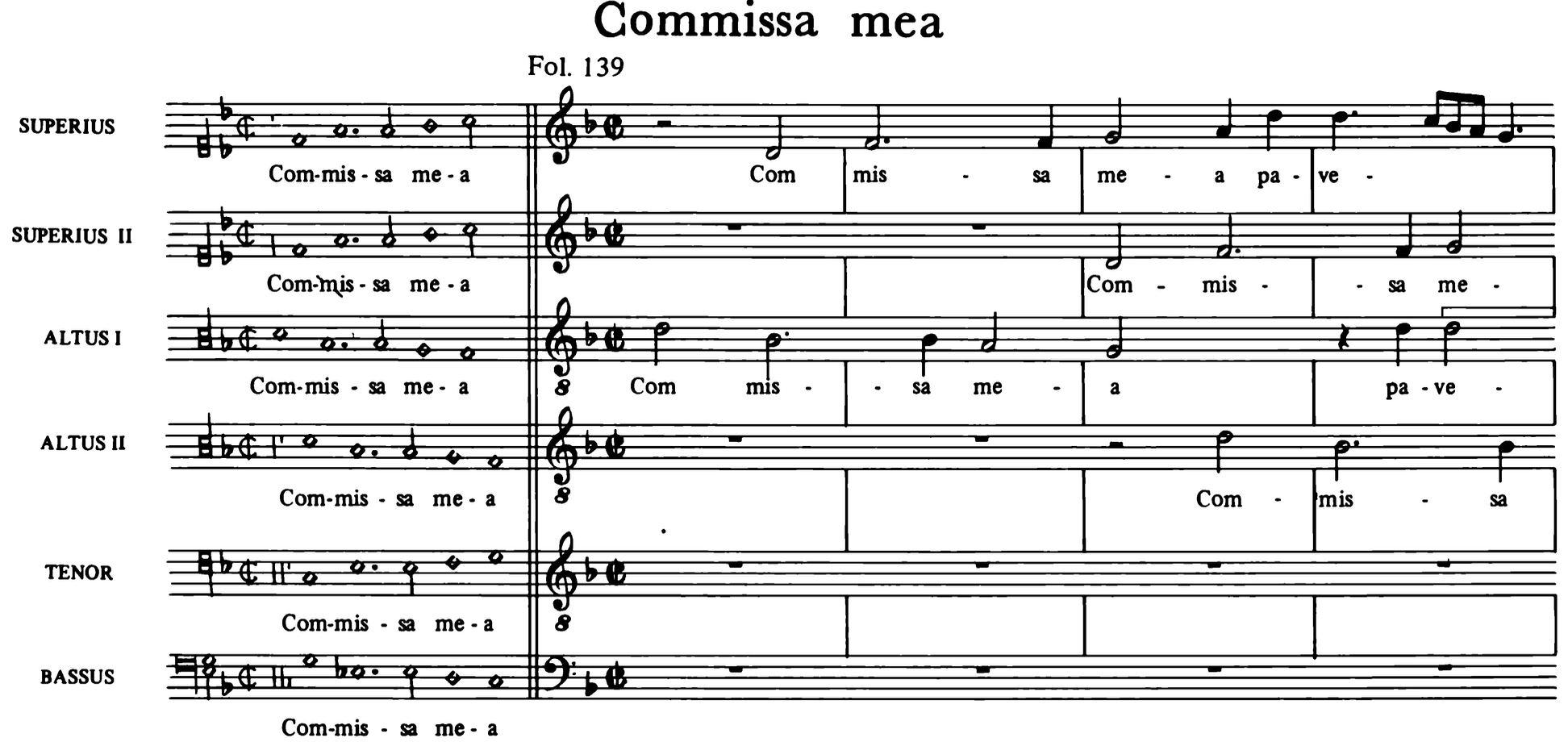
Music of the Iberian Peninsula, Part 3: More observations on the Golden Age
16th June 2026
Our last visit to the Iberian peninsula, a fortnight ago, was an insanely ambitious, necessarily broad-brush survey of the Spanish and Portuguese Golden Age, covering vocal and instrumental music, the sacred and the secular. This week, we take a more concise and (I hope) focussed look at a few of the sacred vocal masterpieces which exemplify the particular fervour and intensity of this remarkable period of musical history. They reflect the special place the peninsula had as a bulwark against the Reformation that had taken... read more
read more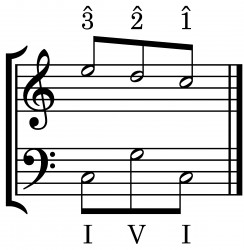
Carl Schachter, Arnold Whittall, and why music analysis matters
9th June 2026
Two recent deaths have robbed the world of music analysis of a pair of its most revered figures. Carl Schachter, who has died at the age of 93, was a pupil of (and subsequently collaborator with) Felix Salzer, himself one of Heinrich Schenker’s foremost students. Schachter continued to enrich and broaden the teaching of Schenkerian analysis, including important work on its application to issues of rhythm (which Schenker, focussing on harmonic and contrapuntal matters, largely bypassed). His influence went well beyond the... read more
read more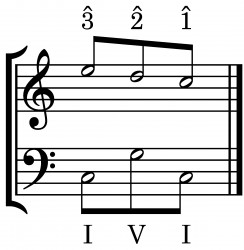
Carl Schachter, Arnold Whittall, and why music analysis matters
9th June 2026
Two recent deaths have robbed the world of music analysis of a pair of its most revered figures. Carl Schachter, who has died at the age of 93, was a pupil of (and subsequently collaborator with) Felix Salzer, himself one of Heinrich Schenker’s foremost students. Schachter continued to enrich and broaden the teaching of Schenkerian analysis, including important work on its application to issues of rhythm (which Schenker, focussing on harmonic and contrapuntal matters, largely bypassed). His influence went well beyond the... read more
read more
Music of the Iberian Peninsula, Part 2: ‘O quam gloriosum’ – The Spanish and Portuguese Golden Age
2nd June 2026
Over the past fortnight, I’ve been bathed in the most glorious, radiant, transformative light. Not the UK’s recent unseasonable heatwave, but the extraordinary vocal polyphony of the Siglo de Oro: the Spanish (and Portuguese) ‘Golden Century’. Extending from the late 15th to the early 17th century, this was a time of remarkable artistic flowering on the Iberian Peninsula, coinciding with the emergence of Spain and Portugal as global imperial powers with extensive colonial territories in the Americas, Africa and Asia. The... read more
read more