 FREE UK SHIPPING OVER £35!
The Spin Doctor Europadisc's Weekly Column
Home-Grown Delights: Orchestral and Choral Own-Labels
15th June 2021
15th June 2021
 The changes in the classical record industry over the past four decades have seen the end of many once-lucrative contracts between orchestras and the ‘big’ labels of old: EMI, Philips, Deutsche Grammophon, Decca, RCA and CBS… (Remember the exclusive contract the Vienna Philharmonic had for many years with Decca, the orchestra’s logo proudly emblazoned on the record sleeves?) However, the technological changes that prompted this demise have also offered new opportunities. Since the turn of the millennium, orchestras and choirs themselves have launched their own labels, where they, not the bean-counters at some remote head office, can determine what repertoire they release, often taking the sort of risks that would be impossible with the big multinationals. Crucially, this gives them control over (and copyright in) their own recordings. Just as smaller independent labels have been able to develop and nurture the talents of a huge range of new and seasoned artists in a way unimaginable for larger companies, so orchestras and choirs in collaboration with experienced producers and engineers have been able to shine the spotlight on projects of their own devising and development, as well as focusing on the music that best represents their wider activities.
Among the first on the own-label scene were the Tallis Scholars under Peter Phillips: since 1980 they have rolled out a series of benchmark recordings of mainly Renaissance choral works on their Gimell label, including a rightly acclaimed project to record all of Josquin Desprez’s hugely important Mass settings (recently completed, just in time for the 500th anniversary of the composer’s death!). Other choirs eventually followed, including The Sixteen under Harry Christophers, whose Coro label now features a jaw-dropping 180 titles, among which their ongoing collection of Royal Welcome Songs by Purcell has won particular attention, but also encompassing more recent repertoire by Pärt, Tavener and MacMillan. John Eliot Gardiner’s Monteverdi Choir launched its beautifully packaged Soli Deo Gloria imprint to document their historic Bach Cantata Pilgrimage in 2000 after DG/Archiv pulled the plug on the project. SDG has since expanded to include performances of Monteverdi, Handel, Beethoven and Brahms featuring the choir’s sister groups, the English Baroque Soloists and the Orchestre Révolutionnaire et Romantique. The Choir of King’s College, Cambridge boasts an impressive array of recordings that bears witness to the legacy of the late Stephen Cleobury.
At about the same time as SDG and Coro were launched, the London Symphony Orchestra became the first big-name mainstream orchestra to create its own label – LSO Live – in a period when such endeavours might have seemed decidedly risky for such a renowned and long-established ensemble. Yet the venture paid off handsomely, certainly in critical terms: their recordings, made chiefly during performances at their Barbican Hall home, with minimal patching, now amount to a substantial back catalogue from conductors including Colin Davis (with a particular focus in Berlioz and Sibelius), Valery Gergiev, Bernard Haitink, John Eliot Gardiner (a notable Mendelssohn cycle), Simon Rattle and, most recently, Antonio Pappano. Additional recordings for the label by LSO players like the strings and the wind section add to the ‘family’ feel of this enterprise, and many of the earlier LSO Live recordings are now licensed to Alto, the budget-price reissue label.
Just a few years later, in 2005, another of the big London orchestras, the London Philharmonic, followed suit towards the end of Kurt Masur’s tenure as principal conductor. Under Masur’s successor Vladimir Jurowski, the LPO label has flourished; aside from Jurowski’s own stunningly idiomatic readings of the Russian repertoire, its releases have included performances by colleagues such as Yannick Nézet-Séguin, and Bruckner from the late Stanisław Skrowacewski, as well as very welcome archive recordings by previous LPO conductors including Adrian Boult and the much-missed Klaus Tennstedt (whose Mahler, Beethoven and Wagner are particularly gripping). Archive performances have also been a notable feature of RCO Live, the label of the Royal Concertgebouw Orchestra of Amsterdam, drawing on a particularly rich and wide-ranging selection of radio broadcasts, and conductors stretching from way back with Mengelberg, van Otterloo and van Beinum, via Giulini and Bernstein, to Harnoncourt, Chailly and Harding. Another special feature of the RCO catalogue is its valuable ‘Horizon’ series featuring works premiered and commissioned by the orchestra.
Other orchestra labels that have proved popular with collectors include the Wiener Symphoniker’s eponymous brand, not least for their much-admired Beethoven symphony cycle from under Philippe Jordan; the San Francisco Symphony’s SFS Media, with some outstanding performances led by Michael Tilson Thomas; and (further up the western seaboard) Seattle Symphony Media, with increasingly impressive recordings of standard and rarer repertoire under Ludovic Morlot and Thomas Dausgaard. In Britain, the Hallé under Mark Elder have thoroughly earned a loyal following among music lovers, with cycles of Elgar, Vaughan Williams, Sibelius and Wagner’s Ring winning particular admiration and acclaim.
More recently on the early music front, and chiefly under the direction of Richard Egarr, the Academy of Ancient Music (once one of the flagship ensembles of Decca’s Florilegium imprint) has begun producing its own recordings on the AAM label. They include notably intense performances of JS Bach’s Passion settings, a revelatory and handsomely presented account of Handel’s much rarer Brockes-Passion, seldom-performed repertoire by the likes of Castello, Valls and Dussek, and (just a few months back) the first professional recording of John Eccles’s English opera Semele. All have won critical plaudits.
Two of the most recent additions to the own-label fold are worth highlighting. The Cleveland Orchestra has started issuing a fascinating series of discs which combine repertoire classics with more contemporary works. Their inaugural release, well worth exploring, is a luxuriously packaged three-disc set that couples Beethoven, Richard Strauss and Prokofiev with music by Varèse, Johannes Maria Staud (see Gramophone, 07/21) and Bernd Richard Deutsch, accompanied by a splendidly produced 150-page accompanying book. Their second release is a similarly imaginative single-disc pairing of Schubert’s ‘Great’ C major Symphony with Ernst Krenek’s rarely-encountered Static and Ecstatic. This type of old/new coupling is a typical feature of Franz Welser-Möst’s programming with his Cleveland musicians.
Last month saw the appearance of another high-end brand with the launch of Bayerische Staatsoper Recordings: opera and concert performances from the world-renowned Bavarian State Opera and Bavarian State Orchestra. These are ensembles that have worked in the past with the likes of Richard Strauss, Bruno Walter, Joseph Keilberth, Carlos Kleiber and Wolfgang Sawallisch. Their first release is bound to grab attention: on it, their outgoing music director Kirill Petrenko (now chief conductor of the Berlin Philharmonic) conducts Mahler’s elusive Seventh Symphony in an urgently probing live performance from May 2018. Their next issue (due in mid-July) looks just as impressive: a DVD and Blu-ray of Korngold’s operatic masterpiece Die tote Stadt with a starry cast including Jonas Kaufmann and Marlis Petersen, and exactly the sort of repertoire that Petrenko – one of the most complete opera conductors since the days of Carlos Kleiber – excels in. With Vladimir Jurowski soon to take over at the Bavarian State Opera, this is surely a label to watch.
Although online streaming has become increasingly popular with younger audiences, we hope that the trend for orchestral and choral own-label discs continues. Beyond their valuable function in documenting live performances, they also offer home listeners the opportunity to support these performing organisations directly, at a challenging time when that support has never been more crucial.
Links (click on the label name to view its product page):
Gimell (The Tallis Scholars)
Coro (The Sixteen)
LPO
RCO Live
Wiener Symphoniker
SFS Media
Seattle Symphony Media
Hallé
AAM Records
Cleveland Orchestra
Bayerische Staatsoper Recordings
Latest Posts
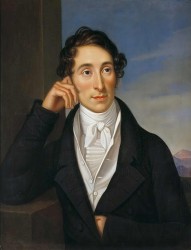
Carl Maria von Weber: Visionary of German Romanticism
23rd June 2026
When audiences think of early nineteenth-century German music, the towering figures of Beethoven, Schubert, and later Wagner often dominate the conversation. Yet between the Classical world of Mozart and the mature Romanticism of Wagner stands a composer whose influence was both profound and transformative: Carl Maria von Weber (1786–1826). Composer, conductor, pianist, critic, and visionary dramatist, Weber played a pivotal role in shaping the future of German opera and helping define the musical language of... read more
read more
Music of the Iberian Peninsula, Part 3: More observations on the Golden Age
16th June 2026
Our last visit to the Iberian peninsula, a fortnight ago, was an insanely ambitious, necessarily broad-brush survey of the Spanish and Portuguese Golden Age, covering vocal and instrumental music, the sacred and the secular. This week, we take a more concise and (I hope) focussed look at a few of the sacred vocal masterpieces which exemplify the particular fervour and intensity of this remarkable period of musical history. They reflect the special place the peninsula had as a bulwark against the Reformation that had taken... read more
read more
Music of the Iberian Peninsula, Part 3: More observations on the Golden Age
16th June 2026
Our last visit to the Iberian peninsula, a fortnight ago, was an insanely ambitious, necessarily broad-brush survey of the Spanish and Portuguese Golden Age, covering vocal and instrumental music, the sacred and the secular. This week, we take a more concise and (I hope) focussed look at a few of the sacred vocal masterpieces which exemplify the particular fervour and intensity of this remarkable period of musical history. They reflect the special place the peninsula had as a bulwark against the Reformation that had taken... read more
read more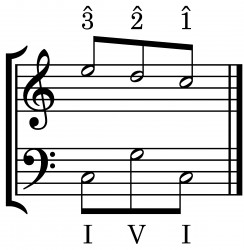
Carl Schachter, Arnold Whittall, and why music analysis matters
9th June 2026
Two recent deaths have robbed the world of music analysis of a pair of its most revered figures. Carl Schachter, who has died at the age of 93, was a pupil of (and subsequently collaborator with) Felix Salzer, himself one of Heinrich Schenker’s foremost students. Schachter continued to enrich and broaden the teaching of Schenkerian analysis, including important work on its application to issues of rhythm (which Schenker, focussing on harmonic and contrapuntal matters, largely bypassed). His influence went well beyond the... read more
read more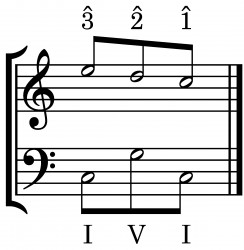
Carl Schachter, Arnold Whittall, and why music analysis matters
9th June 2026
Two recent deaths have robbed the world of music analysis of a pair of its most revered figures. Carl Schachter, who has died at the age of 93, was a pupil of (and subsequently collaborator with) Felix Salzer, himself one of Heinrich Schenker’s foremost students. Schachter continued to enrich and broaden the teaching of Schenkerian analysis, including important work on its application to issues of rhythm (which Schenker, focussing on harmonic and contrapuntal matters, largely bypassed). His influence went well beyond the... read more
read more