FREE UK SHIPPING OVER £35!

The Spin Doctor Europadisc's Weekly Column

The Plight of Radio Orchestras

  1st March 2023

1st March 2023
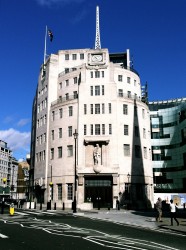

The recent news that the ORF Vienna Radio Symphony Orchestra faces serious funding cuts (and ‘will need to seek alternative funding’) is a reminder of the challenges facing arts organisations in the present economic climate. In particular, it highlights the plight of ensembles attached to broadcasters, and the seemingly perennial threats to the finances of radio orchestras. (The BBC orchestras currently face a similar threat, though details are yet to be spelt out.)
 
The golden age of radio orchestras can be broadly split into two phases: the period between the two World Wars (when ‘light orchestras’ playing mainly dance music predominated), and the immediate post-war years, when a sustained drive to bring culture to the masses amid a period of rebuilding brought a boom in larger orchestras with serious classical programmes. The main hub of this astonishing drive was in West Germany, where the separate radio stations of the various German Lände each boasted their own house orchestra. As well as having the highest number of opera houses per capita in the world, Germany – rebuilding its cultural life in the wake of the horrors of Nazism and wartime bombing – now also had the largest number of radio orchestras of any country, and continues to do so.
 
It was in the 1930s, however, that the pioneering efforts of the BBC, under the visionary directorship of John Reith, laid the groundwork for the modern radio symphony orchestra. The engagement of the young Adrian Boult – a superb orchestra trainer – ensured that playing standards in the newly-founded BBC Symphony Orchestra quickly rose, and conductors of the stature of Arturo Toscanini, Bruno Walter, Richard Strauss, Felix Weingartner, Serge Koussevitsky and Willem Mengelberg were keen to conduct the ensemble. In May 1936 the composer Anton Webern even conducted the first recording of his late colleague Alban Berg’s Violin Concerto – a landmark performance with the original soloist, Louis Krasner, happily still available through the Testament label.
 
Following Boult’s enforced retirement, the appointment of Malcolm Sargent as its next conductor was popular with the public, but not with the wider BBC, nor the orchestra members themselves, who were often obliged to take a supporting role in Sargent’s many choral extravaganzas. The resulting fall in playing standards became a recurring headache for the BBC, only eventually addressed when, following the appointment in 1959 of William Glock as controller of music, Antal Doráti was brought in as the orchestra’s chief conductor. Doráti and his immediate successors Colin Davis and Pierre Boulez not only brought playing standards up to scratch again, but reinforced the orchestra’s focus on contemporary music: modern music for a modern medium.
 
The longer story of the BBC Symphony Orchestra is a topic for another time, but the problems it and its sister orchestras (the BBC Northern Symphony Orchestra – later the BBC Philharmonic – BBC Scottish Symphony Orchestra, BBC Concert Orchestra, etc.) have faced on a recurring basis highlight the particular challenges faced by arts organisations attached to publicly-owned bodies, particularly in times of financial hardship. In many ways, radio orchestras are the heirs to the old court orchestras of the 18th and 19th centuries (and are similarly subject to the whims of their masters), while independent (privately-owned or cooperative non-profit) orchestras are a continuation of the concert orchestras of the 19th century. The latter, enjoying lower levels of state support (if any), are at the mercy of the market and trends of fashion, albeit often with a certain level of state support. Ensembles run by broadcasters face different challenges: ensuring a balance between a public service remit and the need to attract audiences, as well as ensuring that – with members employed on a salaried basis rather than freelance – playing standards don’t stagnate. And, when the state needs to cut back on expenditure, the arts – even though they make up a tiny proportion of the overall budget – are an easy target.
 
The importance of radio orchestras cannot, however, be underestimated. In post-war West Germany, the various orchestras of Southwest German Radio played a huge part in the new music boom of the 1950s onwards, and its archive recordings under such figures as Hans Rosbaud and Michael Gielen are now eagerly sought by collectors. Each of the German regions had a distinctive profile, with Southwest German Radio and WDR Cologne in particular excelling in the field of contemporary music. Bavarian Radio was more conservative, but under the successive leadership of Eugen Jochum and then Rafael Kubelík it built what is still the world’s leading classical radio ensemble in the Bavarian Radio Symphony Orchestra. North German Radio enjoyed an especially glorious phase under the conductorship of Hans Schmidt-Isserstedt (and later, too, under Klaus Tennstedt and Günter Wand), while the Frankfurt Radio Symphony Orchestra of Hessischer Rundfunk excelled under the direction of Dean Dixon (the first African American to hold such a post) and then Eliahu Inbal. We hope to discuss German radio orchestras in more detail in the near future.
 
With a population of under 10 million, Austria is a fraction of the size of Germany. The ORF Vienna Radio Symphony Orchestra, founded as recently as 1969 (well after the boom elsewhere), is the country’s only radio orchestra. Under successive music directors, most recently Marin Alsop and her immediate predecessor Cornelius Meister, it has carved out a special niche as the country’s only symphony orchestra with a specific focus on contemporary music, as well as specialising in neglected works of the past (its recordings of Zemlinsky, Eisler, Dohnányi and Braunfels on the Capriccio label have recently earned wide praise), all the while mixing this with standard repertoire to attract audiences to its series of subscription concerts. While other Viennese orchestras continue to pander, to varying degrees, to the ’chocolate box’ image of the Austrian capital, the Vienna RSO has a unique place in keeping the flame of new music alive in a city that was home, not just to Mozart, Beethoven, Schubert and the Strausses, but to the Second Viennese School and their wider successors, including the late Friedrich Cerha. If Austria really is the ‘home of music’, it needs to think very carefully about the support it provides to one of its most important (if not most celebrated) musical ensembles.

Recommended recordings:

Latest Posts


Music of the Iberian Peninsula, Part 3: More observations on the Golden Age

16th June 2026

Our last visit to the Iberian peninsula, a fortnight ago, was an insanely ambitious, necessarily broad-brush survey of the Spanish and Portuguese Golden Age, covering vocal and instrumental music, the sacred and the secular. This week, we take a more concise and (I hope) focussed look at a few of the sacred vocal masterpieces which exemplify the particular fervour and intensity of this remarkable period of musical history. They reflect the special place the peninsula had as a bulwark against the Reformation that had taken... read more

read more
Music of the Iberian Peninsula, Part 3: More observations on the Golden Age

16th June 2026

Our last visit to the Iberian peninsula, a fortnight ago, was an insanely ambitious, necessarily broad-brush survey of the Spanish and Portuguese Golden Age, covering vocal and instrumental music, the sacred and the secular. This week, we take a more concise and (I hope) focussed look at a few of the sacred vocal masterpieces which exemplify the particular fervour and intensity of this remarkable period of musical history. They reflect the special place the peninsula had as a bulwark against the Reformation that had taken... read more

read more
Carl Schachter, Arnold Whittall, and why music analysis matters

9th June 2026

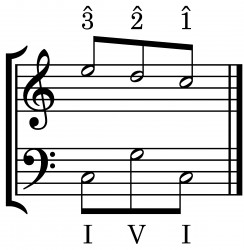
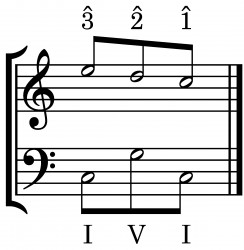
Two recent deaths have robbed the world of music analysis of a pair of its most revered figures. Carl Schachter, who has died at the age of 93, was a pupil of (and subsequently collaborator with) Felix Salzer, himself one of Heinrich Schenker’s foremost students. Schachter continued to enrich and broaden the teaching of Schenkerian analysis, including important work on its application to issues of rhythm (which Schenker, focussing on harmonic and contrapuntal matters, largely bypassed). His influence went well beyond the... read more

read more
Carl Schachter, Arnold Whittall, and why music analysis matters

9th June 2026

Two recent deaths have robbed the world of music analysis of a pair of its most revered figures. Carl Schachter, who has died at the age of 93, was a pupil of (and subsequently collaborator with) Felix Salzer, himself one of Heinrich Schenker’s foremost students. Schachter continued to enrich and broaden the teaching of Schenkerian analysis, including important work on its application to issues of rhythm (which Schenker, focussing on harmonic and contrapuntal matters, largely bypassed). His influence went well beyond the... read more

read more
Music of the Iberian Peninsula, Part 2: ‘O quam gloriosum’ – The Spanish and Portuguese Golden Age

2nd June 2026

Over the past fortnight, I’ve been bathed in the most glorious, radiant, transformative light. Not the UK’s recent unseasonable heatwave, but the extraordinary vocal polyphony of the Siglo de Oro: the Spanish (and Portuguese) ‘Golden Century’. Extending from the late 15th to the early 17th century, this was a time of remarkable artistic flowering on the Iberian Peninsula, coinciding with the emergence of Spain and Portugal as global imperial powers with extensive colonial territories in the Americas, Africa and Asia. The... read more

read more
View Full Archive