 FREE UK SHIPPING OVER £35!
The Spin Doctor Europadisc's Weekly Column
Fathers and Sons (Part 3)
22nd February 2023
22nd February 2023
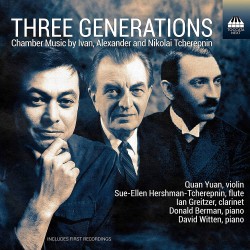 If the idea of children continuing in the professions of their parents seems an old-fashioned one, think again. In the arts, just as in other walks of life (politics, for example: Churchills, Benns, Kennedys…), families and work are not always kept neatly compartmentalised in separate boxes. And while many might seek to keep personal and professional lives apart, for those in particular with occupations which arouse strong passions and commitment, various degrees of intermingling are surely inevitable. It is not only genes that are passed from one generation to the next, but attitudes (conscious or not) to life and all that it entails. From a psychological point of view, the oft-documented discouragement by a parent from following in their footsteps seems virtually guaranteed to pique the curiosity of any child, with opposite consequences to those intended. At the same time, any nurturing environment rich in intellectual and artistic life can rub off on a child’s most formative years, outweighing any teenage tendencies to rebelliousness.
In short, the more recent history of music is as rich in examples of multi-generational talent as were the Baroque, Classical and Romantic eras. And, even though the art of composition is often regarded as a peculiarly solitary and personal one, there are many examples of parent-offspring composers, even when the parent hasn’t acted as the child’s earliest musical instructor. Notable examples include the exiled German composer and conductor Walter Goehr (1903–1960) and his son the composer and academic Alexander (b. 1932), now the last main representative of the ‘Manchester School’ that also included Peter Maxwell Davies and Harrison Birtwistle. While the Goehrs represent a sophisticated modernist axis, the Berkeleys – Lennox (1903–1989) and Michael (b. 1948) – have been more strongly influenced by the more catholic approach fostered by Lennox’s teacher Nadia Boulanger, with a strong regard for tradition. Indeed, it was some years before Berkeley senior fully shook off Boulanger’s influence, but his belated 1947 breakthrough with Four Poems of St Teresa of Ávila, op.27, premiered by Kathleen Ferrier, heralded closer artistic ties to Britten and his circle, not least in the creation of several operas. His son Michael’s breakthrough came with the 1982 oratorio Or shall we die?, while the 1993 opera Baa Baa Black Sheep was another critical success, but he is equally well-known for his broadcasting career and, since 2013, as a crossbench member of the House of Lords.
Other composers whose children have not quite managed to outshine them (at least in terms of reputation) are Polish emigré Andrzej Panufnik (1914–1991) and his daughter Roxanna (b. 1968) who has emerged as a significant composer of choral music in particular; and Elizabeth Maconchy (1907–1994) – renowned above all for her cycle of thirteen string quartets – and her daughter Nicola LeFanu (b. 1947).
But perhaps the most remarkable of all 20th-century composer families are the Tcherepnins, spanning four generations and counting. The founder of this latter-day musical dynasty was Nikolai Tcherepnin (1873–1945), who studied composition under Rimsky-Korsakov in St Petersburg and went on to teach conducting to the likes of Malko and Prokofiev. The most forward-looking of the otherwise rather conservative Belyayev circle, Nikolai was influenced both impressionism and Scriabin, emigrated to Paris, and was active as composer and conductor with the Ballets russes and Pavlova’s company, touring Europe and the USA. Prior to his move to France, the vibrant home life provided the most stimulating environment for his young son Alexander (1899–1977), whose music took on even more progressive and wide-ranging influences, particularly after his visits to China and Japan in the 1930s. Based in Paris and subsequently in Chicago (at DePaul University), Alexander had a career even more successful than his father’s, with his First Symphony premiered by the Chicago Symphony Orchestra under Rafael Kubelík (1951), innovations including 9- and 8-step scales, hocket-like ‘interpoint’ technique, and a broad range of stylistic influences. Alexander’s sons, Serge (b. 1941) and Ivan (1943–1998) became composers in their turn, studying with such figures as Leon Kirchner, Stockhausen and Nono, and active particularly in the field of electronic music and multimedia while showing a strong awareness of traditional styles and forms.
We can’t let this fascinating subject pass without mentioning some of the great names from the world of musical performance: violinists David and Igor Oistrakh rank high, as do conducting father-and-son teams Arvids and Mariss Jansons and the Järvis – father Neeme and sons Paavo and Kristjan. But to find a family equal in stature (if not in numbers) to the great figures of the past, one must look to the Kleibers: conductors Erich (1890–1956) and Carlos (1930–2004), by common consent two of the greatest conductors of the 20th century. There are many who would rate Kleiber fils as one of the greatest maestri of all times, and he excelled in opera and in the classic repertoire championed by his father: Strauss, Beethoven, Schubert. Yet Carlos, for all his mercurial genius and temperament, and his undoubted brilliance in the opera house, never showed the commitment his father had to the music of his own time. Erich had championed the music of Berg and Janáček when the ink was still wet on the page; Carlos built on his fathers legacy – some would say even exceeding him in the Fifth, Sixth and Seventh Symphonies of Beethoven – without adding substantively to it. To what extent this reflects a parental overshadowing of the child will no doubt continue to be the subject of endless debate…
Latest Posts
Music of the Iberian Peninsula, Part 3: More observations on the Golden Age
16th June 2026
Our last visit to the Iberian peninsula, a fortnight ago, was an insanely ambitious, necessarily broad-brush survey of the Spanish and Portuguese Golden Age, covering vocal and instrumental music, the sacred and the secular. This week, we take a more concise and (I hope) focussed look at a few of the sacred vocal masterpieces which exemplify the particular fervour and intensity of this remarkable period of musical history. They reflect the special place the peninsula had as a bulwark against the Reformation that had taken... read more
read more
Music of the Iberian Peninsula, Part 3: More observations on the Golden Age
16th June 2026
Our last visit to the Iberian peninsula, a fortnight ago, was an insanely ambitious, necessarily broad-brush survey of the Spanish and Portuguese Golden Age, covering vocal and instrumental music, the sacred and the secular. This week, we take a more concise and (I hope) focussed look at a few of the sacred vocal masterpieces which exemplify the particular fervour and intensity of this remarkable period of musical history. They reflect the special place the peninsula had as a bulwark against the Reformation that had taken... read more
read more
Carl Schachter, Arnold Whittall, and why music analysis matters
9th June 2026
Two recent deaths have robbed the world of music analysis of a pair of its most revered figures. Carl Schachter, who has died at the age of 93, was a pupil of (and subsequently collaborator with) Felix Salzer, himself one of Heinrich Schenker’s foremost students. Schachter continued to enrich and broaden the teaching of Schenkerian analysis, including important work on its application to issues of rhythm (which Schenker, focussing on harmonic and contrapuntal matters, largely bypassed). His influence went well beyond the... read more
read more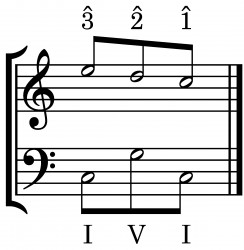
Carl Schachter, Arnold Whittall, and why music analysis matters
9th June 2026
Two recent deaths have robbed the world of music analysis of a pair of its most revered figures. Carl Schachter, who has died at the age of 93, was a pupil of (and subsequently collaborator with) Felix Salzer, himself one of Heinrich Schenker’s foremost students. Schachter continued to enrich and broaden the teaching of Schenkerian analysis, including important work on its application to issues of rhythm (which Schenker, focussing on harmonic and contrapuntal matters, largely bypassed). His influence went well beyond the... read more
read more
Music of the Iberian Peninsula, Part 2: ‘O quam gloriosum’ – The Spanish and Portuguese Golden Age
2nd June 2026
Over the past fortnight, I’ve been bathed in the most glorious, radiant, transformative light. Not the UK’s recent unseasonable heatwave, but the extraordinary vocal polyphony of the Siglo de Oro: the Spanish (and Portuguese) ‘Golden Century’. Extending from the late 15th to the early 17th century, this was a time of remarkable artistic flowering on the Iberian Peninsula, coinciding with the emergence of Spain and Portugal as global imperial powers with extensive colonial territories in the Americas, Africa and Asia. The... read more
read more